
No, Lindsay Lohan Didn’t Actually Return to Her Natural Red Hair Color
 Photo: Getty ImagesSave this storySave this story
For a moment there, it seemed like the Lohanaissance had reached its final form. Lindsay Lohan shared an Instagram carousel with what appeared to be a freakin’ gorgeous return to her famous red hair after years of being a blonde, sending fans into a frenzy. Headlines celebrated the return of one of pop culture's most beloved gingers, and commenters immediately began reminiscing about The Parent Trap, Freaky Friday, and other now-vintage movies from the era that made Lohan a household name. But before you call your colorist asking for "Lindsay red," there's something you need to know: She might not have dyed her hair at all.
Lohan herself offered no confirmation one way or the other, simply captioning the photos with a single red heart emoji. Her hairstylist, Danielle Priano, certainly leaned into the illusion. “For this look, the inspiration was a modern nod to The Parent Trap,” she tells Allure. “We leaned into Lindsay's iconic red hair with soft, effortless waves that felt timeless, healthy, and full of movement. I wanted it to have that nostalgic feel while still looking elevated and current—beautiful, touchable hair that let her new copper color be the star.”
Instagram content
That certainly sounds like a fresh color transformation. But Priano's own Instagram post tells a slightly different story. She tagged wig maker Rob Pickens and the wig company What Wigs, strongly suggesting that Lohan's revived copper look is actually a beautifully crafted wig rather than a childhood-inspired dye job.
That hasn't stopped fans from celebrating the apparent return of her natural color. Comments poured in, with one person writing, "yesss shes a redhead againnnn," while another declared Lohan "the most iconic redhead in pop culture." Others were simply thrilled to see the familiar shade back, commenting, "There she is!!! Babe, you are STUNNING in red!!!" And because the internet can never resist connecting dots, one hopeful fan wrote, “Ohhh its on! Its definitely happening! Parents trap 2, I know it, I can feel it coming! So excited for it.”
Whether it's courtesy of permanent color or an impeccably made wig, one thing is undeniable: Seeing Lohan framed by that warm red hue instantly taps into a collective sense of nostalgia. If that was the goal, mission accomplished.
8 Best Hair Masks 2026 to Replenish Dry, Damaged Hair
 Collage: Paula Balondo; Source images: Courtesy of Allure editor and brandsSave this storySave this story
The best hair masks ask for a few extra minutes in your shower routine, but the payoff is well worth it. Your hair goes through daily wear and tear, so using a weekly treatment infused with nourishing, moisturizing ingredients such as biotin, castor oil, collagen, honey, peptides, and shea butter can be a fast track to healthier hair. Even better? Whether you're working with a few split ends or need a complete overhaul after years of bleach, hot tools, and color treatments, there’s a treatment to tackle damage and give your hair the TLC it deserves. Scroll ahead for the absolute best hair masks our editors have tested and approved for smoother, shinier strands.
Our Top Hair Masks
- Best Overall: K18 Leave-In Molecular Repair Hair Mask, $75
- Best for Mature Hair: Isima Súperbomba Triple Repair Peptide Hair Mask, $38
- Best for Curly Hair: Cécred Moisturizing Deep Conditioner, $40
- Best for Dry Hair: Pureology Smooth Gloss Mask, $45
Frequently Asked QuestionsLargeChevron
- What is a hair mask?
- How do you use a hair mask?
- How often should you use a hair mask?
- Meet the experts
- How we test and review products
- Our staff and testers
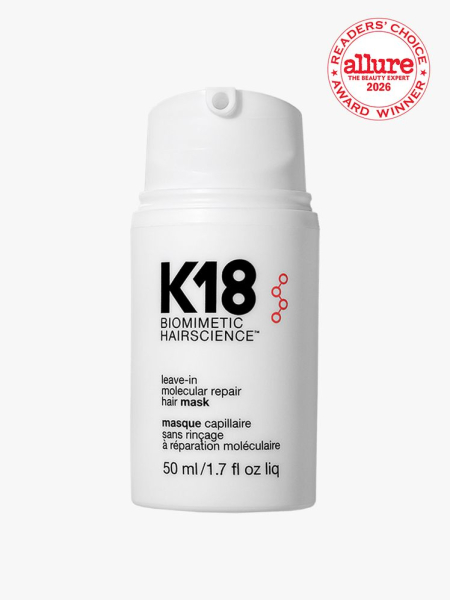
Best Overall: K18 Leave-In Molecular Repair Hair Mask
 Save to wishlist
K18
Leave-In Molecular Hair Mask
Amazon
Sephora
Allure senior commerce director Shanna Shipin applying the K18 Leave-In Molecular Repair Hair Mask.
Shanna Shipin
Why it's worth it: There's a reason K18’s Leave-In Molecular Repair Hair Mask is so popular among our editors and readers (hence its Allure Readers' Choice Award win in 2024). This mask, which also acts as a leave-in conditioner, can mend damaged hair and leave it looking like you just walked out of a salon, no matter how brittle it was. The brand's namesake peptide is the key to its reparative benefits: It helps fortify broken polypeptide chains that otherwise secure the hair shaft, making it feel smoother and softer once your hair is dry. One thing to note: You don’t rinse it out. It’s an in-shower treatment that stays in, so it cuts your in-and-out-of-the-shower time in half. “For hair that’s been pushed to the limit from bleach, heat, extensions, or chemical services, this is one of the most impressive products to restore strength while making hair feel healthier and less fragile,” says Mia Santiago, a hairstylist in Columbus, Ohio.
Tester feedback from senior commerce director Shanna Shipin
LargeChevron
“I put my hair through so much—the blow-drying, the flat-ironing, the re-curling—my split ends were practically visible from outer space! It wasn't until I diligently started using this now-classic leave-in mask that I believed you could actually undo years of damage. There's a learning curve to using it. You need to essentially emulsify the product in your hands, then apply and wait a few minutes, and then continue to style. You also can't use conditioner before applying. Sure, it's a bit finicky, but this stuff works—seemingly instantly. I got heaps of compliments after using it consistently for a month. People thought my hair was shinier when blown out, and my curls were brought back to life, their pattern restored, their joie de vivre revived!” —Shanna Shipin, senior commerce director
More to know
LargeChevron
- Key ingredients: biotech-developed peptides, hydrolyzed wheat protein, glycerin
- Who it’s for: color-treated, damaged, or overprocessed hair
- Fragrance-free: no
- How to use: Towel-dry hair, then work dime-size amounts from ends to roots, let sit for four minutes without rinsing, then style as usual and use for four to six washes before switching to maintenance mode.
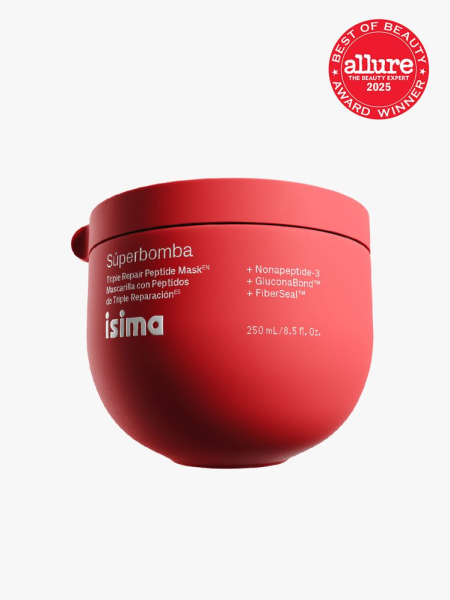
Best for Mature Hair: Isima Súperbomba Triple Repair Peptide Hair Mask
 Save to wishlist
Isima
Súperbomba Triple Repair Peptide Hair Mask
Ulta Beauty
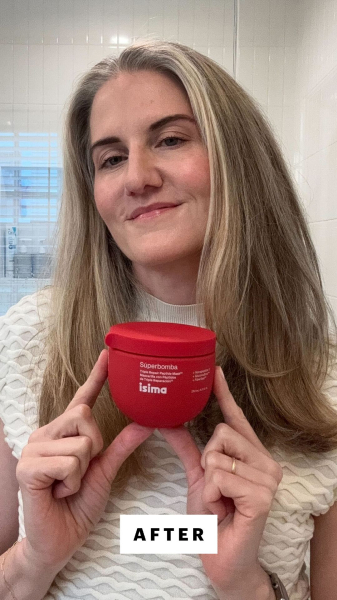
Allure executive beauty director Jenny Bailly after using the Isima Súperbomba Triple Repair Peptide Hair Mask.
Jenny Bailly
Why it's worth it: Shakira, Shakira, the hair-care brand founder you are. Isima Súperbomba Triple Repair Peptide Hair Mask, a treatment that takes a three-step approach to restoring hair from scalp to ends, picked up a 2025 Best of Beauty Award for best repairing hair mask. At the root, nonapeptide-3, a restorative, retinol-like ingredient, helps keep the scalp balanced and healthy without irritation. “Nanopeptide-3 helps to enhance collagen production, support skin cell renewal, and strengthen the skin barrier,” New York City-based cosmetic chemist Marisal Mou previously told Allure. Until this product, she says she associated this star ingredient exclusively with skin care.
Within the cortex, the brand’s gluconabond technology rebuilds broken bonds, while soy and rice hydrolyzed proteins replenish lost keratin to reinforce strength from within. On the surface, proprietary fiberseal steps in to smooth and reseal lifted cuticles caused by heat, color, and daily stress, leaving hair softer, stronger, and visibly renewed from every angle.
Tester feedback from executive beauty director Jenny Bailly
LargeChevron
“After using this three times in one week (once I left it on for 10 minutes, the other times I rinsed it out after maybe two minutes), my hair was much softer and less fuzzy. The musky-sweet fragrance I could do without, but it doesn’t stick around once my hair is dry, so fine, I’ll deal with it for the silkier hair. And the packaging is 10/10—the soft-touch/matte finish doesn’t slip around in the shower, and the lid has a little doohickey (I think that’s the official term) on the edge that lets you easily open it with wet hands.” —Jenny Bailly, executive beauty director
More to know
LargeChevron
- Key ingredients: nonapeptide-3, gluconabond, soy proteins, rice proteins, fiberseal
- Who it’s for: people with damaged hair
- Fragrance-free: no
- How to use: After shampooing, apply the mask from roots to ends, leave on for 5 to 10 minutes, then rinse, using it weekly in place of conditioner.
Best for Curly Hair: Cécred Moisturizing Deep Conditioner
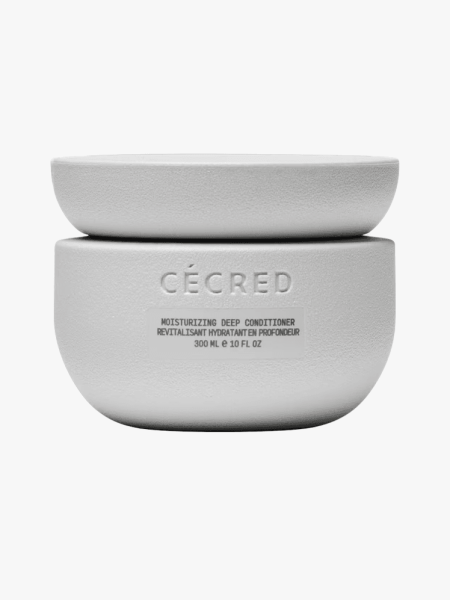 Save to wishlist
Cécred
Moisturizing Deep Conditioner
Ulta Beauty
Allure editor in chief Jessica Cruel applying the Cécred Moisturizing Deep Conditioner.
Jessica Cruel
Why it's worth it: Cécred Moisturizing Deep Conditioner is a dream for anyone with curly or coarse hair, since it’s formulated with some of the most hair-nourishing ingredients. It’s packed with 12 moisturizing butters and oils to bring dry strands back to life, plus squalane to smooth the cuticle, hyssop extract for added shine, and hyaluronic acid to help lock in hydration. For best results, apply it evenly from roots to tips on clean, sectioned hair. Want to level it up? Throw on a plastic cap (like Allure’s editor in chief, Jessica Cruel, does) and add heat with a hooded dryer, a steamer, or even just a warm towel before rinsing. Bonus: It works on both natural hair and wigs because all hair deserves moisture.
Tester feedback from editor in chief Jessica Cruel
LargeChevron
"I gave up on protein treatments for my hair after my first time using Aphogee in the early 2000s. Hair as hard as a helmet was not worth it. But the hair around my edges seems to snap the moment I begin to pull it back into any sleek style. So, I use this mask every six weeks to strengthen my coils. It feels a bit like glue, but it doesn't harden. I pop on a heating cap for 20 minutes, then detangle with a moisturizing mask. Over time, I have noticed my hair can better withstand the tugging of braids, blowouts, and silk presses." —Jessica Cruel, editor in chief
More to know
LargeChevron
- Key ingredients: glycerin, hydrolyzed elastin, castor oil, olive oil
- Who it’s for: all hair types
- Fragrance-free: yes
- How to use: Once or twice a week, apply evenly from roots to tips on clean, sectioned hair, then cover with a plastic cap and add heat using a hooded dryer, steamer, or warm towel before rinsing thoroughly.
Best Thickening: Bumble and Bumble Thickening Plumping Hair Mask
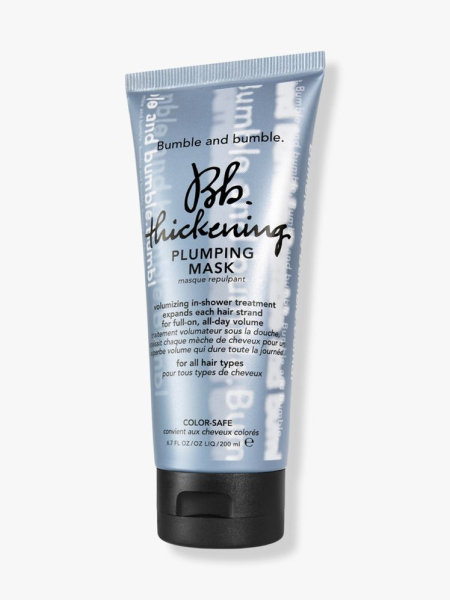 Save to wishlist
Bumble and Bumble
Thickening Plumping Hair Mask
Amazon
Nordstrom
Ulta Beauty
Allure contributing commerce editor Deanna Pai applying the Bumble and Bumble Thickening Plumping Hair Mask.
Deanna Pai
Why it's worth it: The bad news: No mask or styling product can permanently make individual strands thicker. The good news? This two-minute treatment is like a push-up bra for fine hair. Every time you "wear" Bumble and Bumble's Thickening Plumping Hair Mask, its proprietary strand-plumping technology instantly makes hair look and feel fuller. Hydrolyzed rice protein adds body and bounce without weighing strands down, while kukui seed and coconut oils keep everything soft and smooth, not stiff or crunchy. “It feels weightless, spreads easily, and in just two minutes you can see a visible difference in volume and strength,” says Marcos Diaz, a hairstylist based in New York City.
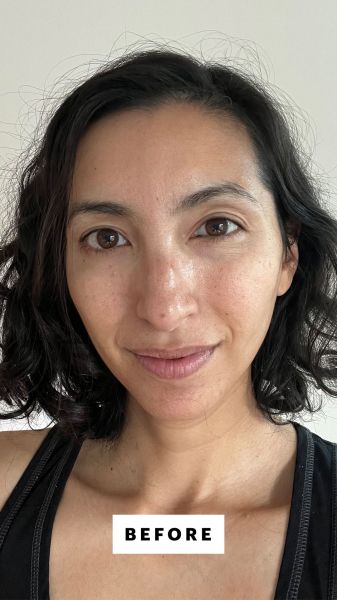
Pai before applying the Bumble and Bumble Thickening Plumping Hair Mask.
Deanna Pai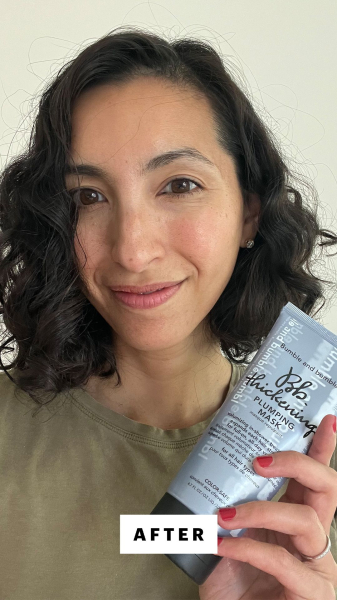
Pai after applying the Bumble and Bumble Thickening Plumping Hair Mask.
Deanna Pai
Tester feedback from contributing commerce editor Deanna Pai
LargeChevron
“My hair has gone limp and flat after months of postpartum hair loss, so I'm desperate for anything that lends even a temporary lift. I don't usually have time for hair masks, especially with two little ones underfoot, but Bumble and Bumble's version has made it as quick and convenient as possible. I work it into my hair in place of conditioner, shave my legs, and then rinse. Even a single use makes a huge difference in the volume of my curls; they look bigger and feel softer than ever. It's become my new holy grail.” —Deanna Pai, contributing commerce editor
More to know
LargeChevron
- Key ingredients: pea protein, wheat protein, biotin, sweet almond oil, argan oil
- Who it’s for: people with fine to medium hair
- Fragrance-free: no
- How to use: After shampooing, apply the mask from roots to tips, massage it in, leave it on for two to five minutes, then rinse thoroughly.
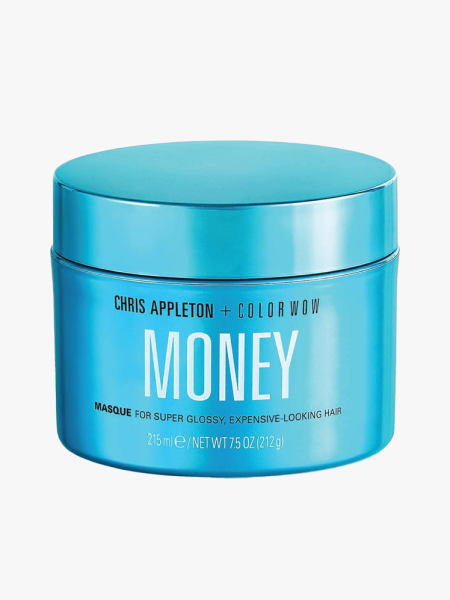
Best for Split Ends: Color Wow Money Masque
 Save to wishlist
COLOR WOW
Money Masque
Amazon
Ulta Beauty
Sephora
Allure contributing commerce writer Christa Joanna Lee applying Color Wow Money Masque—and the results.
Christa Joanna Lee
Why it's worth it: Color Wow's global creative director, Chris Appleton, created Money Masque to capture his signature glossy, red carpet-worthy finish in a treatment that hydrates without weighing hair down. Unlike traditional rich creams that can leave hair feeling coated, Money Masque has an unusually lightweight, almost gel-cream texture that sinks into the hair instead of sitting on top. Blue sea kale helps strengthen damaged keratin, while a Mediterranean sea kelp and algae blend floods dry strands with hydration. Hydrolyzed vegetable protein smooths the hair cuticle, helping rough, frayed ends look sleeker. (FYI, masks can't permanently repair split ends, but they can temporarily smooth and seal them so they're less noticeable.) “This is the mask I recommend most often because it delivers that expensive, ‘healthy hair’ look without weighing hair down,” says Santiago. “It gives incredible slip, makes blowouts look polished, and leaves hair feeling luxe.”
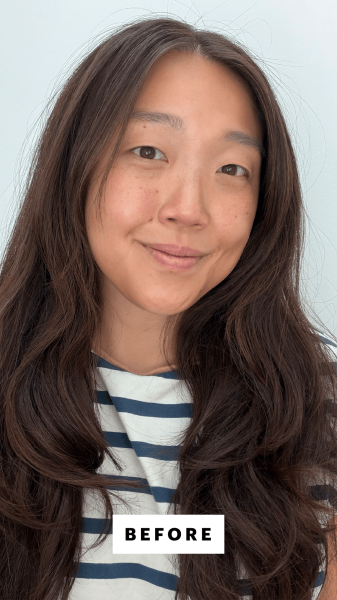
Lee before applying the Color Wow Money Masque.
Christa Joanna Lee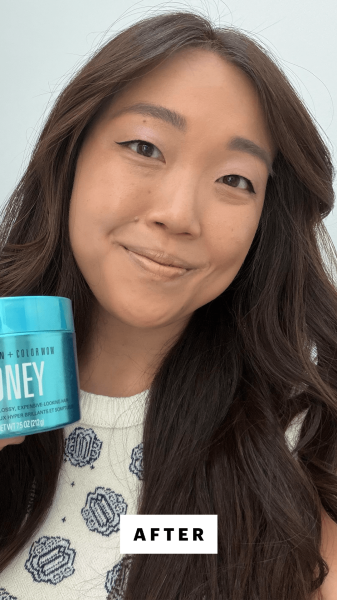
Lee after applying the Color Wow Money Masque.
Christa Joanna Lee
Tester feedback from contributing commerce writer Christa Joanna Lee
LargeChevron
“Ever since I moved to the suburbs eight years ago, I haven't been able to find a stylist I love. So once, maybe twice a year, I make the trek back into New York City to see my beloved stylist. I don't get trims in between, which means split ends are pretty much inevitable, especially since I heat-style my hair regularly. Add in the occupational hazard of testing beauty products every day (some of which leave my hair feeling dull and dry), and my ends are usually crying for help. I wasn't convinced the lightweight, gel-cream texture of Color Wow’s Money Masque would do much for my hair at first. Instead of rinsing it out right away, I applied it, answered a few emails, and let it sit for about 10 to 15 minutes (a bit longer than the instructions on the package). It absorbed so quickly that it almost felt like I didn't even need to rinse it out.
"After rinsing and styling as usual with my trusty Dyson Airwrap, I was surprised by how soft and silky my ends felt. Nothing actually repairs split ends (they can only be trimmed off if they bother you), but this mask made them look and feel healthy enough that I can probably stretch a little longer between salon appointments.” —Christa Joanna Lee, contributing commerce writer
More to know
LargeChevron
- Key ingredients: blue sea kale, sea kelp, algae, hydrolyzed vegetable protein
- Who it’s for: everyone
- Fragrance-free: no
- How to use: After shampooing, apply the mask from roots to tips, massage it in, leave it on for three to five minutes (or up to 20 minutes for a more intensive treatment), then rinse thoroughly.
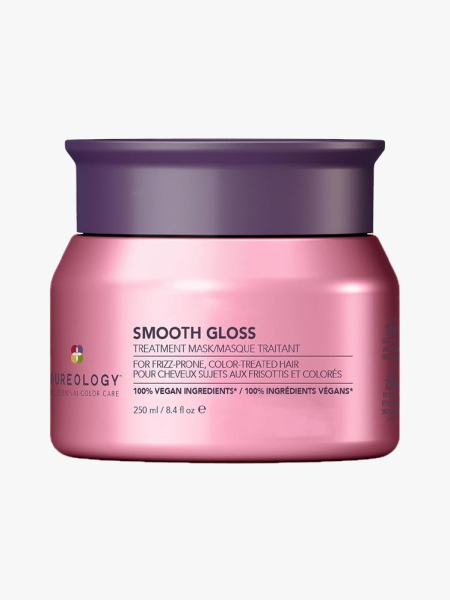
Best for Dry Hair: Pureology Smooth Gloss Mask
 Save to wishlist
Pureology
Smooth Gloss Mask
Amazon
Ulta Beauty
Sephora
Allure commerce editor Sarah Han with the Pureology Smooth Gloss Mask.
Sarah Han
Why it's worth it: If you've written off hair masks as glorified conditioners, you haven't met Pureology Smooth Gloss Mask. Inspired by the amino acid structure of silk, the formula pairs serine to attract and retain moisture with glycine to smooth the hair's surface and alanine to help repel excess humidity, so dry strands stay hydrated and frizz-free (for up to 72 hours, according to the brand). Glycerin replenishes moisture, while sunflower seed extract provides antioxidant protection for color-treated hair. Plus, it has a lovely beachy scent—a blend of creamy vanilla and warm sandalwood—that lets you mentally escape to a tropical vacation while it sinks in for three to five minutes.
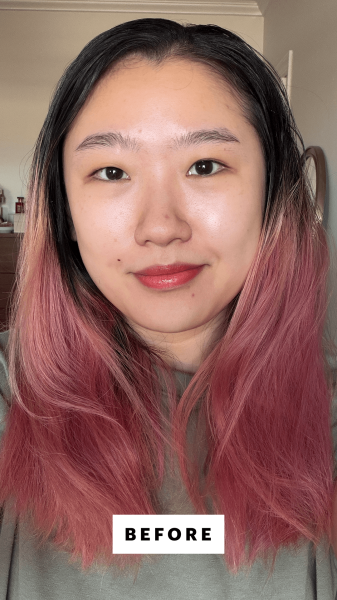
Han before applying the Pureology Smooth Gloss Mask.
Sarah Han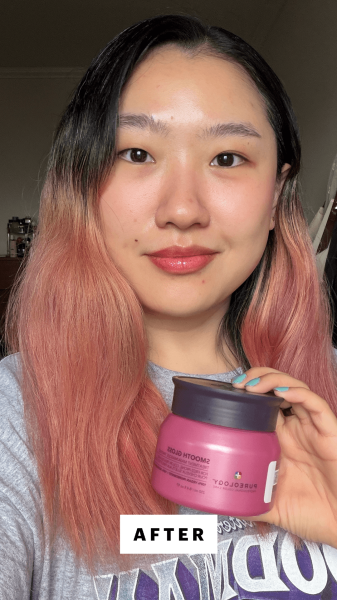
Han after applying the Pureology Smooth Gloss Mask.
Sarah Han
Tester feedback from commerce editor Sarah Han
LargeChevron
“Regular conditioners rarely do much for my dry, color-treated hair, so I have to reach for a hair mask at least once a week to soften my strands. This Pureology mask smells divine, and I appreciate that it’s literally made for my hair type (color-treated and frizzy). It does a much better job of minimizing frizz than most hair masks, even though I’m not particularly skilled at blowouts. And I love that it works fast. I can’t be bothered to stand in the shower for 10 minutes waiting for a mask! It’s thick but not heavy, which is the perfect balance for my fine but dense hair. Post-shower, my hair actually has a sheen to it, which is truly a feat.” —Sarah Han, commerce editor
More to know
LargeChevron
- Key ingredients: serine, glycine, alanine, glycerine
- Who it’s for: everyone, especially those with dry or color-treated hair
- Fragrance-free: no
- How to use: After shampooing, apply the mask from roots to tips, massage it in, leave it on for three to five minutes, then rinse thoroughly.
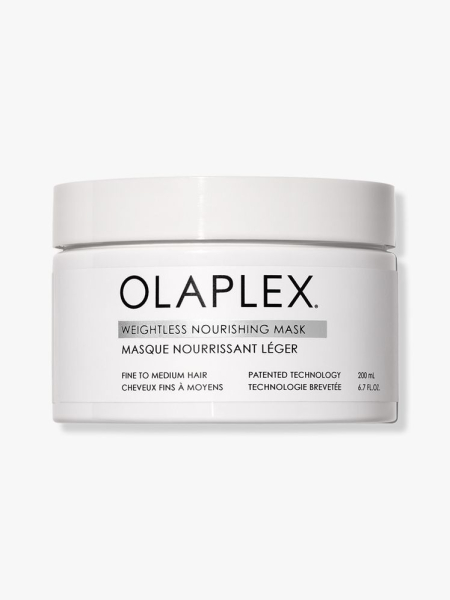
Best for Minimizing Breakage: Olaplex Weightless Nourishing Mask
 Save to wishlist
Olaplex
Weightless Nourishing Mask
Amazon
Nordstrom
Dermstore
Former Allure senior news editor Nicola Dall’Asen with the Olaplex Weightless Nourishing Mask.
Nicola Dall'Asen
Why it's worth it: If you’ve always associated deep moisture with weighed-down hair, Olaplex Weightless Nourishing Mask will change your mind. This treatment features the brand’s volume boost complex, which instantly adds lift while helping to prevent snapping and breakage for long-term length and body retention. It’s also infused with Olaplex’s signature bond-building technology to repair internal damage, while nourishing oils like avocado, sunflower, and coconut deliver deep hydration. It’s designed for weekly use because you won’t need it more often than that: The moisture lasts up to five washes.
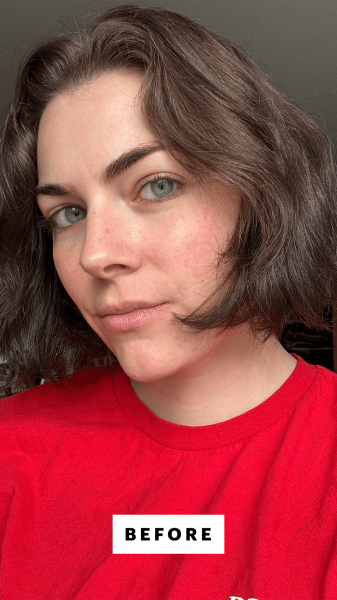
Dall’Asen before applying the Olaplex Weightless Nourishing Mask.
Nicola Dall'Asen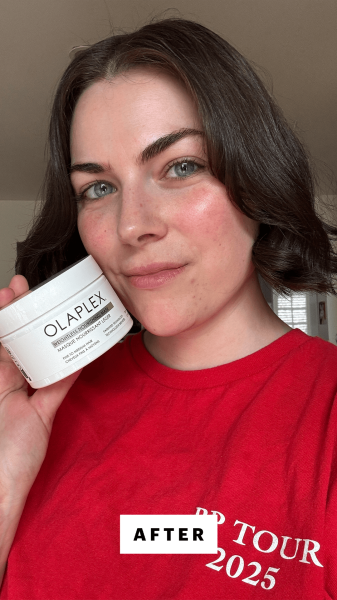
Dall’Asen after applying the Olaplex Weightless Nourishing Mask.
Nicola Dall'Asen
Tester feedback from former senior news editor Nicola Dall’Asen
LargeChevron
“With naturally fine, fragile hair that's endured several bouts of hair loss, I've finally accepted that my hair's never going to be the longest or most bountiful out there. These days, my sole hair-care goal is to make it through my showers without losing massive clumps of it. Preventing dryness and tangles is paramount, and that's why I jumped at the chance to test Olaplex's Weightless Nourishing Mask. Like the rest of the brand's range, which I've used religiously since the brand debuted all those years ago, this mask uses patented bond-building tech to repair hair from the inside out—but this formula is far, far thicker in consistency than any of its siblings. So thick, in fact, that I tend to duck my hair under the running water while I'm applying it to help it spread. That thickness definitely lends itself to deep hydration, though. I can feel the difference as soon as I rinse it out of my hair.” —Nicola Dall’Asen, former senior news editor
More to know
LargeChevron
- Key ingredients: volume boost complex, avocado, sunflower, and coconut oils, shea butter, glycerin
- Who it’s for: people with flat, limp hair that needs moisture and volume
- Fragrance-free: no
- How to use: After shampooing, apply generously to wet hair from mid-lengths to ends, leave it on for three to five minutes, then rinse well. Use weekly for best results.
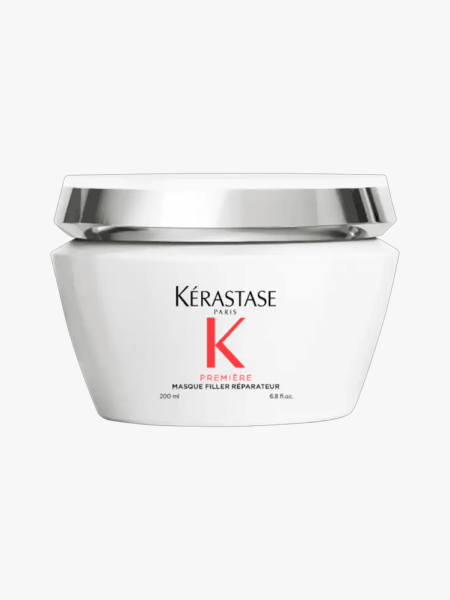
Best for Color-Treated Hair: Kérastase Première Anti-Breakage Repairing Mask
 Save to wishlist
Kérastase
Première Anti-Breakage Repairing Mask
Amazon
Sephora
Why it's worth it: For the amount of time—and money—you spend in the salon chair when you’re getting your hair colored, it's hard to believe it can still end up feeling dry, rough, or prone to breakage. But that's often just part of the territory with chemically treated hair. Kérastase Première Anti-Breakage Repairing Mask tackles all of the above with a formula centered on glycine, an amino acid that penetrates the hair fiber to help reconnect weakened keratin bonds, alongside peptides that reinforce strands and reduce breakage. The rich, creamy texture leaves hair feeling smoother, stronger, and softer after just one use without sacrificing movement.
More to know
LargeChevron
- Key ingredients: glycine, peptides
- Who it’s for: everyone, especially those with color-treated hair or calcium buildup from hard water
- Fragrance-free: no
- How to use: After shampooing and towel-drying, apply the mask from roots to tips, massage it in, leave it on for five minutes, then rinse thoroughly.
Frequently Asked Questions
What is a hair mask?
What makes a hair mask different from your regular conditioner is higher doses of ingredients to supercharge your strands, according to New Jersey-based hairstylist Michelle Cleveland. "A hair mask is very similar to a daily conditioner in that it restores hydration to the hair after shampooing. However, a mask contains higher concentrations of vitamins, oils, and butters that will penetrate deeper into the hair when left on for longer periods of time than a traditional conditioner," she explains. "The result is a higher level of hydration, which ultimately leads to repairing dry, damaged, and/or dehydrated hair." If you're looking for masks for damaged hair, these deep conditioning treatments can deliver a level of nourishment your everyday conditioner simply can't.
On top of that, hair masks are more tailored to address specific needs and concerns, says Los Angeles-based hairstylist Mark Townsend. "Hair masks are deep conditioners aimed at specific needs like repairing damage from heat and chemical treatments, improving circulation at the scalp, strengthening the hair follicle, and adding and retaining moisture," he says.
How do you use a hair mask?
Most hair masks come with specific instructions, but as a rule of thumb, Townsend says always shampoo your hair before using one to wash away buildup that can affect the mask's efficacy. "Masks usually work best on damp hair, not soaking wet, so remove as much water from the hair as possible," he adds. To ensure you remove as much water as possible, Brooklyn-based hairstylist Latoya Moore suggests wrapping your hair in a microfiber towel to soak up excess water before applying your mask. "Apply a generous amount from mid-shaft to ends, and try to avoid the roots," she suggests.
To ensure every strand is coated, Townsend and Moore recommend combing your hair immediately after applying. "Use a wide-tooth comb or fingers to evenly distribute the mask to ensure every strand is coated," says Moore. Both hairstylists also suggest covering your hair with a shower cap or warm towel to help the mask penetrate.
Usually, you won't have to follow a hair mask with a conditioner since the former is, essentially, a more concentrated version of the latter. Always read the product's instructions, whether it's a leave-in or rinse-out treatment, to ensure proper use for the best results.
How often should you use a hair mask?
Multiple hairstylists we chatted with agree that each hair mask's formulation is totally unique, so, yet again, make sure you follow the instructions. Some hair masks can be used once a week, while others can be used as a daily treatment; it all depends on what the brand recommends. Taking your own course of action won't necessarily ruin your hair, but rinsing out a hair mask too quickly or not using it often enough can lead to less significant results, and leaving one in for too long can leave a greasy residue.
Meet the experts
- Michelle Cleveland is a hairstylist based in New Jersey.
- Marcos Diaz is a hairstylist in New York City.
- Jerome Lordet is a hairstylist in New York City.
- Latoya Moore is a hairstylist in Brooklyn.
- Marisal Mou is a cosmetic chemist in New York City.
- Mia Santiago is a hairstylist and the owner of Headspace by Mia in Columbus, Ohio.
- Mark Townsend is a hairstylist based in Los Angeles.
How we test and review products
We always enlist a range of testers for our makeup vertical, but hair-care products and tools are another story. While there are certainly products that can be used across different hair textures, lengths, curl patterns, thicknesses, colors (natural and unnatural), and needs, hair products are often created with specific consumers in mind. Many are created to address a concern (dandruff, breakage, brittleness, thinning) or to work most effectively for a hair type (4C curls, wavy hair, gray hair). You wouldn’t want to pick up a purple shampoo that’s only been reviewed by someone with, say, auburn hair, or a diffuser that’s never been tested by anyone with curls, right?
For our review of the best hair masks, we enlisted the help of multiple editors, writers, contributors, and hairstylists. Testers considered performance across four primary categories: efficacy, texture and experience, fragrance, and packaging. For more on what's involved in our reporting, check out our complete review process and methodology page.
Our staff and testers
A beauty product is a personal purchase. You might be searching for a face cream to address persistent dryness or a new nail product to add to your Sunday self-care routine; you may simply be browsing around for the latest launches to hit the hair market. No matter what you seek or your individual needs and concerns, Allure wants to ensure that you love anything we recommend in our stories. We believe that having a diverse team of writers and editors—in addition to the wide range of outside testers and industry experts we regularly call upon—is essential to reaching that goal.
After all, can we really say a skin-care product is the "best" for people over 50 if the only testers we've solicited opinions from are folks who have yet to hit 30? Can we honestly deem a high-end diffuser worthy of your hard-earned cash if it's never been tested on curls? We're proud that our staff spans a wide range of ages, skin tones, hair textures, genders, and backgrounds, which means that we are able to fairly assess any beauty product that comes into the beauty closet.
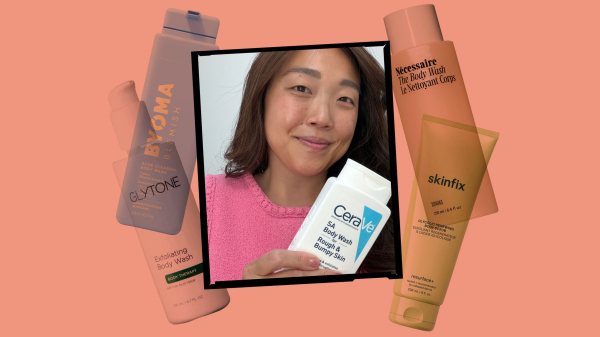
6 Best Exfoliating Body Washes 2026 for Smoother Skin
 Collage: Paula Balondo; Source images: Courtesy of Allure editors and brandsSave this storySave this story
The best exfoliating body washes do more than cleanse—they smooth out rough skin using a blend of chemical or physical exfoliants and barrier-supporting ingredients. Whether you’re dealing with keratosis pilaris (a.k.a. strawberry skin), body breakouts, ingrown hairs, or general dryness, the right formula can make a major difference.
Many exfoliating body washes use chemical ingredients, like glycolic, lactic, or salicylic acid, to break down dead skin cells and clear out clogged pores. These acids (often labeled as AHAs, BHAs, or PHAs) do the heavy lifting when it comes to maintaining even skin texture and controlling breakouts. Others may include physical exfoliants, such as fine scrub particles, to manually remove dead cells from the skin.
Our Top Exfoliating Body Washes
- Best Overall: Nécessaire The Body Wash in Hinoki, $28
- Best for Keratosis Pilaris: First Aid Beauty KP Bump Eraser Body Scrub, $30
- Best for Dry Skin: Glytone Exfoliating Body Wash, $16
- Best for Acne: Byoma Blemish Acne Clearing Body Wash, $15
Frequently Asked QuestionsLargeChevron
- Is it okay to use an exfoliating body wash daily?
- What is the best exfoliating body wash for sensitive skin?
- Meet the experts
- How we test and review products
- Our staff and testers
Before you brace yourself for a rough, red, irritated aftermath, know this: You’ll often find these paired with soothing ingredients like aloe, ceramides, or niacinamide to calm and protect the skin barrier. Ahead, we’ve rounded up the best exfoliating body washes for every skin concern, whether you're looking for a heavy-duty polish for a weekly reset or body care that’s gentle enough for daily use.
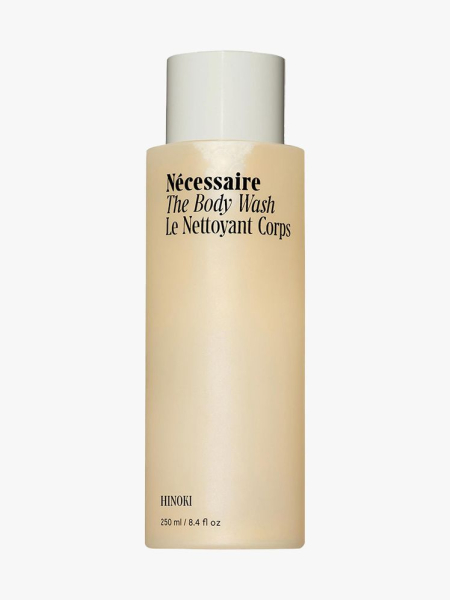
Best Overall: Nécessaire The Body Wash in Hinoki
 Save to wishlist
Nécessaire
The Body Wash in Hinoki
Amazon
Nordstrom
Credo Beauty
Allure contributing commerce editor Deanna Pai using the Nécessaire The Body Wash in Hinoki
Deanna Pai
Why it’s worth it: Nécessaire's The Body Wash in Hinoki is a skin-care treatment disguised as a cleanser. Since we crowned the fragrance-free version as the best body wash for sensitive skin, it doesn’t surprise us that dermatologists also love the exfoliating, scented version. “This formula is incredibly well-balanced,” says Dendy Engelman, MD, a board-certified dermatologist based in New York City. “It exfoliates with a gentle blend of glycolic, lactic, and salicylic acids, while also nourishing the skin with niacinamide and glycerin.” She recommends it for body breakouts, dullness, and dryness, noting that it “supports the skin barrier instead of stripping it.” The woodsy Hinoki scent, inspired by Japanese cypress, instantly evokes a mountain spa vibe, and honestly, who wouldn’t want that in their shower routine?
Tester feedback from contributing commerce editor Deanna Pai
LargeChevron
“I hoard Nécessaire's body washes for one reason: They're good! But the Hinoki is my favorite, especially in the summertime when my skin is peppered with mosquito bites—which inevitably lead to dark spots. The exfoliating acids help them fade more quickly (think weeks, not months) and I love the sheer convenience of having a potent exfoliant and body wash in a single step. Bonus: The Hinoki scent is fresh and green, like a walk in the woods.” —Deanna Pai, contributing commerce editor
Tester feedback from commerce producer Sarah Hoffmann
LargeChevron
“I’m a certified Hinoki Head™. As evidenced by my well-loved bottle, I adore it, but I'd still be hoarding these body washes even if they hadn't added my favorite woody, slightly spicy fragrance to it. It forms a nice, medium lather, and the trio of exfoliating acids—AHA, BHA, and PHA—smooth out rough patches of skin—has definitely made a difference in the KP on my upper arms. I am not an early riser at all, but having my morning shower smell like a lush, tree-lined spa makes waking up with my alarm a little easier.” —Sarah Hoffmann, commerce producer
More to know
LargeChevron
- Key ingredients: lactic acid, glycolic acid, mandelic acid, salicylic acid, niacinamide
- Scent: hinoki, basil, magnolia, vetiver
Best for Keratosis Pilaris: First Aid Beauty KP Bump Eraser Body Scrub
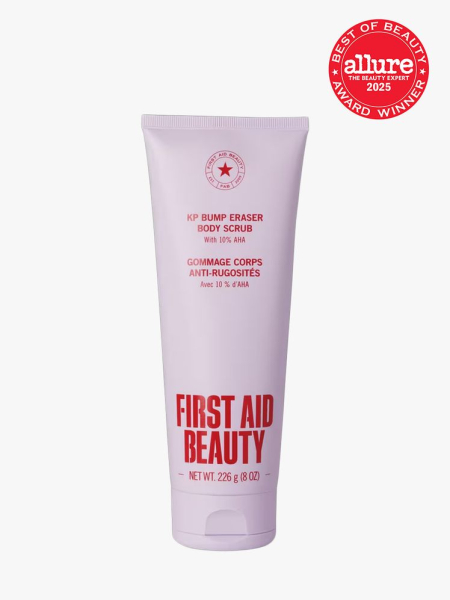 Save to wishlist
First Aid Beauty
KP Bump Eraser Body Scrub
Amazon
Nordstrom
Dermstore
Allure former content director Kara McGrath using First Aid Beauty’s KP Smoothing Body Lotion
Kara McGrath
Why it’s worth it: If you've got keratosis pilaris, chances are you've cycled through more body scrubs and lotions than you can count—only to end up with the same stubborn bumps. “KP is one of those conditions where patients often feel like nothing works, and I find First Aid Beauty's KP Bump Eraser Body Scrub actually delivers noticeable improvement with consistent use," says Alexandra Bowles, MD, board-certified dermatologist based in Cincinnati.
This 2025 Best of Beauty-winning formula takes a two-pronged approach, pairing 10% glycolic and lactic acids (to dissolve the buildup of dead skin cells that clog hair follicles) with fine pumice buffing beads that instantly smooth rough texture. To keep all that exfoliation from feeling overly aggressive, soothing bisabolol calms potential irritation while vitamin E replenishes moisture and supports the skin barrier. “Treating KP requires patience, but this addresses the root issue rather than just temporarily softening the skin,” she says.
Tester feedback from former content director Kara McGrath
LargeChevron
"First Aid Beauty’s KP Bump Eraser Body Scrub has a potent, 10% alpha-hydroxy acid-infused formula, along with a gritty texture to double down on all the clogged pores, ingrown hairs, and keratosis pilaris along my body. This stuff means business, so I usually use this scrub once per week on problem areas, like my upper arms and back, and rougher patches of skin after cleansing." —Kara McGrath, former content director
More to know
LargeChevron
- Key ingredients: pumice buffing beads, glycolic acid, lactic acid, bisabolol, vitamin E
- Scent: none
Best Drugstore: CeraVe SA Body Wash for Rough & Bumpy Skin
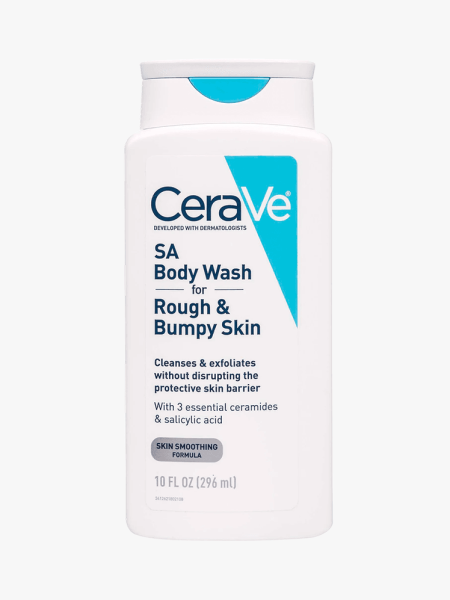 Save to wishlist
CeraVe
SA Body Wash for Rough & Bumpy Skin
Amazon
Dermstore
Allure contributing commerce writer Christa Joanna Lee using the CeraVe SA Body Wash for Rough & Bumpy Skin
Christa Joanna Lee
Why it’s worth it: When it comes to skin care, CeraVe is one of the best-known drugstore brands around, and their SA Body Wash for Rough & Bumpy Skin is a derm go-to for smoothing and restoring rough skin. “It cleanses and exfoliates while simultaneously helping to restore the skin barrier with three essential ceramides,” says Y. Claire Chang, MD, a board-certified dermatologist based in New York City. In addition to barrier-repairing ceramides, the formula includes salicylic acid to clear pores and gently exfoliate, as well as hyaluronic acid and niacinamide to deeply hydrate, soothe, and strengthen the skin. It’s fragrance-free and non-stripping, making it ideal for those with sensitive skin.
Tester feedback from contributing commerce writer Christa Joanna Lee
LargeChevron
“I’ve dealt with strawberry skin on my thighs and upper arms for most of my life, and this is one of the few body washes that actually helps without irritating my skin. The gel texture feels silky going on, builds a satisfying lather, and somehow manages to exfoliate while leaving my sensitive skin feeling calm, moisturized, and noticeably smoother.” —Christa Lee, contributing commerce writer
More to know
LargeChevron
- Key ingredients: salicylic acid, hyaluronic acid, ceramides, niacinamide
- Scent: none
Best for Dry Skin: Glytone Exfoliating Body Wash
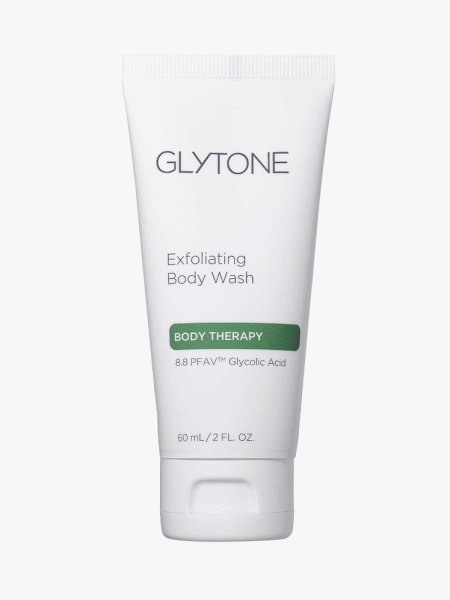 Save to wishlist
Glytone
Exfoliating Body Wash
Amazon (2 fl oz.)
Dermstore (6.7 fl oz.)
Why it’s worth it: Glytone literally takes its name from its hero ingredient, glycolic acid, "which is one of the most well-researched AHAs for improving skin texture, tone, and overall radiance," says Dr. Bowles. Glycolic acid exfoliates dead skin cells that can otherwise contribute to rough patches and keratosis pilaris, while glycerin offsets dryness by drawing moisture into the skin. "It's effective without being overly harsh, and it works well for people dealing with rough skin or dullness on the body," says Dr. Bowles, who recommends letting it sit on the skin for a minute or two before rinsing to maximize the exfoliating benefits.
More to know
LargeChevron
- Key ingredients: glycolic acid, glycerin
- Scent: none
Best for Acne: Byoma Blemish Acne Clearing Body Wash
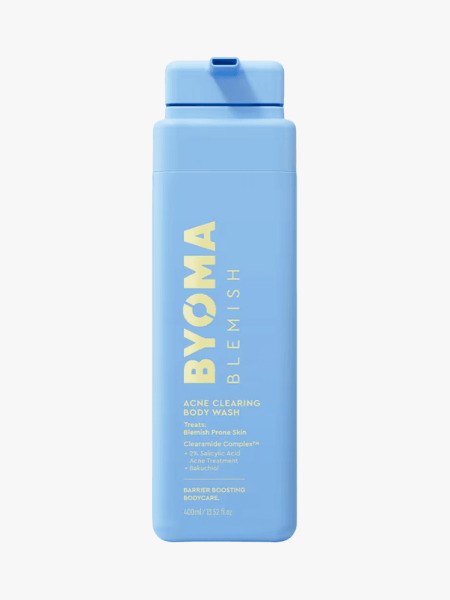 Save to wishlist
Byoma
Blemish Acne Clearing Body Wash
Amazon
Ulta Beauty
Why it’s worth it: If you're prone to body acne, one of the easiest ways to keep breakouts at bay is by reaching for an exfoliating body wash. Byoma's Blemish Acne Clearing Body Wash combines 2% salicylic acid to unclog pores and reduce excess oil, and bakuchiol (a gentle alternative to retinol) to promote skin cell turnover and reduce the appearance of uneven texture. "What I appreciate about this one is that it tackles body acne without completely wrecking the skin barrier, which is a common complaint I hear from patients who've tried more aggressive options," says Dr. Bowles. Alongside the salicylic acid, the formula features ceramides and glycerin to nourish and comfort skin. "The texture is lightweight, which helps with consistently remembering to use it,” she says.
More to know
LargeChevron
- Key ingredients: 2% salicylic acid, bakuchiol, glycerin, ceramides
- Scent: none
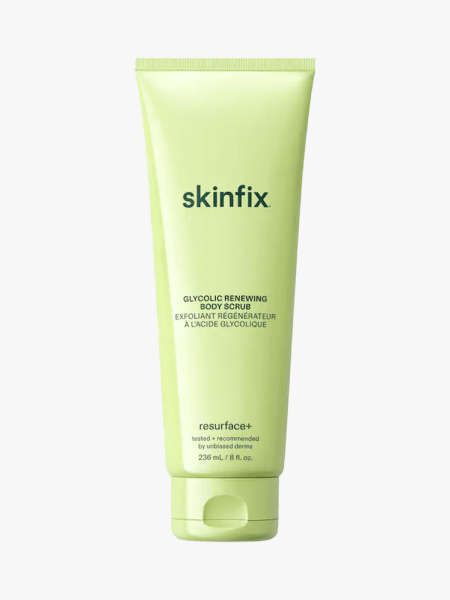
Best for Mature Skin: Skinfix Resurface+ Glycolic and Lactic Acid Renewing Body Scrub
 Save to wishlist
Skinfix
Resurface+ Glycolic Renewing Body Scrub
Sephora
Why it’s worth it: If you’re looking to improve skin texture fast, Skinfix's Resurface+ Glycolic and Lactic Acid Renewing Body Scrub combines both chemical and physical exfoliants to get the job done. “It combines willow bark extract, glycolic and lactic acids with soothing aloe and skin-conditioning ingredients,” says Dr. Engelman. “It’s great for targeting roughness, uneven tone, or post-inflammatory hyperpigmentation on the body.” While it does contain physical exfoliant particles, the super-milled texture is ultra-fine and gentle, so it won’t scratch or irritate sensitive skin. “I especially like this for patients with more advanced sun damage or those prepping for body treatments like lasers or peels,” she says. Unlike your typical body wash, this one is meant to be used on dry skin before your shower. Then, rinse off with warm water.
More to know
LargeChevron
- Key ingredients: 5% glycolic acid, 5% lactic acid, willow bark extract
- Scent: subtle and fruity, thanks to orange and lemon extract, with zero added fragrance
Frequently Asked Questions
Is it okay to use an exfoliating body wash daily?
Using an exfoliating body wash every day isn’t always the best idea, especially if you have sensitive or dry skin. “I do not typically recommend using an exfoliating body wash every day, as this can dry out the skin and cause irritation, especially in those with sensitive skin,” says Dr. Chang. “I recommend using exfoliating body washes two or three times per week as tolerated, and alternate with a gentle hydrating body wash.” If your skin starts to feel tight, itchy, or irritated, it’s a sign to scale back and focus on replenishing your barrier with more moisturizing formulas in between.
What is the best exfoliating body wash for sensitive skin?
The best exfoliating body wash for sensitive skin is one that uses gentle chemical exfoliants and includes barrier-supporting ingredients. “For those with sensitive skin, I recommend gentle exfoliants like lactic acid and PHA, both of which are unique in that they exfoliate and hydrate at the same time,” says Dr. Chang. She adds that low concentrations of salicylic acid and glycolic acid may also be tolerated, but higher concentrations can be too harsh. “I also typically prefer chemical exfoliants over physical exfoliants, which may cause excessive irritation and inflammation of the skin.” Look for formulas with added hydrators, such as ceramides, aloe, or hyaluronic acid, to keep the skin calm and balanced.
Meet the experts
- Alexandra Bowles, MD, board-certified dermatologist at MONA Dermatology based in Cincinnati
- Y. Claire Chang, MD, a board-certified dermatologist at UnionDerm based in New York City
- Dendy Engelman, MD, a board-certified cosmetic dermatologist and Mohs surgeon at Shafer Clinic based in New York City
How we test and review products
When Allure tests a product, our editors look at it from every angle in an effort to best serve you. We review ingredients, scrutinize brand claims, and, when necessary, examine peer-reviewed scientific and medical studies. In addition to testing each and every product that's included in each and every review, we rely on experts who shape their fields, including dermatology, cosmetic chemistry, and medicine, to help us vet the ingredients and formulas.
For our list of the best exfoliating body washes, we considered each product's performance across five primary categories: product ingredients and efficacy, packaging, fragrance, texture, and product wear. Every product was determined to have excelled in each category by our editorial team, which is composed of in-house writers and editors as well as contributors—along with special consideration from dermatologists. To learn more information on our reporting and testing processes, read our complete reviews process and methodology page.
Our staff and testers
A beauty product is a personal purchase. You might be searching for a face cream to address persistent dryness or a new nail product to add to your Sunday self-care routine; you may simply be browsing around for the latest launches to hit the hair market. No matter what you seek or your individual needs and concerns, Allure wants to ensure that you love anything we recommend in our stories. We believe that having a diverse team of writers and editors—in addition to the wide range of outside testers and industry experts we regularly call upon—is essential to reaching that goal.
After all, can we really say a skin-care product is the "best" for people over 50 if the only testers we've solicited opinions from folks who have yet to hit 30? Can we honestly deem a high-end diffuser worthy of your hard-earned cash if it's never been tested on curls? We're proud that our staff spans a wide range of ages, skin tones, hair textures, genders, and backgrounds, which means that we are able to fairly assess any beauty product that comes into the beauty closet.
10 Best Showerhead Filters 2026 for Silky Hair and Clear Skin
 Adobe StockSave this storySave this story
We treat viral products with a healthy dose of skepticism, but some experts say the best showerhead filters can actually make a meaningful difference in your routine. Why? It’s not uncommon for your local water supply to contain rust, sediment, chlorine, or an excess of minerals like calcium and magnesium. While these so-called contaminants don’t make the water dangerous to drink, they can make it harder (hence the term “hard water”) on your skin and hair, explains Omer Ibrahim, MD, a Chicago-based board-certified dermatologist. Over time, they can contribute to dullness, dryness, irritation, and itchiness. People with sensitive or extra dry skin, eczema, or rosacea may feel these effects more acutely, says Debra Luftman, MD, a board-certified dermatologist based in California.
Installing a showerhead filter, many of which use materials like activated carbon and calcium sulfite to remove contaminants from water, can alleviate some of those issues. “Patients sometimes report that their skin feels less tight and their hair appears softer after switching to a quality filter,” says Dara Spearman, MD, a board-certified dermatologist in Fort Wayne, Indiana.
Our Top Showerhead Filters
- Best Overall: Jolie Filtered Showerhead, $169
- Best Bath Tub Filter: Canopy Baby Bath Tub Filter, $89
- Best Universal Filter: AquaBliss SF100 Daily Revitalize Shower Filter, $37
- Best Handheld Showerhead: Aquasana Showerhead Filter, $100
- Best for Aromatherapy: Canopy Filtered Showerhead, $150
- Best Budget: Sprite Slim-Line Shower Head Filter, $28
Frequently Asked QuestionsLargeChevron
- How does hard water affect my skin and hair?
- How does a filtered showerhead benefit my skin and hair?
- Are there any shower water filters that actually work?
- What are the disadvantages of shower filters?
- Meet the experts
- How we test and review products
- Our staff and testers
Pause for the aforementioned skepticism: The science on the efficacy of showerhead filters is still limited, and your results will largely depend on the content of your area’s water supply, but showerhead filters can potentially help alleviate dry skin and brittle hair—all while making your “everything showers” feel a little more special. Below, we tapped experts and editors to share which filtered showerheads are worth trying.
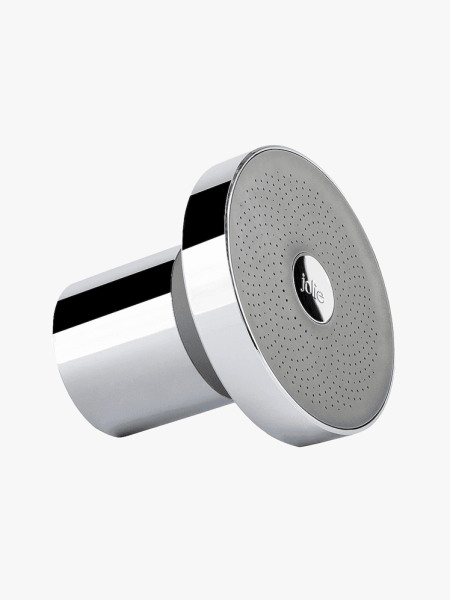
Best Overall: Jolie Filtered Showerhead
 Save to wishlist
Jolie
Filtered Showerhead
Amazon
Ulta Beauty
Revolve
Why we love it: With its comprehensive filter and intentional design, Jolie’s Filtered Showerhead is well worth the investment and hype, according to Dr. Ibrahim. “While this one is on the pricier side, it is a full filter system with an aesthetically pleasing showerhead,” he says. (It comes in four chic colors, a.k.a. no eyesores here.) Setup is easy-breezy, too: Remove your existing showerhead and screw on the Jolie in its place. You should be able to remove and replace the showerheads by hand, but the included wrench comes in handy if you need to loosen or tighten any pipe threads along the way (and the included plumber’s tape can further seal off the pipe connections to prevent leaks). Once it’s in place, the filter will improve your water quality and keep the water pressure strong.
Plus, Dr. Spearman appreciates the brand’s transparency around its filtration system. Jolie utilizes KDF-55 (a type of copper-zinc alloy filter) and calcium sulfite to minimize levels of chlorine, heavy metals, and minerals in your shower water for up to 90 days. After that, you can just swap in a new filter for $38 a pop—or opt for a subscription on Jolie’s website that brings the cost to $35 per filter.
More to know
LargeChevron
- Type of filter: KDF-55, calcium sulfite
- Notable features: easy, universal installation
- Set includes: showerhead, replacement filter, wrench, plumber’s tape
- How long it lasts: 3 months
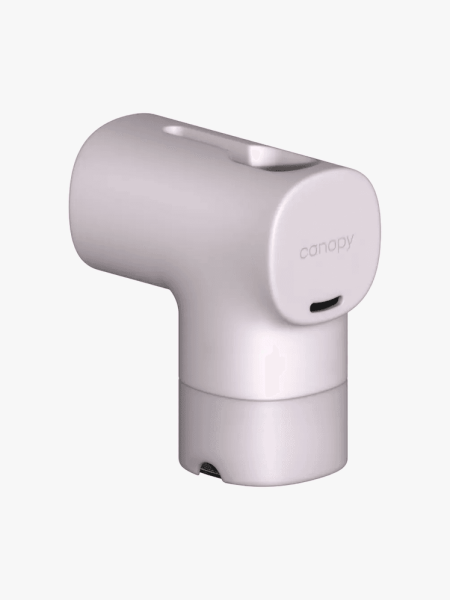
Best Bathtub Filter: Canopy Baby Bath Tub Filter
 Save to wishlist
Canopy
Baby Bath Tub Filter
Amazon
Nordstrom
Why we love it: Whether you’re gearing up for tub time with your little one or you’re more of a bath person yourself, Canopy’s Baby Bath Tub Filter will make your next soak more comfortable. It’s made to filter out chlorine and particles that can cause redness, flaky skin, and overall irritation, but it’s the filter’s nice-to-have features that really make it stand out. Its built-in temperature indicator changes color so you know when the water is safe for baby’s skin, and its spout cover prevents accidental bumps—which contributing commerce editor Deanna Pai says is a huge bonus. (No ouchies here!) While Pai doesn't have a hard-water issue, she saw no harm in eliminating any water-quality-related issues since her older daughter has eczema. “I’ve noticed that my younger baby's skin is smooth and soft post-bath, even before I slather her in lotion,” she says. “No sign of eczema in the baby so far, and while I can’t definitively credit the filter, I appreciate the unsung work that it might be doing!”
The filter also installs without any finicky tools: First, slide one of the included attachment bands over your faucet, then follow with the filter itself. Press it into place on the band, and you’re good to go—all you need is your trusty rubber duck.
More to know
LargeChevron
- Type of filter: activated carbon, calcium sulfite, copper-zinc
- Notable features: dishwasher-safe parts, temperature indicator
- Set includes: bath tub filter, filter cartridge, 2 attachment bands
- How long it lasts: 3 months
Best Universal Filter: AquaBliss SF100 Daily Revitalize Shower Filter
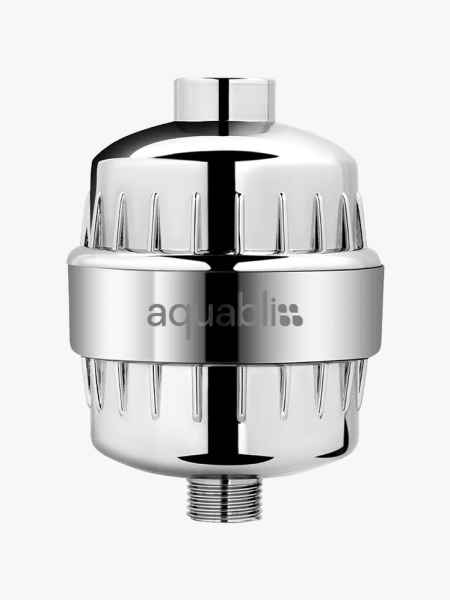 Save to wishlist
AquaBliss
SF100 Daily Revitalize Shower Filter
Amazon
Walmart
Why we love it: Don’t want to update to a new showerhead? You don’t have to with the AquaBliss Daily Revitalize Shower Filter. This teensy addition to your shower setup removes metal and sediment buildup floating in your water with a comprehensive, layered filtration system. But it isn’t all about what it takes out: This filter also infuses your shower water with vitamin C to help reduce chlorine and boost your skin and hair’s radiance, so it’s a preventative and proactive step in one sleek gadget. It also has a universal fit that works with any showerhead, including rain showers, which is a major plus for Dr. Spearman. She also recommends AquaBliss for its replacement filter subscriptions (one less task to remember!).
More to know
LargeChevron
- Type of filter: sand, stainless steel mesh, cotton, calcium sulfite, Redox media (copper-zinc alloy), activated carbon
- Notable features: vitamin C infusion
- Set includes: filter housing, filter cartridge, 2 screened washers, adapter, plumber’s tape, 2 replacement seals
- How long it lasts: 4 to 6 months, depending on usage frequency
Best Handheld Showerhead: Aquasana Handheld Showerhead Filter
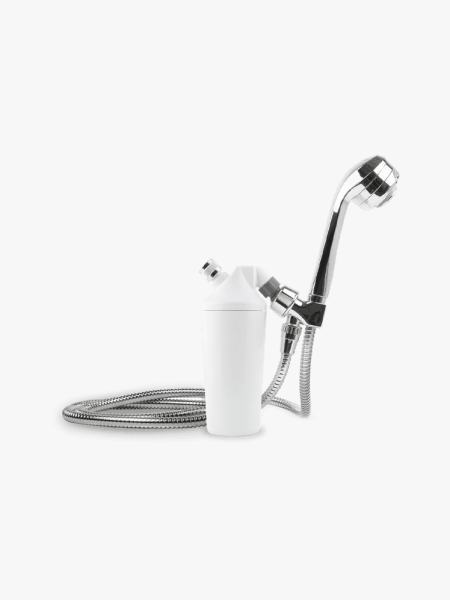 Save to wishlist
Aquasana
Handheld Showerhead Filter
Amazon
Walmart
Why we love it: Dr. Luftman highly recommends Aquasana’s line of filters for their ease of use and efficient chlorine filtration. Even though the Handheld Showerhead Filter has a few additional components, its setup is still pretty straightforward: The filter goes onto the shower pipe first, and the brand recommends flushing it with water until it runs clear before adding on more parts. Then you can screw on the hose, cradle, and wand by hand, no wrench required. Its filtration system meets the NSF water treatment standard for chlorine reduction, removing up to 90% of it from your water. (Originally called the National Sanitation Foundation, NSF is a global health nonprofit that independently tests products like water systems, food equipment, and dietary supplements to certify that they do what they claim and are safe to use.) Chlorine can strip away your body’s natural oils, Dr. Luftman explains, so avoiding it can help keep your hair and skin hydrated (and color-treated hair vibrant for longer).
More to know
LargeChevron
- Type of filter: coconut shell carbon, copper-zinc
- Notable features: rain and massage settings
- Set includes: shower filter, hose, cradle assembly, shower wand (pliers recommended to tighten the filter’s collar, but not included)
- How long it lasts: 6 months
Best for Aromatherapy: Canopy Filtered Showerhead
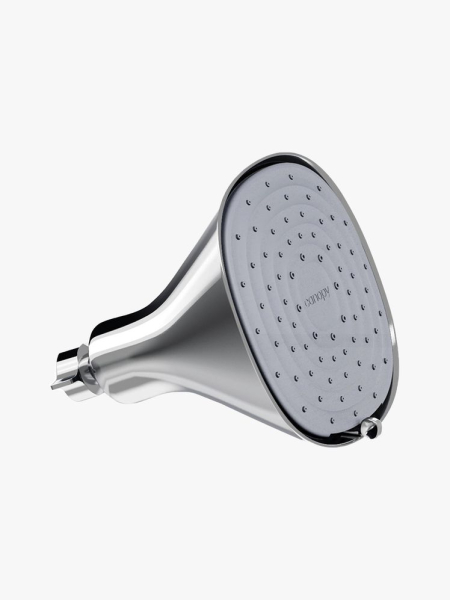 Save to wishlist
Canopy
Filtered Showerhead
Amazon
Nordstrom
Sephora
Why we love it: Bring the spa to your bathroom with Canopy’s Filtered Showerhead, a fave among derms and hairstylists alike. Dendy Engelman, MD, a board-certified dermatologist based in New York City, previously vouched for its intensive filtration system consisting of granular activated carbon, a copper-zinc complex, and calcium sulfite to remove contaminants. Adir Abergel, a hairstylist and creative director of Virtue Labs, also gave it a shoutout: “I tell all my clients about the Canopy. It helps you hold color longer and also seals the cuticle to maintain shine.” And about those spa vibes: This showerhead comes with a tiny essential oil diffuser that hooks onto its arm, so you can indulge in the aromatherapeutic benefits of Canopy’s energizing and relaxing scents. (Just add a few drops onto the felt body.) Matcha Blossom or Vanilla Noir, anyone?
More to know
LargeChevron
- Type of filter: granular activated carbon, copper-zinc, calcium sulfite
- Notable features: felt essential oil diffuser
- Set includes: showerhead, showerhead filter, aroma oil sleeve, felt diffuser, Canopy’s Unwind Aroma Oil
- How long it lasts: 3 months
Best Budget: Sprite Slim-Line Shower Head Filter
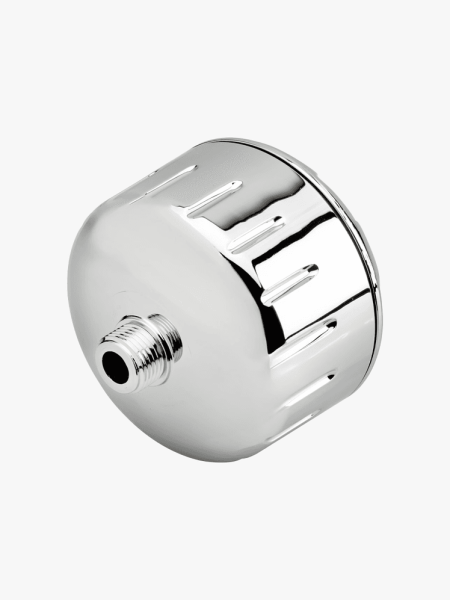 Save to wishlist
Sprite
Slim-Line Shower Head Filter
Amazon
Walmart
Why we love it: You don’t have to make a dramatic investment to try a showerhead filter, especially if you have lingering skepticism. (Fair!) Sprite’s Slim-Line Shower Head Filter is another pick from Dr. Luftman that clocks in under $30. It removes chlorine, dirt, and odors from shower water with the brand’s patented Chlorgon filter. Translation: As part of its filtration process, it converts chlorine into chloride salt, which is harder for the skin to absorb and thus less likely to cause any barrier damage. While it doesn’t come with a ton of bells and whistles, this filter is easy to install, beginner-friendly, and won’t disrupt your setup if you’re happy with your current showerhead.
More to know
LargeChevron
- Type of filter: copper-zinc, calcium sulfite
- Notable features: Sprite Showers app for tracking filter use (Apple, Google Play)
- Set includes: filter housing, filter cartridge
- How long it lasts: 6 months
Frequently Asked Questions
How does hard water affect my skin and hair?
Considering hard water contributes to soap scum (as in, that gross layer of grime that can build up on your shower floor if you don’t clean it often enough), it’s no surprise that it can also lead to buildup on your body and hair, according to Dr. Ibrahim. “For people who have hard water in their shower, they’ll often see a layer of soap scum on their walls–that’s due to the minerals reacting to soap to form this insoluble layer,” he explains. When that layer of “scum” develops on your body, it can exacerbate dryness and inflammation, especially for those with skin conditions like eczema, psoriasis, keratosis pilaris, and even acne.
As for your hair, that layer of minerals leads to a dry, brittle texture and dull color (a major bummer if you pay for expensive color treatments). “Hard water can also exacerbate dandruff or seborrheic dermatitis,” adds Dr. Ibrahim.
How does a filtered showerhead benefit my skin and hair?
These filters, also known as water softeners, cleanse your tap water of mineral buildup and replace them with sodium through a process called ion exchange, Washington, DC-based dermatologist Adam Friedman, MD, previously told Allure. This process lowers the water’s concentration of mineral sediments, minimizing buildup and, potentially, irritation. To that end, “shower filters can help as long as they include a water-softening system,” says Dr. Ibrahim. These “water-softening systems” include filtration mediums such as KDF-55 (a combination of carbon and zinc) and calcium sulfite. By removing these minerals from your shower water, they can deliver calmer, healthier skin—not to mention shinier, softer hair. Consider them a worthwhile investment for your self-care routine.
Are there any shower water filters that actually work?
Showerhead filters can certainly make a difference, provided that their filtration systems are targeting the right contaminants. That’s why it’s important to look into your area’s water quality report, Dr. Spearman says. Once you know what’s actually in your shower water (say, if it contains higher-than-average levels of chlorine), you’ll have a better idea of whether a specific showerhead filter can help with your issues.
What are the disadvantages of shower filters?
For one thing, a showerhead filter is another thing to maintain around the house. The filter needs regular replacements, which means ongoing costs, Dr. Luftman points out. There’s also a chance that it affects the water pressure in your shower, she adds.
For another, keep your expectations realistic, Dr. Spearman says. Not only do filters lose efficacy over time (which is why you need to replace them), they also can’t feasibly address every single issue with your shower’s water quality. It’s better to look for subtle improvements in the long-term, like you’re gradually benefiting your skin and hair one shower at a time.
Meet the experts
- Omer Ibrahim, MD, a board-certified dermatologist based in Chicago
- Debra Luftman, MD, a board-certified dermatologist based in Beverly Hills and Calabasas, California
- Dara Spearman, MD, a board-certified dermatologist in Fort Wayne, Indiana
- Dendy Engelman, MD, a board-certified dermatologist based in New York City
- Adir Abergel, a hairstylist and creative director of Virtue Labs
How we test and review products
When Allure tests a product, our editors look at it from every angle in an effort to best serve you. We are particularly discerning when writing about skin-care devices. This is because of the increased risks and, in many cases, the high price points that accompany at-home dermatological tools and devices.
Each device undergoes extensive testing and must be approved by a senior member of our beauty team prior to appearing in Allure. Additionally, our editorial team consults board-certified dermatologists and cosmetic chemists about the science behind product claims and independently reviews any studies cited by brands. Testers consider performance across four primary categories: efficacy, safety (including ease of use), research and the science behind specific claims, as well as product value. To learn more information on what's involved in our reporting, check out our complete reviews process and methodology page.
Our staff and testers
A beauty product is a personal purchase. You might be searching for a face cream to address persistent dryness or a new nail product to add to your Sunday self-care routine; you may simply be browsing around for the latest launches to hit the hair market. No matter what you seek or your individual needs and concerns, Allure wants to ensure that you love anything we recommend in our stories. We believe that having a diverse team of writers and editors—in addition to the wide range of outside testers and industry experts we regularly call upon—is essential to reaching that goal.
After all, can we really say a skin-care product is the "best" for people over 50 if the only testers we've solicited opinions from folks who have yet to hit 30? Can we honestly deem a high-end diffuser worthy of your hard-earned cash if it's never been tested on curls? We're proud that our staff spans a wide range of ages, skin tones, hair textures, genders, and backgrounds, which means that we are able to fairly assess any beauty product that comes into the beauty closet.

Nicole Kidman, Hollywood’s Chameleon, Only Wants to Look Like Herself
 Nicole KidmanPhoto: Getty ImagesSave this storySave this story
Nicole Kidman has received countless accolades in her decades-long career, thanks to her chameleon-like abilities on-screen. (Who can forget that prosthetic nose in The Hours?) Off-screen, though, she only wants to look and feel like herself.
“I’ve got to be able to walk a red carpet and feel comfortable,” she says, “feel like myself and feel very free. If I feel too confined, that won’t be good for anyone. That ability to feel free and normal in those really extreme situations, I’m wired for that now.”
It turns out that sense of freedom is not innate. It’s something that has come with age to Kidman, who is 59. “I started modeling at 14 and 15, and I started acting at the same time. I wanted to be an actress, but I was using the modeling to make money so that I could fund my acting,” she says. “People used to always say to me, ‘When you grow up, you’re gonna be so pretty. I was like, ‘Huh?’” The backhanded compliments did their damage. “I’d look in the mirror and I’d go, What does that mean? I wanna be pretty now. But I suppose I was a gawky kind of teenager.” Kidman, 5’10 even then, towered over her peers—“I was all arms and legs, and I didn’t have control over my body, in a way’” she says—and lamented not having pin-straight, blonde hair.
Those early tests to her confidence didn’t hamper her acting career; if anything they may have fueled it through an astonishing series of memorable roles. In 2026, she’s had another busy year (the new season of Lioness debuted this month, and the sequel to cult classic Practical Magic is slated for release in September). She also fronts a video series, The Many Sides of Radiance, a campaign for Clé de Peau Beauté, unveiled Monday, for which she has served as a spokesperson since last year. That series focuses on her acting work, her work as a producer, and her advocacy for fellow women film directors and actors.
 Nicole Kidman in Clé de Peau Beauté's “The Many Sides of Radiance” campaign.Courtesy of Clé de Peau Beauté
It’s what Kidman calls “the many sides of myself.” In pursuit of those different facets, she’s not a stranger to adventure, having done an Allure cover interview last year in a hyperbaric oxygen chamber. For her work on camera, she says, “I love the idea of creating a character. That’s what makeup costumes, hair, all of it—even changing the way you move, does.” Those are nuances she’s always been sensitive to. Prior to technicolor, she notes that movement coaches were de rigueur, and she’s enthused by their return. “They’re really utilizing how you can become different characters,” she says, “I have zero interest in playing myself on screen.”
Looking back, she sees those criticisms from her earlier days from a different vantage point. “I understand what they were saying, in a way,” she says of past critics. “But I feel pretty now. I just go, okay, well, this is who I am. I’m grateful to have what I have and to be able to use it. I also think because of my coloring and the way in which my face is structured, I can morph and change so easily because I don’t really have any dominant features.” She’s also found different ways to modify her beauty routine, in that vein. “I do dermaplane, which I’d never done,” she says. “I started that about a year ago, and I feel like my moisturizer goes on more easily, the serums that I use. I’d been scared of it because I thought it’s like shaving. But it just gives my skin this natural exfoliation.”
Other recent interests of Kidman’s go beyond beauty. A lover of tennis, she just finished watching Rafa, the Netflix documentary series on Rafael Nadal; reading Arundhati Roy’s memoir Mother Mary Comes to Me, and is knee deep in The Things We Never Say by Elizabeth Strout. “Some of those are odd recommendations,” she says recognizing the variances among her interests, “but that’s my cultural type.”
Everything You Need to Know About Hair Removal If You Have Psoriasis
 AdobeSave this storySave this story
While psoriasis can come with its fair share of everyday annoyances, hair removal should be a relative breeze as long as you don’t have an active flare-up. “The truth is that most people with psoriasis are not tremendously bothered by gentle hair removal as long as their psoriasis is controlled,” says Shira Y. Wieder, MD, a board-certified dermatologist at Montefiore Einstein Advanced Care in New York City.
Anyone who hasn’t found an effective method to ward off their psoriasis flares should take serious precautions before doing any type of hair removal, as it carries a real risk of triggering new plaques even in areas that weren’t affected before. However, if your psoriasis is well managed by prescription treatments, you’ll likely be able to shave, laser, wax, and pluck almost exactly like anyone else. “The risk of triggering new plaques drops but doesn’t fully disappear,” says Divya Shokeen, MD, a board-certified dermatologist and founder of OSVI Dermatology and Surgical Institute in California. Here are a few precautions to keep in mind to avoid irritating your skin and triggering a flare-up.
Meet the experts:
- Shailer Carruth is a licensed esthetician in Brattleboro, Vermont.
- Tracy Evans, MD, is a board-certified dermatologist and the medical director of Pacific Skin and Cosmetic Dermatology in California.
- Divya Shokeen, MD, is a board-certified dermatologist and founder of OSVI Dermatology and Surgical Institute in California.
- Shira Y. Wieder, MD, is a board-certified dermatologist at Montefiore Einstein Advanced Care in New York City.
In this story:
- How having psoriasis can affect hair removal
- The best hair removal methods for psoriasis-prone skin
- Hair removal methods to approach with caution
- What to do if hair removal causes a flare-up
How Having Psoriasis Can Affect Hair Removal
“It’s one word: Koebnerization,” Dr. Shokeen says of what can make hair removal trickier for people with any inflammatory condition like psoriasis, especially during an active flare. For people with psoriasis, the Koebner effect occurs when trauma stimulates the immune system to develop plaques, Dr. Wieder says. In other words, if your psoriasis is active and you suffer any sort of minor skin injury (like a nick from a razor or a burn from too-hot wax), you could see more psoriasis, especially if it’s close to a psoriatic plaque, Dr. Shokeen says.
She emphasizes that this does not mean your psoriasis is “spreading” because psoriasis is not an infectious disease (meaning it’s not contagious). Instead, these minor injuries can start a new inflammatory reaction anywhere on the body, especially if your psoriasis is not controlled by medication.
In addition to the risk of Koebnerization, people with psoriasis tend to have drier skin, which compromises the skin barrier, Dr. Shokeen says. This means the skin can become irritated fairly easily. As a result, it “tends to develop more redness, stinging, or lingering marks from things that a non-psoriatic patient would tolerate,” she explains.
With all of that in mind, the first step in safe hair removal should be to manage your psoriasis with prescription treatments, many of which can completely eliminate symptoms. This is especially true if you’re taking an injectable medication like the biologics Humira or Skyrizi, says Tracy Evans, MD, a board-certified dermatologist and the medical director of Pacific Skin and Cosmetic Dermatology in California. However, since psoriasis can only be managed and not cured, the risk of Koebnerization from hair removal remains for anyone with the condition, although it’s much lower in those cases.
On the flip side, if you’re still in the process of finding a psoriasis treatment that works for you, Dr. Shokeen says all hair removal methods carry a high risk. “Anything that’s causing repeated, mechanical trauma could potentially trigger your psoriasis.”
The Best Hair Removal Methods for Psoriasis-Prone Skin
If your psoriasis is well managed and the hair removal method is performed correctly, the dermatologists interviewed here agree you’ll likely be fine to use any method as long as you do so carefully. However, they note you should ideally speak with your own doctor before trying anything new. It will ultimately be a matter of trial and error to find which one works best for you, but these are a few safer options to consider.
Shaving
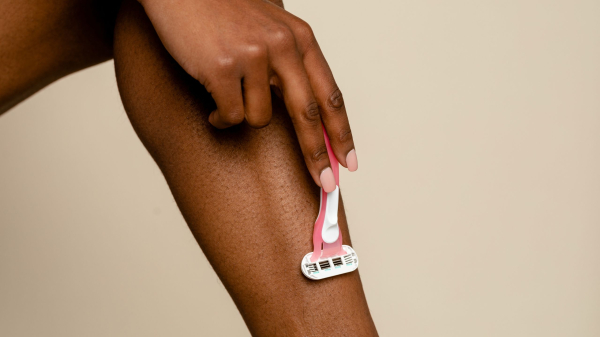
All three dermatologists interviewed for this piece agree that, aside from the risk of accidental cuts that could cause skin trauma, shaving is one of the safest hair removal methods for people with psoriasis. With shaving, “you’re [removing hair] above the follicle, not pulling it out,” Dr. Evans explains.
Dr. Wieder agrees and notes that it’s especially important for people with psoriasis to use a sharp razor and shave in the direction of hair growth rather than against the grain. Both will help ward off the irritation that can trigger Koebnerization. And if you’re trying to navigate around a psoriasis plaque, proceed with caution. “Avoid shaving off the scales because it’ll bleed underneath,” Dr. Wieder says.
Laser hair removal
Laser hair removal might sound like it carries a high risk of causing trauma, but the dermatologists interviewed agree it’s actually one of the safer options for psoriasis patients, as long as it is administered correctly. (Laser burns have the potential to cause, say it with us, Koebnerization.) “Even though you would think [a laser] would be traumatic to the hair follicle, it does seem to be safe,” Dr. Wieder says, pointing to studies on lasers that have shown their potential for treating psoriasis. Dr. Evans echoes this, noting that “heat and light” don’t seem to be an issue for people with psoriasis.
“I do laser hair removal on psoriasis patients all the time,” Dr. Shokeen says. She notes her preference for long-pulsed Nd:YAG lasers (1,064 nm), though she says diode lasers (about 800 to 810 nm) can also work if the settings are dialed down. Either way, it can be a tricky balance to get the levels just right, and the settings will need to be adjusted for each patient.
“If the energy of the device is too low, you’ll actually get hair regrowth,” she says. “It’s complicated to treat a psoriatic patient [with lasers], to say the least.” That’s why she always recommends that people who have psoriasis get laser hair removal in “a physician-supervised, medical-grade setting rather than a standard laser chain. There are more med spas than McDonald’s,” she says, noting her skepticism that all the people employed in those many locations would be fully trained to treat people with psoriasis.
Hair Removal Methods to Approach With Caution
As mentioned above, if your psoriasis is well controlled, you will likely be okay no matter how you remove unwanted hair as long as it’s done carefully. However, these methods carry some extra risks worth considering.
Depilatories
Hair removal creams (depilatories) may be a good option for someone with psoriasis because, like shaving, they don’t cause much trauma to the hair follicles. However, Dr. Wieder notes that these products can be irritating to many people, with or without psoriasis, so she always recommends a patch test beforehand on the areas where you plan to apply the depilatory. If you want to use it on your face, for example, Dr. Wieder recommends trying “some spots under the chin to see if you can tolerate it.”
Waxing
Although people with psoriasis can certainly get waxed, it’s the method that arguably comes with the most risk. “Waxing could pull on the skin and create microabrasions or tears,” says Dr. Evans. She says psoriasis is more likely to develop on areas that have been injured, even if the damage is minor. Dr. Evans also cautions that if the skin is damaged by waxing, new flare-ups could occur even in areas where you didn’t have plaques before.
For this reason, Shailer Carruth, a Vermont-based esthetician who specializes in Brazilian waxing, says she waxes with her eyes as well as her hands. “The first thing I do if I’m going to wax someone who has psoriasis is check for any broken skin,” she says.
If you’re going the DIY route, Carruth recommends using a hard wax, which adheres only to the hair, not the surrounding skin. A sticky strip wax, on the other hand, is going to exfoliate the top layer of skin, which could further aggravate a psoriatic flare-up.
Tweezing
“Plucking is very traumatic to the hair follicles,” Dr. Wieder says, so you’ll want to tweeze with caution if it is your preferred method. While Dr. Evans notes that it’s relatively uncommon to get psoriasis on the face, it’s not impossible, so you should think twice about plucking if you’re prone to getting plaques there.
What to Do If Hair Removal Causes a Psoriasis Flare-Up
Although hair removal is generally safe for people with controlled psoriasis, if you get any micro-injuries during the process, there is a small risk that it could trigger a flare-up. If that happens, Dr. Evans says you can use your topical prescription medication to treat the area. If the flare persists, reach out to your dermatologist.
Beginner’s Guide to Skin Care: How to Build Your Routine
 Photo: Adobe StockSave this storySave this story
If there is one certainty among the many, many uncertainties in our world right now, it is this: Taking the time to care for ourselves should no longer be considered an indulgence. Rather, for so many reasons, it is a necessity. With skin care, though, there is another undeniable truth: It can often feel overwhelming. "The skin-care market has really boomed in the last few years," says Sejal Shah, MD, a board-certified dermatologist. "While this is great because it gives us a variety of new ingredients and formulations, this can be really confusing for the consumer—especially a newbie."
So forget everything you’ve seen on TikTok and start here, with this simple, no-nonsense guide to building a skin-care routine. We consulted a team of dermatologists to walk us through exactly which products you need, how to use them, which ones to avoid, and when to level up.
In this story:
- The Basics
- Skin-Care 101: The Foundation of Your Routine
- Skin-Care 201: Extra Credit
The Basics
Start simple
They say a good chef must first master a simple omelet. Think of your skin-care routine as your omelet. After you have a solid foundational routine in place and know that you can stick to it, you can add ingredients, if you choose. “You don’t need a dozen products to have healthy skin,” says board-certified dermatologist Jenna Queller, MD. “In fact, the more products you introduce at once, the harder it becomes to know what’s actually helping and what’s causing irritation.”
It may not sound very exciting, but keeping to the essentials and avoiding trendy ingredients or methods is your best bet. “Social media often promotes products that aren’t appropriate for everyone,” Dr. Queller says. Instead, she recommends “choosing products based on your skin type and concerns, rather than what’s currently popular online.”
Consider your skin type
Dr. Queller says she frequently sees people using products designed for someone else's skin type. “A friend’s favorite product may not be appropriate for your skin, and what works well for one person can cause irritation or breakouts for another.”
Introduce one product at a time
Start simple and slow. “I recommend introducing only one new product every two to four weeks,” says board-certified dermatologist Kseniya Kobets, MD. “That way, if you develop irritation, it’s much easier to identify the culprit instead of guessing between five new products.”
Stay consistent
Sticking with your routine—provided you don't have any reactions to the products—is key to seeing results. “One of the biggest misconceptions is that skin care works overnight,” says Dr. Queller. “Most active ingredients need at least six to 12 weeks of consistent use before you see meaningful improvement.”
Don’t be afraid to ask for help
You don’t have to do this alone. If you’re dealing with issues like persistent acne, eczema, rosacea, melasma, or just want to fact-check your routine, it’s worth visiting a dermatologist. “A personalized treatment plan can often save months of frustration,” says Dr. Queller, “and help you achieve better results more quickly.”
Skin-Care 101: The Foundation of Your Routine
Step 1: Cleanse
You can’t cook an omelet in a dirty pan (well, you can, but it wouldn’t pass a health inspection). Using a gentle cleanser twice per day—once in the morning, once in the evening—is where you should start.
Cleansing in the morning will help remove any evidence of sweat or oil left from your beauty sleep, says board-certified dermatologist Divya Shokeen, MD. If you have very dry or sensitive skin, you can skip the product and just rinse your face with water in the morning to keep things as gentle as possible; but cleansing in the evening is a nonnegotiable, since you’ll have accumulated a day’s worth of all kinds of pore-clogging culprits (makeup, sweat, dead skin cells, and other debris). Plus, Dr. Queller notes, “a properly cleansed face allows the rest of your skin-care products to work more effectively.”
Lukewarm water is best, as hot water can cause redness or irritation. And though you may see all manner of scrubbers, washcloths, and brushes online, Dr. Queller says good old-fashioned fingertips are the best option, as brushes can be harsh on the skin and bristles or fabric collect bacteria over time. “Massage the cleanser into the skin for about 30 to 60 seconds before rinsing,” she says.
Choosing a facial cleanser for this step depends entirely on your skin type. When in doubt, though, “any skin type will tolerate a hydrating cleanser,” says board-certified dermatologist Michele Farber, MD.
Oily skin
For oily skin types Dr. Kobets recommends a foaming cleanser, because the lather literally breaks down and lifts away excess oil and dirt from your pores, which, left uncleansed, would eventually lead to a breakout. She suggests Avène Tolerance Foaming Facial Cleanser—formulated with trusty hydrating ingredients like niacinamide and glycerin—as the foaming action doesn’t strip away too much moisture.
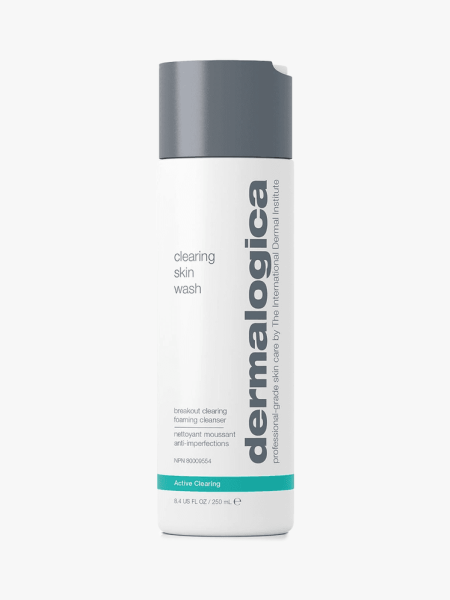
For those battling breakouts or acne, a more targeted cleanser could do the trick. PanOxyl Acne Foaming Wash uses a high concentration of benzoyl peroxide, which, Dr. Kobets says, can help kill acne-causing bacteria. Or try Dermalogica Acne Clearing Skin Wash, which is formulated with salicylic acid and clears away buildup in your pores.
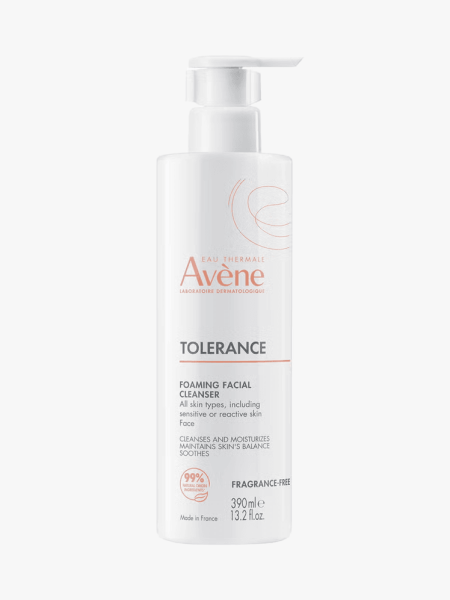 Save to wishlist
Avène
Tolerance Foaming Facial Cleanser
Amazon
Dermstore
Ulta Beauty
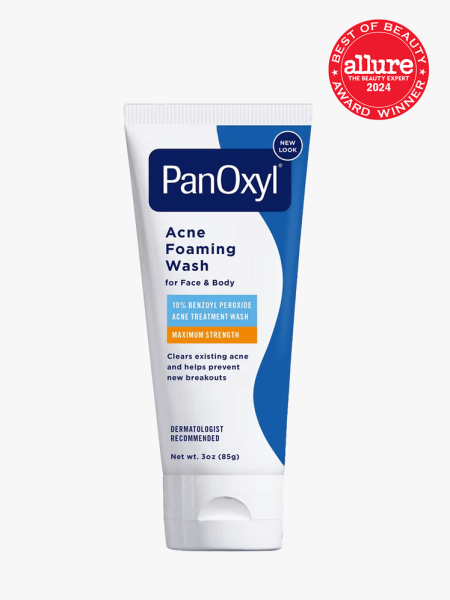 Save to wishlist
Panoxyl
Acne Foaming Wash
Amazon
 Save to wishlist
Dermalogica
Acne Clearing Skin Wash
Amazon
Ulta Beauty
Dry skin
“If your skin feels tight after washing, opt for a hydrating cleanser,” says Dr. Kobets, who recommends Prequel Gleanser and CeraVe Hydrating Cleanser. They contain the same type of hydrating ingredients, like hyaluronic acid and glycerin, you might see in moisturizers.
Dr. Queller seconds the CeraVe cleanser suggestion, but also recommends La Roche-Posay Toleriane Hydrating Gentle Cleanser: “They’re both excellent options because they contain ceramides and other moisturizing ingredients that help support the skin barrier while leaving the skin clean, soft, and hydrated, rather than tight or dry,” she says.
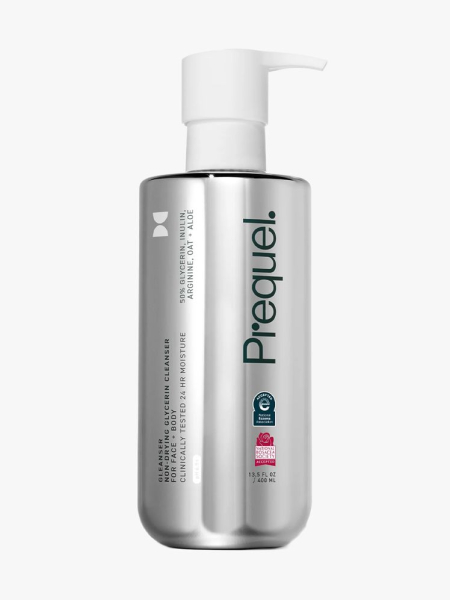 Save to wishlist
Prequel
Gleanser
Amazon (2-Pack)
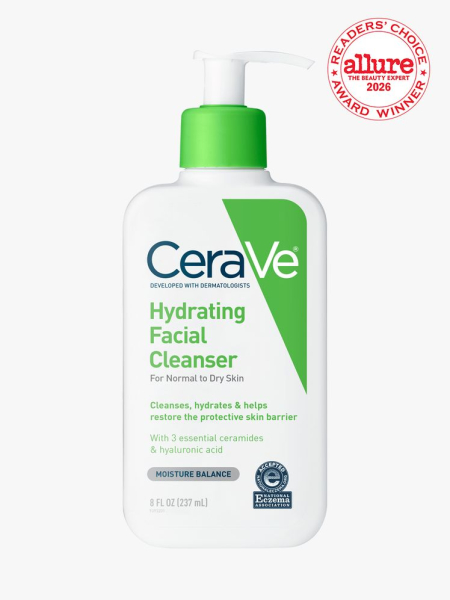 Save to wishlist
CeraVe
Hydrating Cleanser
Amazon
Ulta Beauty
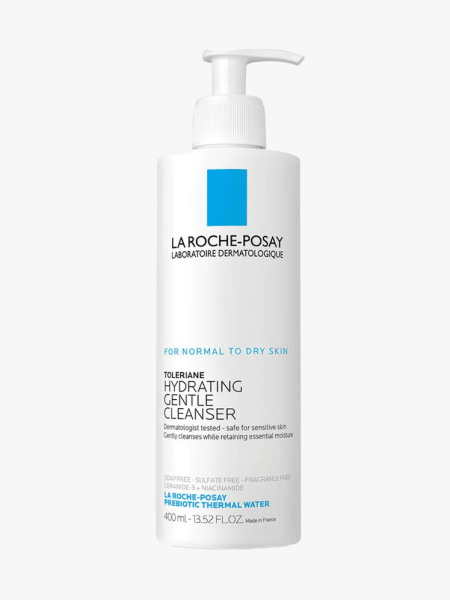 Save to wishlist
La Roche-Posay
Toleriane Hydrating Cleanser
Amazon
Ulta Beauty
Sensitive skin
Hydrating cleansers are usually good options for those prone to inflammation, but be sure they don’t include any added fragrance, essential oils, or botanical extracts. “They can be common causes of allergic reactions and irritation,” says Dr. Queller, who recommends Vanicream Gentle Facial Cleanser because “it gently cleanses the skin without compromising the skin barrier.” Opting for a cleanser with soothing ingredients like aloe or oat extract, found in Tower 28 SOS Gentle Hydrating Gel Cleanser, can help calm down an active flare-up.
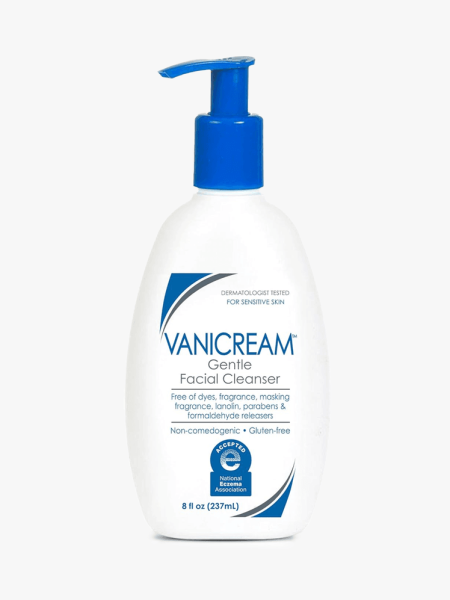 Save to wishlist
Vanicream
Gentle Facial Cleanser
Amazon
Ulta Beauty
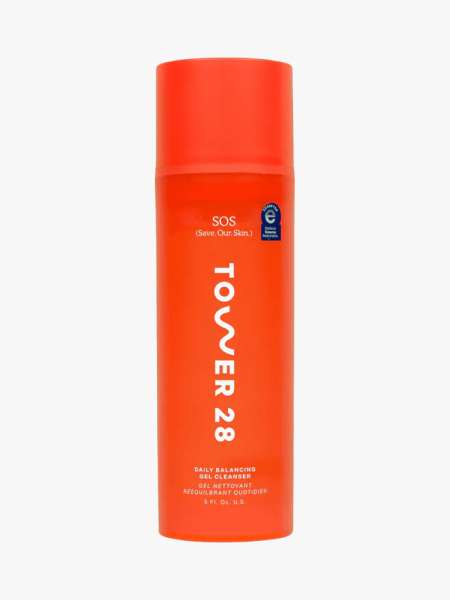 Save to wishlist
Tower 28
SOS Gentle Hydrating Gel Cleanser
Amazon
Sephora
Credo Beauty
Step 2: Moisturize
Now that you have a clean slate, it’s time to start feeding your skin the good stuff. “Moisturizer is an important step for every skin type, not just dry skin,” says Dr. Queller. “It helps support the skin barrier, prevent water loss, and keep skin balanced.”
Apply moisturizer while your skin is still slightly damp from cleansing to lock in that hydration, making sure to cover the face and neck, she adds.
Oily skin
If you have oily or acne-prone skin, please don't think you can (or should) skip daily moisturizer use. Says Dr. Shokeen, "Over-washing without the appropriate use of a moisturizer will actually trigger an over-production of oil on your skin."
Dr. Farber explains further: "No matter how oily or acne-prone your skin may feel, it will become dry without rehydration, and dried-out skin is irritated skin."
However, those with oily skin should seek out moisturizers that are labeled “noncomedogenic,” meaning a product that does not contain ingredients known to clog pores and cause more breakouts, Dr. Shokeen explains. Dr. Shokeen, Dr. Queller, and Dr. Kobets all recommend Neutrogena Hydro Boost Water Gel, a hydrating but lightweight gel-based moisturizer.
“Formulations containing larger amounts of dimethicone or richer emollients can become overly occlusive in acne-prone individuals and worsen congestion,” Dr. Kobets notes. “I generally recommend gels or lotion for patients who are oily or prone to breakouts.” If you need a slight step up from gel hydration, a lotion formula (like the CeraVe Daily Moisturizing Lotion) is a good middle ground between gel and dense cream.
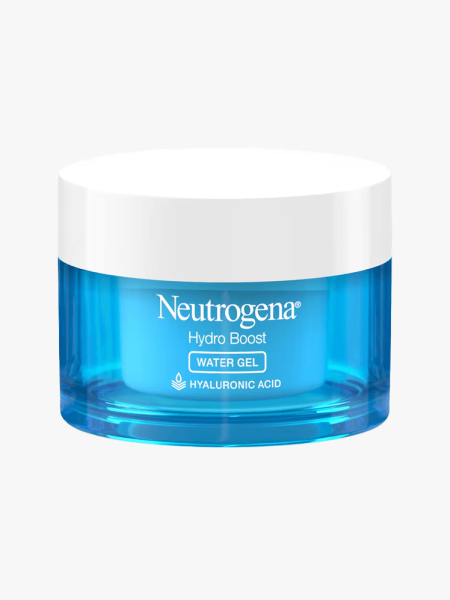 Save to wishlist
Neutrogena
Hydroboost Water Gel
Ulta Beauty
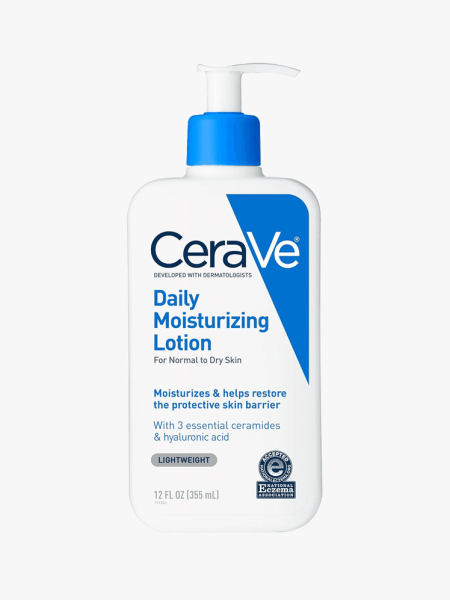 Save to wishlist
CeraVe
Daily Moisturizing Lotion
Amazon
Ulta Beauty
Dry or sensitive skin
Unlike oily skin, dry or inflamed skin can actually benefit from a richer cream that contains oils or lipids to help restore a damaged skin barrier. Look for “barrier-supporting ingredients like glycerin, ceramides, niacinamide, or squalane,” says Dr. Kobets.
Skinfix Triple Lipid Peptide Cream is packed with ceramides and fatty acids to help replenish moisture, and a humectant blend to help lock it in. Kiehl's Ultra Facial Cream is formulated with squalane, a lipid used to seal in moisture, and Aestura Atobarrier365 Hydro Soothing Cream features compressed hyaluronic acid for moisture and super rich dimethicone as an emollient.
 Save to wishlist
Skinfix
Triple Lipid Peptide Cream
Ulta Beauty
Sephora
 Save to wishlist
Kiehl's
Ultra Facial Cream
Amazon
Nordstrom
Ulta Beauty
 Save to wishlist
Aestura
AtoBarrier365 Hydro Soothing Cream
Amazon
Sephora
Step 3: Protect
In the evening, steps one and two (cleansing and moisturizing) are truly all you need before bed. But in the morning, you should be adding a third step: SPF. "Sunscreen is your first line of defense and protection against skin cancer," Dr. Farber explains. "If you were to do nothing else for your skin, sun protection is the most important."
Opt for using a broad-spectrum sunscreen—a formula that protects your skin from UVA and UVB rays—every day, with at least SPF 30, no matter what your plan is. “You’re always getting intermittent UV exposure throughout the day—walking to your car, loading groceries, or driving,” says Dr. Kobets. Sitting on the couch all day? Surprise! You still have windows. There is truly no situation in which you should skip this step.
While an SPF 100 does block slightly more UVB radiation, it does not protect twice as well or last twice as long. “What matters much more is applying enough sunscreen—about one-half teaspoon for the face and neck—and reapplying every two hours when you’re outdoors or after swimming or sweating,” says Dr. Kobets. “I’d much rather see someone apply SPF 30-50 correctly and reapply it than use SPF 100 once in the morning and forget about it.”
Oily skin
The market isn’t short on lightweight, oil-free SPF options. Shiseido Urban Environment Oil-Free SPF is a good bet, says Dr. Kobets of the mineral formula that doesn’t leave a white cast. We also recommend the Proactiv Clear Skin SPF 30, which has a matte finish to help combat any greasiness.
 Save to wishlist
Shiseido
Urban Environment Oil-Free Mineral Sunscreen
Amazon
Nordstrom
Ulta Beauty
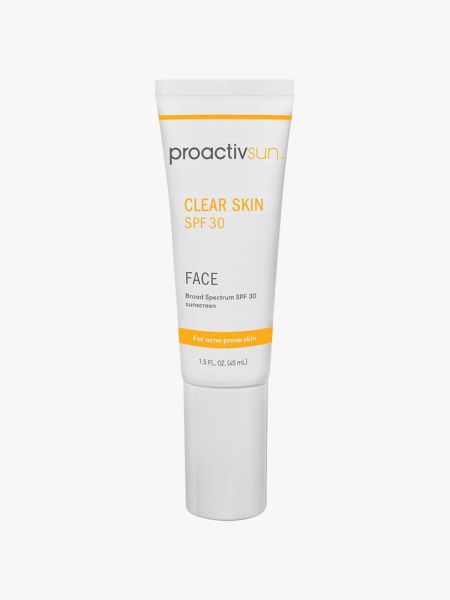 Save to wishlist
Proactiv
Clear Skin SPF 30
Amazon
Ulta Beauty
Dry skin
Peach and Lily Beam Blocker Invisible Sunscreen contains ceramides, squalane, niacinamide, and aloe to help soothe and hydrate your skin, and Beauty of Joseon Dayscreen SPF 30 Moisturizer is a hydrating, lightweight option formulated with hyaluronic acid. If you want a little color in your SPF, Ilia Sun Serum Mineral Sunscreen has a super subtle tint, and it’s formulated with hyaluronic acid.
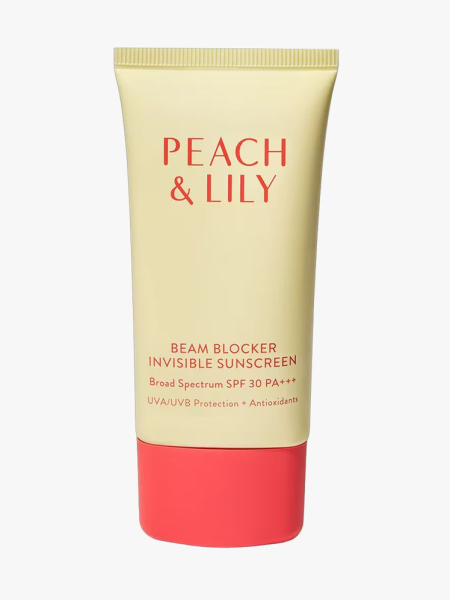 Save to wishlist
Peach & Lily
Beam Blocker Invisible Sunscreen SPF 30
Ulta Beauty
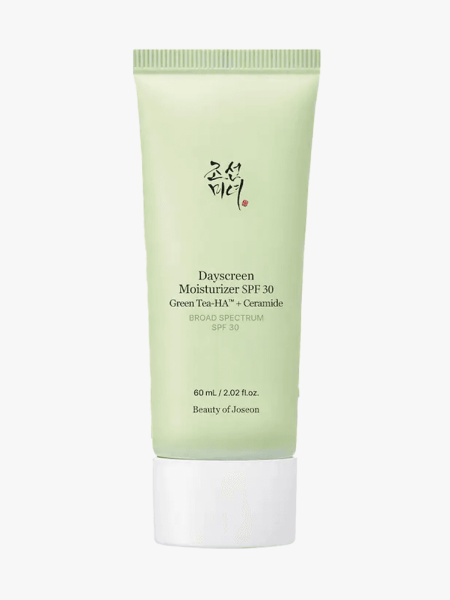 Save to wishlist
Beauty of Joseon
Dayscreen Moisturizer SPF 30
Sephora
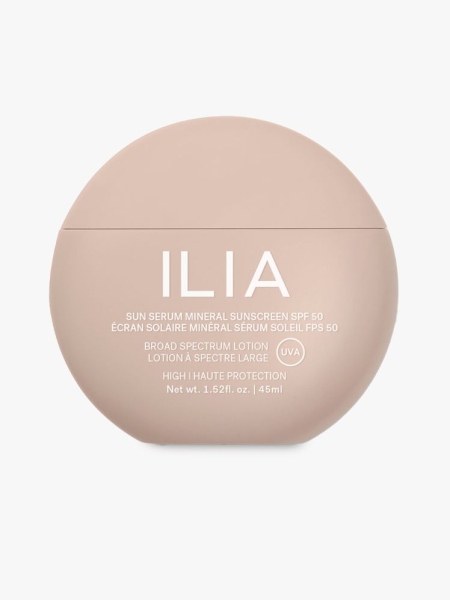 Save to wishlist
Ilia
Sun Serum Mineral Sunscreen
Amazon
Nordstrom
Ulta Beauty
Sensitive skin
For reactive skin, Dr. Queller likes MD Solar Sciences Mineral Crème SPF 50, which is fragrance-free and noncomedogenic. If you have rosacea or are dealing with redness, there are plenty of sensitive-skin-friendly SPFs that have color correction built in, such as EltaMD UV Skin Recovery Red Color Correcting Green Tint SPF 50.
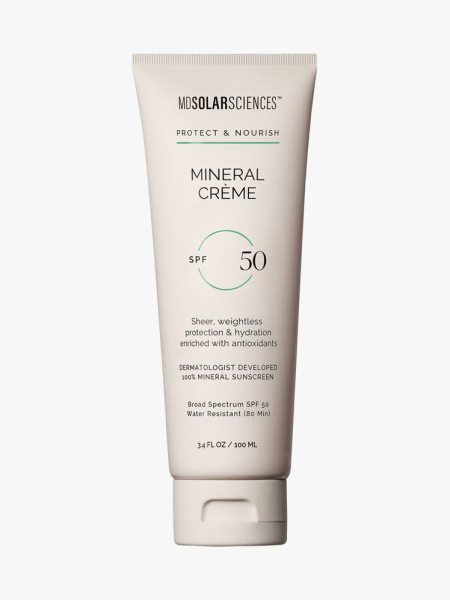 Save to wishlist
MDSolarSciences
Mineral Cream SPF 50
Amazon
Nordstrom
Dermstore
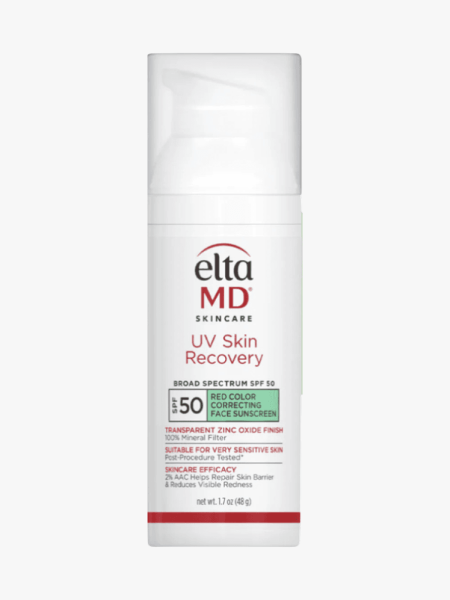 Save to wishlist
EltaMD
UV Skin Recovery Red Color Correcting Green Tint SPF 50
Amazon
EltaMD
Skin-Care 201: Extra Credit
With cleansing, moisturizing, and SPF, you have everything you need to get started. After you’ve mastered that omelet, though, you may want to add a few extra steps, such as products that target specific issues you may have.
Exfoliants
Exfoliating as part of the cleansing step—physically or chemically—can help slough away excess buildup and improve dull skin. But it’s easy to overdo it and leave your skin in worse condition than when you started. “If you use a physical scrub, be very gentle, and limit it to every one to two weeks,” says Dr. Kobets. “I also wouldn’t use it on the same day you’re introducing a new product or using a retinoid.”
Chemical exfoliants leave a little less room for error and abrasion, but are best used after consulting with a dermatologist.
Serums
Facial serums are high-potency, lightweight topicals that are formulated with a higher concentration of active ingredients to target more specific skin concerns. They’re meant to be sandwiched between your cleanser and your moisturizer.
“Treat what you actually have,” says Dr. Kobets. So if you’re dealing with dry skin, opt for a hyaluronic acid serum. For brightening or treating pigmentation, try adding a vitamin C serum to your routine, she says. Just don’t feel like you need to add serum after serum just for the sake of it.
Masks
“Think of masks as occasional treatments rather than necessities,” says Dr. Kobets. “Hydrating masks containing ingredients like glycerin, hyaluronic acid, squalane, and niacinamide—without added fragrance or botanicals—are my go-to. For most people, they’re more useful than aggressive exfoliating masks. They’re also great before a night out or before applying makeup, especially right after a shower, to give the skin an extra boost of hydration.”
Retinoids
“Retinoids are one of the most well-studied ingredients for treating acne, fine lines, uneven pigmentation, and improving overall skin texture,” says Dr. Queller. “I recommend starting slowly by applying a retinoid two nights per week, and gradually increasing frequency as your skin tolerates it.” Retinoids should always be followed by moisturizer, she adds, and used consistently with daily sunscreen, because they can be sensitizing.
Meet the experts:
- Michele Farber, MD, is a board-certified dermatologist based in New York City.
- Kseniya Kobets, MD, is a board-certified dermatologist and director of cosmetic dermatology at Montefiore Einstein Advanced Care Dermatology.
- Jenna Queller, MD, is a board-certified dermatologist based in Boca Raton, FL.
- Sejal Shah, MD, is a board-certified dermatologist based in New York City.
- Divya Shokeen, MD, is a board-certified dermatologist based in Manhattan Beach, CA.
Additional reporting by Rebecca Dancer.
7 Best Shampoos and Conditioners for Color-Treated Hair to Stay Vibrant and Fresh
 Collage: Paula Balondo; Source images: Courtesy of brandsSave this storySave this story
There’s nothing quite like leaving the salon with glossy, freshly colored hair. While fading is inevitable over time, using the best shampoos and conditioners for color-treated hair can help extend the life of your meticulously crafted shade between salon visits. These gentle, often sulfate-free formulas cleanse away oil, flakes, and product buildup without stripping pigment so that your pricey balayage, bleach-and-dye treatment, or at-home color job continues to look as good on day 30 as it did on day one.
Regular shampoos aren’t necessarily formulated with color-treated hair in mind. Many, like sulfate-filled or clarifying shampoos, contain strong cleansing agents that can strip away color, which can ultimately cause your fresh color to fade faster and lose its shine. Long story short: “Using a shampoo made for color-treated hair helps protect your investment, keeps the color looking fresh longer, and helps maintain shine and overall hair health between appointments,” says Sierra Kener Mehl, a hairstylist based in West Hollywood. Color-safe conditioners, for their part, also help keep your strands feeling moisturized and healthy, which is especially important after a dye job when they might be especially dry, damaged, and in need of a little extra TLC.
Our Top Shampoos and Conditioners for Color-Treated Hair
- Best Overall: Pureology Hydrate Moisturizing Shampoo and Conditioner, $76
- Best for Blondes and Bleached Hair: Biolage Professional Hair Spa Color Last Shampoo & Conditioner, $52
- Best for Graying Hair: Rōz Foundation Shampoo ($39) and Mask ($48)
- Best Drugstore: L'Oréal Paris EverPure Moisture Shampoo and Conditioner, $18
Whether your color is fresh from the salon or courtesy of an at-home dye kit, upgrading your wash-day routine with a color-safe shampoo and conditioner set is one of the easiest ways to keep things looking vibrant. After months of testing, these are the duos worth adding to your shower.
Frequently Asked QuestionsLargeChevron
- What shampoos should you avoid for color-treated hair?
- How often should I wash color-treated hair?
- What causes hair color to fade?
- What are sulfates, and are they bad for color-treated hair?
- How is shampoo for colored hair different than "regular" shampoos?
- Which shampoo is right for my hair color?
- Meet the experts
- How we test and review products
- Our staff and testers
Best Overall: Pureology Hydrate Moisturizing Shampoo and Conditioner
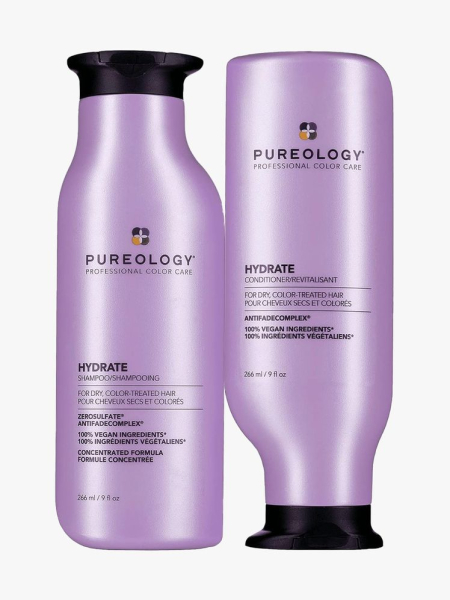 Save to wishlist
Pureology
Hydrate Moisturizing Shampoo and Conditioner
Amazon
Why we love it: Whether you have just a touch of subtle highlights or a full head of faux color, Pureology’s Hydrate Moisturizing Shampoo and Conditioner are up for the task. This Allure Best of Beauty Award-winning duo is one of our all-time favorite in-shower combos for its brass-busting lavender tint and creamy, jojoba oil-powered formulas that leave hair impressively smooth. Both the shampoo and conditioner also contain antioxidant-rich green tea and sage extracts to hydrate strands while supporting scalp health. Keep in mind that the original formula might be too heavy for finer hair types, but no sweat: Pureology also makes lightweight options specifically for thinner hair.
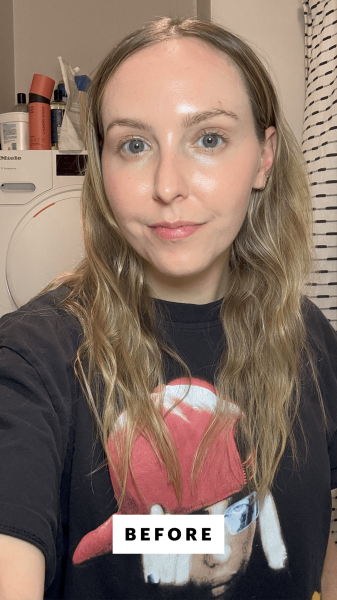
Allure beauty director Sarah Kinonen before using the Pureology Hydrate Moisturizing Shampoo and Conditioner
Sarah Kinonen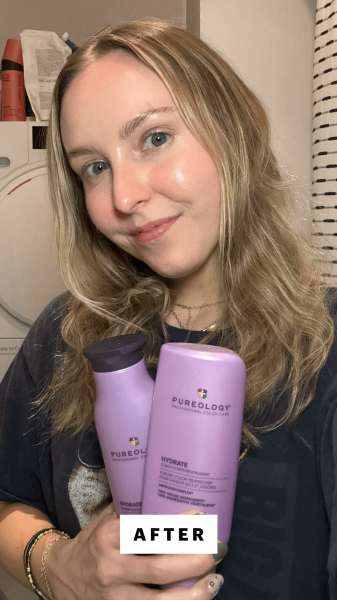
Kinonen after using the Pureology Hydrate Moisturizing Shampoo and Conditioner
Sarah Kinonen
Tester feedback from beauty director Sarah Kinonen
LargeChevron
“As someone who washes their hair once a week, my shampoo-and-conditioner selection is super important. I have long, fine, color-treated hair, so it has a lot of needs: hydration, damage control, and color protection. This Pureology duo does all of the above and more with an earthy (shampoo) and minty (conditioner) scent that lingers long past the last rinse. I typically double- (and sometimes even triple-) shampoo because of how dirty and oily my hair gets during the week. I love that this one lathers fast—I’m pro suds (and sulfates)! As for the conditioner, I like to use it as more of a mask, raking it through my mids to my ends, and then letting it marinate while I shave my legs. The result is always soft, shiny, and super-clean hair.” —Sarah Kinonen, beauty director
More to know
LargeChevron
- Key ingredients: jojoba oil, green tea extract, sage extract
- Sulfate-free: yes
- Who it's for: all hair types
Best for Blondes and Bleached Hair: Biolage Professional Hair Spa Color Last Shampoo & Conditioner
 Save to wishlist
Biolage
Professional Hair Spa Color Last Shampoo & Conditioner
Amazon
Ulta Beauty (Shampoo)
Ulta Beauty (Conditioner)
Why we love it: Biolage’s Professional Hair Spa Color Last Shampoo & Conditioner features moisturizing soybean oil and stearic acid, an ingredient that acts like a lightweight barrier over your strands to protect color from fading. Together, they maintain your color’s luster for weeks, making it a bit more feasible to stretch out the time between your salon appointments—no wonder it won an Allure Best of Beauty Award in 2025. As its key ingredients seal in much-needed moisture and assist in preserving color, its formula gently washes away dirt, oil, and buildup as you lather. Though it’s not a purple shampoo, our blonde-haired testers found that this duo amps up brightness without leading to brassiness or stripped color, making it a great option for lighter hair colors.
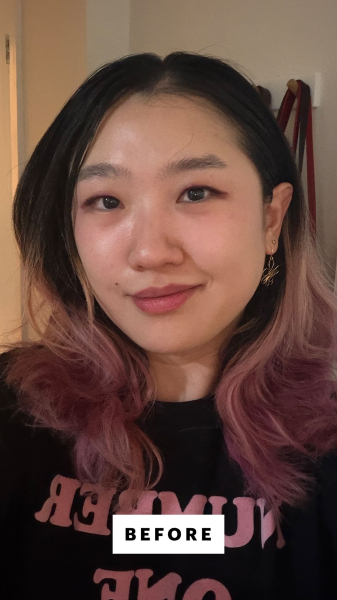
Allure commerce editor Sarah Han before using the Biolage Professional Hair Spa Color Last Shampoo & Conditioner
Sarah Han
Han after using the Biolage Professional Hair Spa Color Last Shampoo & Conditioner
Sarah Han
Tester feedback from commerce editor Sarah Han
LargeChevron
“I've put my hair through the wringer, a.k.a. double-bleached it many times throughout the years, and it shows in how dry and brittle it gets. I used to use a color-depositing shampoo every other wash, which is too often because it doesn't do a great job of actually hydrating my hair. This Biolage duo leaves my hair feeling soft post-shower and my pink surprisingly intact—and thank goodness. My color also looks overall brighter, which is the cherry on top!” —Sarah Han, commerce editor
Tester feedback from global senior director of commerce audience & analytics Lexi Herrick
LargeChevron
“This Biolage shampoo-and-conditioner combo has become one of my absolute staples. It provides a thorough clean and deep-conditioning, smells amazing, and brightens my blonde almost instantly. As someone who has been actively trying to delay my highlights appointments, I can visibly see this product extending the life of my color over time.” —Lexi Herrick, global senior director of commerce audience and analytics
More to know
LargeChevron
- Key ingredients: soybean oil, stearic acid
- Sulfate-free: no
- Who it's for: blondes and lighter hair colors, dry hair
Best for Graying Hair: Rōz Foundation Shampoo and Mask
 Save to wishlist
RŌZ
Foundation Shampoo and Mask
Amazon (Shampoo)
Amazon (Mask)
Nordstrom (Shampoo)
Nordstrom (Mask)
Why we love it: This duo isn't necessarily billed for color-treated hair, but we've found that the sulfate-free (and Best of Beauty Award-winning) shampoo and reparative mask work wonders for color-treated hair, too—and Mehl agrees, adding that it also performs well on medium hair types in particular. It’s a “great choice for clients looking for a cleaner beauty option that still performs really well on color-treated hair,” she says. The Rōz Foundation Shampoo relies on coconut-derived surfactants to dislodge grime and oil, while ceramides keep both scalp and strands soft and comfortable.
The silicone-free Rōz Foundation Mask, meanwhile, hydrates and repairs hair from mid-lengths to ends, thanks to a base of vitamin E-rich coconut oil and strengthening rice bran extract. Both can be critical for those with gray hairs, which tend to be coarse, dry, and even wiry. That said, our tester recommends subbing the conditioner in for the mask if you have fine or thinning hair, since the mask might be too heavy for daily use.
Tester feedback from executive beauty director Jenny Bailly
LargeChevron
“My long hair is balayaged into a blend of gray and blonde—and it looks and feels so smooth when I use this shampoo and mask. It's not billed as a combo for color-treated hair but it's gentle and moisturizing so certainly fits the bill. The shampoo sudses up beautifully (I usually do two) and a dollop of the mask is enough for my currently almost-bra-strap-length hair (I usually comb it through and leave it in a couple minutes before rinsing). The citrus-y, fig-y scent is a joy in the morning, and the packaging is chic and understated without trying too hard to be sleek and fancy. I'm not saying I worked my recent bathroom reno around this duo; I'm just saying that light blue does look great in my new shower.” —Jenny Bailly, executive beauty director
More to know
LargeChevron
- Key ingredients: ceramides, coconut oil, rice bran extract
- Sulfate-free: yes
- Who it's for: those transitioning to gray or with color-treated gray hair
Best for Brunette Hair: Wella Ultimate Color Shampoo and Conditioner
 Save to wishlist
Wella Professionals
Ultimate Color Shampoo and Conditioner
Amazon (Shampoo)
Amazon (Conditioner)
Ulta Beauty (Shampoo)
Ulta Beauty (Conditioner)
Why we love it: Rich brunette shades and vibrant reds can lose their glossiness faster than you’d like, which is why Mehl recommends Wella’s Ultimate Color Shampoo and Conditioner. “I recommend it for anyone with color-treated hair, but I especially love it on brunettes and reds because those shades tend to fade a little faster and lose that rich, glossy look between appointments,” she says. The shampoo gently removes oil and buildup without stripping your color, while the conditioner replenishes moisture to leave hair noticeably softer, smoother, and shinier.
Formulated with metal purifier (which helps detoxify water by removing metals that can distort or dull color or alter brunette dye), glycine, and vitamin B5, this duo helps to shield hair from free radical-induced damage, lock in moisture, and improve the look and feel of brittle, overprocessed strands. “The metal purifier technology is definitely a bonus because it helps protect the color from minerals in your water that can cause fading or unwanted tone shifts,” Mehl adds, noting that the duo allows her clients’ color to stay richer and shinier for longer.
More to know
LargeChevron
- Key ingredients: metal purifier, glycine, vitamin B5
- Sulfate-free: yes
- Who it's for: highlighted hair, glosses, red hair, brunettes
Best Drugstore: L'Oréal Paris EverPure Moisture Shampoo and Conditioner
 Save to wishlist
L'Oréal Paris
EverPure Moisture Shampoo and Conditioner
Amazon
Walmart
Why we love it: No need to splurge to keep your color looking salon-fresh. When it comes to drugstore darlings for color-treated hair, we can't fail to mention L'Oréal Paris's EverPure Moisture Shampoo. New York City-based colorist Nikki Ferrara is also a fan of the sulfate-free formula, which is strong enough to lift away oil and buildup at the roots but gentle enough to avoid stripping freshly-colored strands. Infused with antioxidant-rich rosemary oil, the shampoo helps support color longevity while leaving hair feeling clean, but not stripped to the point of squeakiness. The shampoo is moisturizing all on its own, but the matching conditioner further seals in hydration, smooths the cuticle, and boosts shine, leaving strands delightfully soft and shiny.
More to know
LargeChevron
- Key ingredients: rosemary oil
- Sulfate-free: yes
- Who it's for: people with dry hair, or those looking for extra shine
Best for Fine Hair: Kevin Murphy Everlasting Color Wash and Rinse
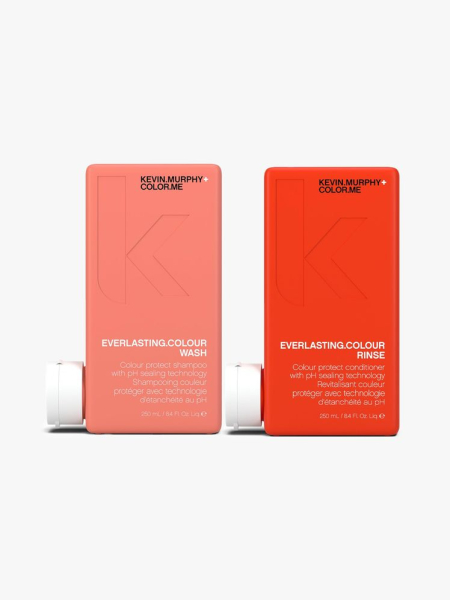 Save to wishlist
Kevin Murphy
Everlasting Color Wash and Rinse
Amazon (Wash)
Amazon (Rinse)
Why we love it: Fine, color-treated hair can be tricky to care for—you need enough hydration and moisture to keep strands healthy, but not so much that your roots fall flat or look oily. If that sounds familiar, New York City-based colorist Abby Haliti suggests swapping your usual in-shower duo with Kevin Murphy’s Everlasting Color Shampoo and Rinse. She shouts out this sulfate‑free pairing for its hydrating and color-preserving properties in particular. “Botanical extracts and antioxidants work together to lock in pigment and improve overall hair condition,” she says. “Their lightweight formulas ensure smooth manageability without dulling shine, making it a reliable choice for color‑treated routines.”
More to know
LargeChevron
- Key ingredients: phytic acid, rice extract, hydrolyzed quinoa extract
- Sulfate-free: yes
- Who it's for: fine and thinning hair types
Best for Chemically-Treated Hair: Oribe Shampoo and Conditioner for Beautiful Color
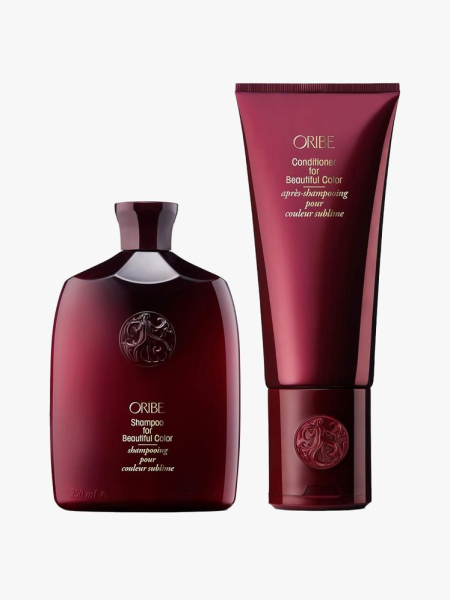 Save to wishlist
Oribe
Shampoo and Conditioner for Beautiful Color
Amazon
Nordstrom (Shampoo)
Nordstrom (Conditioner)
Why we love it: Oribe’s Shampoo and Conditioner for Beautiful Color duo is perfect for those with color-treated hair and other forms of chemical treatments like keratin straightening and perms, according to Ian McCabe, a Washington, DC-based colorist. “This is a great option as it is sulfate-free and safe for those with a keratin treatment,” he says. That’s all thanks to its lightweight, non-stripping formula that’s boosted with the brand’s Signature Complex, a blend of antioxidant-rich watermelon, lychee, and edelweiss flower extracts. For added hydration, both formulas also contain baobab tree extract. “It smells amazing and leaves the hair so shiny,” adds McCabe.
More to know
LargeChevron
- Key ingredients: Oribe Signature Complex (watermelon, lychee, and edelweiss flower extracts), baobab tree extract, bioflavinoids
- Sulfate-free: yes
- Who it's for: all hair types
Frequently Asked Questions
What shampoos should you avoid for color-treated hair?
When you’re looking for a shampoo for color-treated hair, it’s important to prioritize gentle, cleansing formulas—which, for one, means steering clear of harsh cleansing agents that can strip away your fresh color, such as sulfates, according to Mehl. If you have oily hair or a lot of product buildup that needs deep cleansing, that doesn’t mean you need to skip clarifying shampoos entirely: They “definitely have their place, but they shouldn’t be your everyday shampoo if you’re trying to maintain your color,” she adds.
Instead, Mehl recommends seeking out sulfate-free formulas, as well as shampoos and conditioners that contain amino acids, antioxidants, ceramides, and lightweight proteins; these can help boost the health of your strands. “Color-treated hair tends to be more fragile and porous, so keeping the cuticle healthy is really important,” she explains.
How often should I wash color-treated hair?
It depends on your scalp, your hair, and your lifestyle, so it’s best to ask your hairstylist or colorist what they recommend. But as a general rule, “the less often you wash, the longer your color tends to stay vibrant,” says Mehl, who adds that two to three times a week should suffice for most people.
What causes hair color to fade?
Extra care is a must for your dye job since there are a number of contributing factors when it comes to your color fading. Watch out for exposure to hard water, the overuse of heat-styling tools (and hot shower temperatures), and even UV rays. "The sun bleaches color out of everything, including your hair," St. Louis-based colorist Caitlin Ford tells Allure. "If you're going outside for extended periods of time, protect your scalp and hair with a hat," she adds. We also like to spritz on a little hair sunscreen to make sure we've covered all of our bases.
What are sulfates, and are they bad for color-treated hair?
Sulfates are cleansers that trap oil-based dirt so it can be rinsed away from skin or hair with water. They also happen to be the additives behind the lather and bubbles in shampoos, toothpastes, and soaps. Overall, the jury is still kind of out on whether they're harmful or not, but this group of ingredients is definitely known for its color-stripping effects.
While sulfates are usually given the side-eye—for example, they're a no-go, according to our very own Clean Best of Beauty seal—they aren't necessarily as bad for preserving your hair pigment as they're made out to be. Cosmetic chemist Randy Schueller previously told Allure that water is as damaging as any cleanser. "When your hair gets wet, it swells, the hair shaft opens, and some color leaches out," says Schueller, who tested sulfates against other surfactants and didn't see any notable differences in terms of fading color. (This is why many experts suggest washing your hair less often and spritzing dry shampoo to buy you extra time in between.)
However, the case against sulfates is still pretty valid, especially if you want to err on the side of caution. Not only are they irritating to the skin, but they are also capable of "stripping the [scalp] of its natural oils" a little too well, Aanand Geria, MD, a board-certified dermatologist in Rutherford, New Jersey, previously explained to Allure. In other words: Sulfates are a pretty slippery slope, leading to dryness and flaking.
How is shampoo for colored hair different than "regular" shampoos?
Like many experts, Ferrara is a fan of brands with sulfate-free offerings, as she says they will "extend the shelf life of your hair color and prevent fading." Los Angeles-based colorist and Redken brand ambassador Matt Rez previously shared that using sulfate-free shampoo will keep hair as hydrated as possible. Adding to the chorus is cosmetic chemist Ron Robinson, who told Allure that sulfates can dry hair out, which can be especially damaging after coloring. They'll also make your eyes burn if they accidentally slip in, which is a universally unpleasant experience.
All to say: Your best bet, when it comes to preserving your color, is to switch your regular shampoo with one that's specially formulated for color-treated hair. (Please, no clarifying shampoos.)
Which shampoo is right for my hair color?
We'll have to dabble in the color wheel theory to answer this question. Basically, complementary colors—or colors that are on opposite sides of the color wheel—neutralize each other. Therefore, you can use tinted shampoos, hair masks, and conditioners to balance brassy tones and dullness. "To counteract yellow hues, you need to use something that has violet in it; to counteract orange tones, you'll need to use blue hues," St. Louis, Missouri-based colorist Kristina Cheeseman previously told Allure. For minimizing brassy tones, a purple shampoo for blondes and a blue shampoo for brunettes are always your best bets.
Meet the experts
- Sierra Kener Mehl, a West Hollywood-based hairstylist and co-owner of ESKÉ Salon
- Abby Haliti, a New York City-based hair colorist
- Ian McCabe, a Washington, DC-based colorist and owner of Navy Hair Studio
- Nikki Ferrara, a New York City-based hair colorist
- Danita Hampton, a North Carolina-based hairstylist and Covet & Mane Lead Educator
- Caitlin Ford, a St. Louis-based hair colorist
- Randy Schueller, a cosmetic chemist
- Aanand Geria, MD, a board-certified dermatologist in Rutherford, New Jersey
- Matt Rez, a Los Angeles-based colorist and Redken brand ambassador
- Ron Robinson, a cosmetic chemist
- Kristina Cheeseman, a St. Louis-based hair colorist
How we test and review products
We always enlist a range of testers for our makeup vertical, but hair-care products and tools are another story. While there are certain products that can be used across different hair textures, lengths, curl patterns, thicknesses, colors (natural and unnatural), and needs, hair products are often created with specific consumers in mind. Many are created in order to address a concern (dandruff, breakage, brittleness) or to work most effectively for a specific hair type (4C curls, wavy hair, gray hair). You wouldn’t want to pick up a purple shampoo that’s only been reviewed by someone with, say, auburn hair, or a diffuser that’s never been tested by anyone with curls—right?
For our review of shampoos for colored hair, we enlisted the help of multiple editors, writers, contributors, and hair colorists—many of whom have or have had color-treated hair. Testers considered performance across four primary categories: efficacy, texture and experience, fragrance, and packaging. For more on what's involved in our reporting, check out our complete reviews process and methodology page.
Our staff and testers
A beauty product is a personal purchase. You might be searching for a face cream to address persistent dryness or a new nail product to add to your Sunday self-care routine; you may simply be browsing around for the latest launches to hit the hair market. No matter what you seek or your individual needs and concerns, Allure wants to ensure that you love anything we recommend in our stories. We believe that having a diverse team of writers and editors—in addition to the wide range of outside testers and industry experts we regularly call upon—is essential to reaching that goal.
After all, can we really say a skin-care product is the “best” for people over 50 if the only testers we’ve solicited opinions from folks who have yet to hit 30? Can we honestly deem a high-end diffuser worthy of your hard-earned cash if it’s never been tested on curls? We’re proud that our staff spans a wide range of ages, skin tones, hair textures, genders, and backgrounds, which means that we are able to fairly assess any beauty product that comes into the beauty closet.

Zara Larsson’s Eye Makeup Would Be Right at Home Under the Sea—See the Photos
 Getty ImagesSave this storySave this story
Zara Larsson is diving deep for her eye makeup inspiration—as in, literally under the ocean! The Swedish pop star is now very well known for her colorful, elaborate eye shadow, which is often sparkling with gemstones and comprised of vivid neon tones, and she and makeup artist Sophia Sinot are looking to the natural world to inform their latest designs. But we're not talking flowers, though the two have done similar designs in the past; instead, they're swimming under the ocean to mimic the shades of sea life.
For Larsson's Lollapalooza set on August 1, the pair went pink and channeled the Palinurus mauritanicus, or pink spiny lobster, with vivid shades of pale pink, fuchsia, and orange on the “Midnight Sun” singer's lids, dotted with vibrant magenta polka dots to mimic the pattern on the small crustacean's shell.
 Getty Images
A few days later in Montreal, they modeled Larsson's makeup after the pseudoceros dimidiatus, or tiger flatworm. As you may imagine from the creature's name, it has a striped pattern—one Sinot replicated on Larsson's eyes with bold strokes of black eyeliner under her brows, atop a powdery sea green base. (Prior to that, they swapped the sea creatures for a more traditional animal print—leopard, of course—all over Larsson's lids.)
TikTok content
This isn't the first time Larsson and Sinot have gone underwater for beauty inspo; they've been having fun with it all summer. For a performance in Madrid a few weeks ago, the two channeled a yellow snapperfish, which is typically found in tropical waters. The fish itself is shiny silver with vertical yellow stripes, so Sinot applied a shimmery silver shadow to Larsson's lids and added a bright canary yellow color to her inner corners and under her lower lashline. For the stripes, she drew wavy, winged shapes under Larsson's brow bone and outer corners, then placed yellow gemstones atop each stripe.
The next night, Sinot and Larsson landed on a pink dorid nudibranch sea slug as their inspo for the evening. Sinot used a palette of pure white, vibrant magenta, and dandelion yellow, with the white color concentrated in the inner corners and dotted with teeny pink spots that faded into bright pink at the outer corners. The yellow shade was applied underneath the arch of Larsson's brow and to her lower lashline.
Then again, the makeup inspo isn't really that unexpected, given how closely Larsson has been associated with what I like to call the “Lisa Frank dolphin” aesthetic. Though the “Midnight Sun” singer is a Sagittarius, she's also a Cancer moon, and recently posed with an enormous crab on Instagram. Her looks always have a tropical, summer mermaid vibe, so it's not entirely surprising that she and Sinot would be pulling inspo from the depths of the ocean. And there are so many gorgeous creatures to channel, each with their own unique colors and patterns, it's basically a marine biology lesson and makeup masterclass all rolled into one!
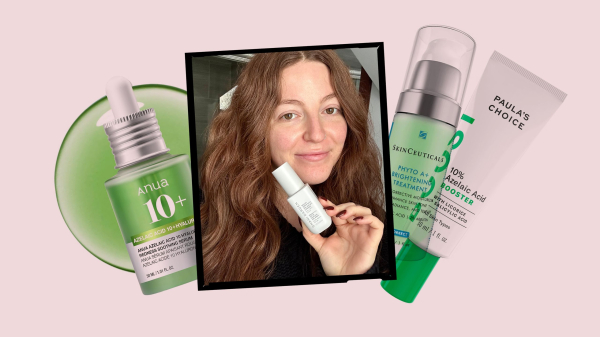
7 Best Azelaic Acid Serums for Acne, Redness, and Uneven Skin Tone
 Collage: Paula Balondo; Source images: Courtesy of Allure editor and brandsSave this storySave this story
Treating acne (and the discoloration it leaves behind) is no easy task, but the best azelaic acid serums can speed up the process. If you're a skin-care enthusiast, you've likely heard of—and experimented with—a handful of acids, be it glycolic, salicylic, or polyhydroxy. However, azelaic acid is particularly effective at killing acne-causing bacteria, loosening dead skin cells to unclog pores, reducing inflammation, and evening skin tone (all without irritating sensitive skin types). "[Azelaic acid serum] is a great product to use in combination with other acne medicines or alone,” says Ava Shamban, MD, a Beverly Hills-based board-certified dermatologist. If your skin-care concerns involve pesky pimples, dark spots, and redness, we've rounded up the best azelaic acid-infused serums to add to your routine, stat.
Our Top Azelaic Acid Serums:
- Best Overall: La Roche-Posay Effaclar A.Z. Gel Azelaic Acid Acne Treatment, $43
- Best for Uneven Tone: Shani Darden Skin Care Rescue Serum with 10% Azelaic Complex, $68
- Best for Acne-Prone Skin: SkinCeuticals Phyto A+ Brightening Treatment, $115
- Best for Redness: Anua Azelaic Acid 10 Hyaluron Redness Soothing Serum, $22
Frequently Asked QuestionsLargeChevron
- What is azelaic acid?
- Who can use azelaic acid?
- Can azelaic acid be used with retinoids?
- Meet the experts
- How we test and review products
- Our staff and testers
Best Overall: La Roche-Posay Effaclar A.Z. Gel Azelaic Acid Acne Treatment
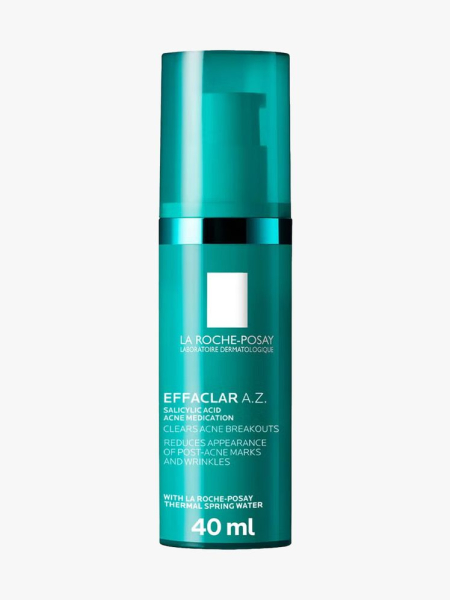 Save to wishlist
La Roche-Posay
Effaclar A.Z. Gel Azelaic Acid Acne Treatment
Amazon
Dermstore
Allure editor in chief Jessica Cruel applying the La Roche-Posay Effaclar A.Z. Gel Azelaic Acid Acne Treatment
Jessica Cruel
Why it's worth it: Ever wish treating both acne and fine lines was as easy as snapping your fingers? La Roche-Posay’s Effaclar A.Z. Gel Azelaic Acid Acne Treatment isn’t a magic trick, but this multitasking gel comes pretty close. Designed to tackle multiple skin concerns in a single pump, it pairs azelaic acid to gently resurface skin and fade the look of post-acne marks with 1.2% salicylic acid, which exfoliates inside pores to help clear breakouts and refine their appearance (especially key for oily or congestion-prone skin). Hyaluronic acid delivers lightweight hydration to smooth fine lines, while zinc helps purify skin and keep shine in check. “It’s a well-rounded formula that sits nicely beneath moisturizer, SPF, and makeup,” says Jenna Queller, MD, a board-certified dermatologist based in Boca Raton, Florida.
One thing worth noting: Although the brand is known for its fragrance-free formulas, this one does list fragrance toward the end of the ingredient list—likely added in a minimal amount to offset the naturally metallic scent zinc can sometimes have in skin care. If your skin is sensitive, start with a patch test first.
Tester feedback from editor in chief Jessica Cruel
LargeChevron
“This acne treatment combines azelaic and salicylic acids to treat active breakouts. After just one day of using it, I noticed my pimple had reduced in size. What I like about this formula is that you can use it well after the pimple is gone. Azelaic acid can help with hyperpigmentation and superficial post-acne marks. Some acne treatments are super drying, but this one is moisturizing enough to be a part of my daily routine." —Jessica Cruel, editor in chief
More to know
LargeChevron
- Key ingredients: azelaic acid (percentage undisclosed), 1.2% salicylic acid, hyaluronic acid, zinc
- Who it's for: people with fine lines and acne
- Fragrance-free: no
Best for Uneven Tone: Shani Darden Skin Care Rescue Serum With 10% Azelaic Complex
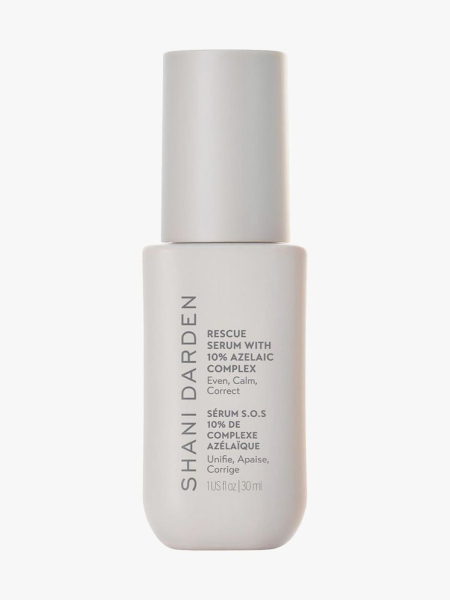 Save to wishlist
Shani Darden
Rescue Serum with 10% Azelaic Complex
Amazon
Nordstrom
Sephora
Allure senior staff writer Elizabeth Gulino applying the Shani Darden Skin Care Rescue Serum With 10% Azelaic Complex
Elizabeth Gulino
Why it's worth it: Shani Darden Skin Care’s Rescue Serum features mid-strength 10% azelaic acid, a Goldilocks-level dose to target acne and dark spots without veering into irritation-causing levels for sensitive skin. Made specifically for targeting discoloration and inflammation, this calming face serum combines azelaic acid’s soothing properties with other skin-coddling favorites, including oat kernel extract, hyaluronic acid, and aloe vera. To double down on its tone-evening properties, this serum is also infused with brightening licorice root extract and antioxidant panthenol.
Tester feedback from senior staff writer Elizabeth Gulino
LargeChevron
“I've been using this product almost daily since November, and I can confidently say that my skin has been brighter and my redness more toned down since adding this into my routine. It's light and not greasy, which is a huge pet peeve of mine when it comes to products. I'm really obsessed with the packaging—it's luxe and heavy in a way that's not annoying. The scent isn't amazing, but I'd rather have calm and hydrated skin over a product that doesn't work and smells like roses.” —Elizabeth Gulino, senior staff writer
More to know
LargeChevron
- Key ingredients: 10% azelaic acid, oat kernel extract, aloe vera extract, licorice root extract, panthenol, hyaluronic acid
- Who it's for: all skin types, including sensitive
- Fragrance-free: yes
Best for Acne-Prone Skin: SkinCeuticals Phyto A+ Brightening Treatment
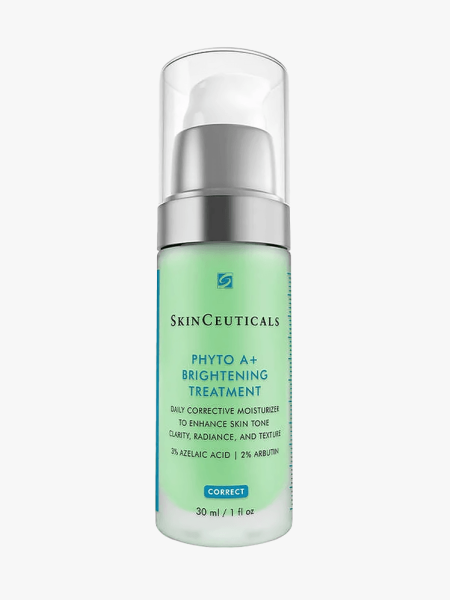 Save to wishlist
SkinCeuticals
Phyto A+ Brightening Treatment
SkinCeuticals
Dermstore
Bluemercury
Allure contributing commerce editor Deanna Pai applying the SkinCeuticals Phyto A+ Brightening Treatment
Deanna Pai
Why it's worth it: SkinCeuticals' Phyto A+ Brightening Treatment contains 3% azelaic acid (a lower dose of the ingredient to avoid sensitizing skin) and 2% brightening alpha arbutin, a gentler derivative of the somewhat controversial hydroquinone. This green-tinted serum also contains a calming botanical blend of cucumber, thyme, and olive leaf extracts to calm redness and irritation. Bonus: It has a refreshing, soothing feel, while the tint neutralizes redness on the spot. "Its lightweight, oil-free, silicone-free, [and] non-comedogenic formula is suitable for acne-prone and sensitive skin," says Michele Green, MD, a New York City-based board-certified dermatologist.
Tester feedback from contributing commerce editor Deanna Pai
LargeChevron
“My dermatologist recommended I switch from retinoids to azelaic acid when I was pregnant with my first daughter to fade my dark spots, which led me to this skin-brightening formula—and now, with two kids underfoot, I still pull it out every time I have a breakout, since it works wonders for calming inflammatory zits and evening out my skin tone. First, I love that it's a moisturizer, making it easy to pop into my routine instead of my usual gel-cream. It's also lightweight and relatively gentle, working nicely with other ingredients in my arsenal (like vitamin C, mandelic acid, and retinol). I find the fragrance a little off-putting at first—it's strangely floral—but it's not too much to be a dealbreaker.” —Deanna Pai, contributing commerce editor
More to know
LargeChevron
- Key ingredients: 3% azelaic acid, alpha arbutin, cucumber extract, thyme extract, olive leaf extract
- Who it's for: all skin types
- Fragrance-free: yes
Best for Redness: Anua Azelaic Acid 10 Hyaluron Redness Soothing Serum
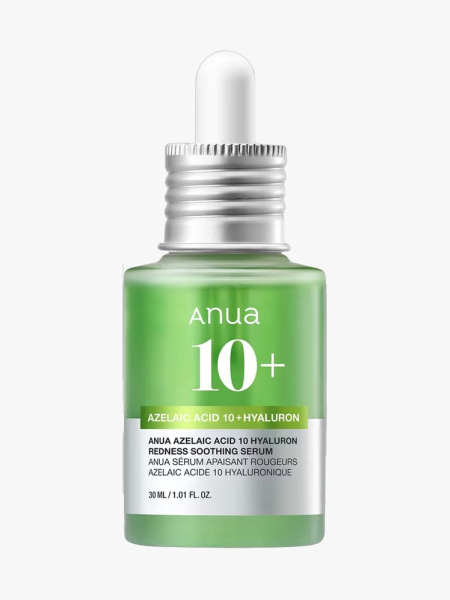 Save to wishlist
Anua
Azelaic Acid 10 Hyaluron Redness Soothing Serum
Amazon
Ulta Beauty
Allure contributing commerce writer Christa Joanna Lee applying the Anua Azelaic Acid 10 Hyaluron Redness Soothing Serum
Christa Joanna Lee
Why it's worth it: Redness can happen for all sorts of reasons—rosacea, inflammation, sunburn, or even an allergic reaction (in those cases, it's always best to check in with your dermatologist on treatment options). But if your skin is simply looking flushed because it's dry or your moisture barrier is compromised, Anua's Azelaic Acid 10 Hyaluron Redness Soothing Serum contains a Who's Who of calming ingredients. "The star is 10% azelaic acid, which is paired with niacinamide to help visibly reduce redness while gently evening skin tone," says Debra Jaliman, MD, a board-certified dermatologist based in New York City.
The soothing, fragrance-free formula also features panthenol, allantoin, beta-glucan, aloe vera, and a full lineup of Centella asiatica extracts to comfort sensitive, stressed skin. To address the dryness that's often behind temporary flushing, hyaluronic acid, glycerin, squalane, and ceramides help replenish moisture and reinforce the skin barrier. “It is quite gentle, feels hydrating, and tends to be well-tolerated even with consistent use,” says Sandra Oska, MD, a board-certified dermatologist based in Los Angeles and Santa Monica, California
Tester feedback from contributing commerce writer Christa Joanna Lee
LargeChevron
"There's no K-beauty brand taking over my bathroom counter quite like Anua. Nothing delivers an instant glow quite like the brand's Glow Pads or PDRN Hyaluronic Acid Hydrating Capsule Mist, but this serum takes a different approach. Instead of chasing immediate hydration, it's focused on tackling redness and uneven tone—though my perpetually dry skin still appreciates the boost of hydration from hyaluronic acid, glycerin, and squalane in this formula.
I have extremely dry, redness-prone skin with melasma, so I'm still giving the azelaic acid a little more time to work its magic on discoloration and lingering redness. What I loved right away, though, was the texture: It sinks in instantly, feels incredibly lightweight, leaves behind zero sticky residue, and never pills under my makeup when I use it in the morning." —Christa Joann Lee, contributing commerce writer
More to know
LargeChevron
- Key ingredients: 10% azelaic acid, niacinamide, panthenol, allantoin, beta-glucan, aloe vera, Centella asiatica, hyaluronic acid, glycerin, squalane, ceramides
- Who it's for: everyone, especially people with redness due to dryness or sensitive skin
- Fragrance-free: yes
Best for Dark Spots: Paula’s Choice 10% Azelaic Acid Booster
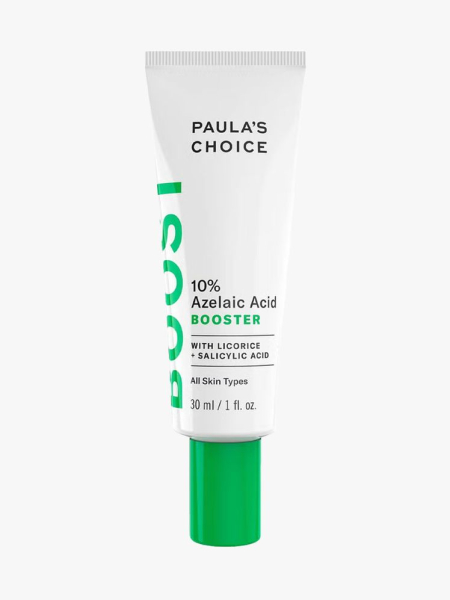 Save to wishlist
Paula's Choice
10% Azelaic Acid Booster
Amazon
Dermstore
Sephora
Why it's worth it: You did your best not to pick at that blemish. You waited patiently for it to disappear. And then, of course, it left behind a post-acne mark as a little souvenir. Paula’s Choice’s 10% Azelaic Acid Booster “is a reliable option for acne that also treats redness or post-breakout marks,” says Dr. Queller, who adds that its lightweight, non-clogging gel-serum texture can be mixed into moisturizer for drier skin types. The formula uses 10% azelaic acid to visibly brighten dark spots, even skin tone, and fade lingering hyperpigmentation, while 0.5% salicylic acid (BHA) works inside pores to smooth rough texture and keep congestion in check. “The azelaic-salicylic acid combo not only helps treat skin after breakouts, but also helps prevent new ones,” adds Corey L. Hartman, MD, a board-certified dermatologist based in Birmingham, Alabama. Licorice root extract rounds out the formula, adding extra redness-soothing benefits without irritation—ideal when acne and sensitivity overlap.
More to know
LargeChevron
- Key ingredients: 10% azelaic acid, 0.5% salicylic acid, licorice
- Who it's for: people with post-acne marks or those looking for acne prevention
- Fragrance-free: yes
Best for Acne-Prone Skin: Allies of Skin Azelaic and Kojic Advanced Clarifying Serum
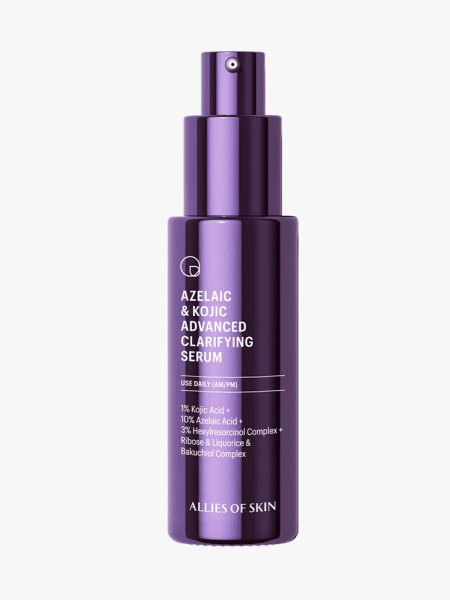 Save to wishlist
Allies of Skin
Azelaic and Kojic Advanced Clarifying Serum
Amazon
Nordstrom
Dermstore
Why it’s worth it: Allies of Skin was inspired by the belief that skin-care should be effective and simple (a.k.a. work smarter, not harder). The Azelaic & Kojic Advanced Clarifying Serum lives up to that mission, especially if you’re dealing with oily or skin prone to blemishes. This multitasking formula helps unclog pores, reduce excess oil, and calm active breakouts, all while fading stubborn dark spots. “Incorporating azelaic acid, bakuchiol, kojic acid, and hexylresorcinol, this serum can help target discoloration and uneven skin tone and texture, while also brightening the skin and reducing redness,” says Marisa Garshick, MD, a board-certified dermatologist in New York City. “I especially love that it’s lightweight and absorbs easily.” It's fragrance-free, non-comedogenic, and works great under your makeup or SPF, making it a great choice for preventing breakouts day or night.
More to know
LargeChevron
- Key ingredients: 10% azelaic acid, bakuchiol, kojic acid
- Who it’s for: people with oily or acne-prone skin
- Fragrance-free: yes
Best Budget: The Ordinary Azelaic Acid Suspension 10%
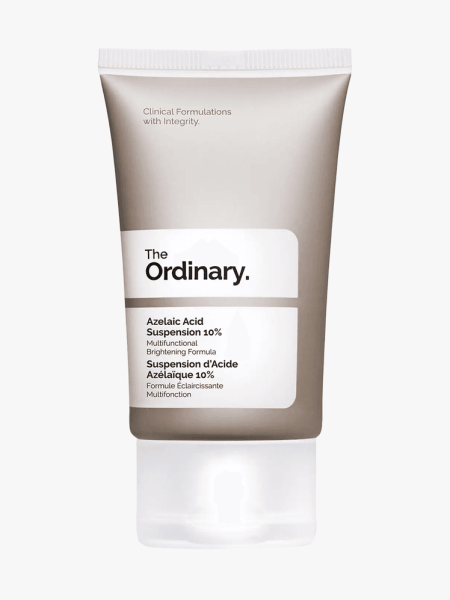 Save to wishlist
The Ordinary
Azelaic Acid Suspension 10%
Amazon
Nordstrom
Ulta Beauty
Why it's worth it: The Ordinary's Azelaic Acid 10% Suspension Brightening Cream is "one of the most accessible and effective azelaic acid products out there," says Aderonke Obayomi, MD, a board-certified dermatologist based in New York City. At a 10% concentration, it's "strong enough to make a noticeable difference in uneven texture, mild acne, and post-inflammatory hyperpigmentation, yet gentle enough for everyday use," she says. True to the brand’s no-frills approach, the minimalist formula lets azelaic acid take center stage without a long list of supporting actives. It also layers easily into your routine: "The lightweight formula glides on smoothly before your morning sunscreen, and azelaic acid is one of my go-to pregnancy-safe skin-care ingredients," says Jocelyn Gandelman, MD, a board-certified dermatologist based in New York City.
More to know
LargeChevron
- Key ingredient: 10% azelaic acid
- Who it's for: everyone, including sensitive skin
- Fragrance-free: yes
Frequently Asked Questions
What is azelaic acid?
When most people hear the word "acid," they usually think of a harsh chemical, but actually, azelaic acid is a sensitive, skin-friendly molecule (well, depending on its concentration, which we’ll dive into) derived from barley, rye, and wheat. It's part of the dicarboxylic acid family and has antibacterial, keratolytic, comedolytic, and antioxidant properties. Azadeh Shirazi, MD, a board-certified dermatologist based in La Jolla, California, tells Allure that azelaic acid works by inhibiting tyrosinase (a.k.a. the enzyme involved in pigment production) and, thereby, "reduces hyperpigmentation" and describes this buzzy acid as a "dermatologist favorite, jack-of-all-trades, and one of the most underrated skin-care ingredients." Okay, we’re officially sold.
Dr. Green echoes Dr. Shirazi's sentiments. Both professionals also note that the benefits of azelaic acid include antimicrobial and anti-inflammatory properties, excellent for treating skin conditions like acne and rosacea, as it kills breakout-causing bacteria and reduces inflammation. This versatile acid, also considered a gentle exfoliant, stimulates cell turnover as well. As such, Dr. Green says that azelaic acid "can help reduce the appearance of acne scars."
Who can use azelaic acid?
The good news is that azelaic acid is safe for all skin types, but Dr. Green advises those with sensitive skin to start using it "once a day, increasing the frequency to twice a day after several weeks." And, if you experience any irritation, it's best to consult your doctor before continuing.
You also need not worry too much about adjusting your entire skin-care routine to incorporate azelaic acid. Fortunately, Dr. Green and Dr. Shirazi agree that azelaic acid is generally gentle enough and safe to use with other ingredients like vitamin C, AHAs, BHAs, and retinoids. However, says Dr. Green, "If you have prescription-strength azelaic acid, Retin-A, or other topical creams, you should consult a dermatologist."
Depending on your skin type and concerns, azelaic acid can be found in over-the-counter products in all sorts of strengths, from as low as 1% to as high as 15%, with the highest prescription-strength concentration coming in at 20%, per Dr. Shirazi. However, lower concentrations can be just as effective and “may help prevent skin irritation" for those with reactive, sensitive skin, says Dr. Green. "Skin-care products with a low concentration of azelaic acid can be beneficial when it comes to unclogging pores, preventing acne breakouts, and soothing skin inflammation," he adds. For those with acne-prone skin, lower concentrations of azelaic acid are often combined with other actives, such as AHAs and BHAs, for a multi-pronged approach.
Can azelaic acid be used with tretinoin?
Yes, azelaic acid can be used alongside retinoids like retinol and tretinoin, and it's a combination dermatologists frequently recommend because the two ingredients "complement each other very well," says Dr. Queller. While tretinoin increases skin cell turnover, stimulates collagen production, and improves acne and signs of photoaging, azelaic acid has anti-inflammatory, antibacterial, and pigment-reducing properties. Together, “they're especially beneficial for addressing multiple skin-care concerns at once,” such as acne, post-inflammatory hyperpigmentation, melasma, and early signs of aging, says Dr. Queller.
Rather than simply increasing the strength of tretinoin—which can also increase the likelihood of redness, peeling, dryness, and irritation—Dr. Queller often prefers adding azelaic acid because it "enhances results for acne and discoloration while helping reduce inflammation and the appearance of persistent pigmentation." If you have sensitive skin, eczema, or a compromised skin barrier, she recommends introducing the ingredients gradually under a dermatologist's guidance. Many patients can eventually use both in the same evening routine by applying azelaic acid first, followed by tretinoin and then moisturizer, though those with sensitive skin may find it more comfortable to use azelaic acid in the morning and tretinoin at night.
Meet the experts
- Jocelyn Gandelman, MD, a board-certified dermatologist at Schweiger Dermatologist based in New York City
- Marisa Garshick, MD, a board-certified dermatologist in New York City
- Michele Green, MD, a board-certified dermatologist based in New York City
- Corey L. Hartman, MD, a board-certified dermatologist and founder of Skin Wellness Dermatology based in Birmingham, Alabama
- Debra Jaliman, MD, a board-certified dermatologist based in New York City
- Aderonke Obayomi, MD, a board-certified dermatologist and assistant professor at Mount Sinai, based in New York City
- Sandra Oska, MD, a board-certified dermatologist at Dermatology Institute & Skin Care Center based in Los Angeles and Santa Monica, California
- Jenna Queller, MD, a board-certified dermatologist and founder of DermWorks based in Boca Raton, Florida
- Ava Shamban, MD, a board-certified dermatologist based in Beverly Hills
- Azadeh Shirazi, MD, a board-certified dermatologist based in La Jolla, California
How we test and review products
When Allure tests a product, our editors look at it from every angle in an effort to best serve you. We review ingredients, scrutinize brand claims, and, when necessary, examine peer-reviewed scientific and medical studies. In addition to testing each and every product that’s included in each and every review, we rely on experts who shape their fields, including dermatology, cosmetic chemistry, and medicine, to help us vet the ingredients and formulas.
For our list of the best azelaic acid products, we considered each product’s performance across five primary categories: product ingredients and efficacy, packaging, fragrance, texture, and product wear. Every product was determined to have excelled in each category by our editorial team, which is composed of in-house writers and editors as well as contributors—along with special consideration from board-certified dermatologists. To learn more information on our reporting and testing processes, read our complete reviews process and methodology page.
Our staff and testers
A beauty product is a personal purchase. You might be searching for a face cream to address persistent dryness or a new nail product to add to your Sunday self-care routine; you may simply be browsing around for the latest launches to hit the hair market. No matter what you seek or your individual needs and concerns, Allure wants to ensure that you love anything we recommend in our stories. We believe that having a diverse team of writers and editors—in addition to the wide range of outside testers and industry experts we regularly call upon—is essential to reaching that goal.
After all, can we really say a skin-care product is the "best" for people over 50 if the only testers we've solicited opinions from folks who have yet to hit 30? Can we honestly deem a high-end diffuser worthy of your hard-earned cash if it’s never been tested on curls? We're proud that our staff spans a wide range of ages, skin tones, hair textures, genders, and backgrounds, which means that we are able to fairly assess any beauty product that comes into the beauty closet.