Can You Fake a Blepharoplasty? I Gave It My Best Shot.
 Courtesy SubjectSave this storySave this story
I didn't recognize her until I spotted the necklace.
My neighbor was waving at me from across the restaurant, and I genuinely had no idea who she was. The face was unfamiliar—wide-eyed, oddly taut in a way that read as alert but not quite right. It was the distinctive pendant at her collarbone that gave her away. She’d had a blepharoplasty. And it had worked, technically. Her lids were lifted, her eyes were open, her face was refreshed. She just didn’t look like herself anymore.
I went home and canceled my consultation.
I’d been building toward a bleph consult for months. It started the way these things usually do, in the unforgiving overlap of Zoom meetings and late-afternoon light. Not wrinkles exactly, but a heaviness in my eyelids that made my resting face look perpetually exhausted. In response, I did what any beauty journalist with access and curiosity would do. I experimented. Heated metal pyramids stamped across my eyelids (Tixel). Electromagnetic pulses fired through my brow muscles (EmFace). High-pressure microjets punched beneath my skin (Enerjet). All in pursuit of looking—and feeling—less tired.
I’ve always had mild eyelid hooding, or ptosis. You can see it in childhood photos. It never really bothered me. But in my early 40s, something shifted. My upper lids began to actually feel heavier. That sliver of lid visible between crease and lash line seemed to vanish beneath a sagging overhang. By mid-afternoon, I was fighting to keep my eyes open. My dad, who is 80, has watched his lids slowly descend into his visual field, partially obstructing his vision on particularly saggy days. I’m looking at the early chapters of that story, which also includes a subplot: A few millimeters south, my undereye bags have inflated over time, beyond the usual post-salty-meal puff.
When I brought up my situation to multiple dermatologists (see: access, curiosity), they casually floated: “You could always do a blepharoplasty.” Not in a judgey way, but with the nonchalance of suggesting I get my cracked phone screen fixed.
Blepharoplasty—surgically removing or repositioning excess eyelid skin and fat—is consistently among the top five cosmetic surgical procedures in the US, according to the American Society of Plastic Surgeons, and interest is only growing. On TikTok (which my over-40 female algorithm has turned into BlephTok), the hashtag #blepharoplasty has amassed more than 542 million views, while before-and-afters and surgeon reaction clips have become their own booming subgenre.
As plastic surgery goes, blepharoplasty is a relatively straightforward procedure with a minimal recovery time. As plastic surgery goes. This is still very much surgery with the attendant financial and physical and emotional tolls. So a new question has entered the mainstream: How close can today’s nonsurgical tools actually get you to that lifted, rested look a bleph is meant to provide? I decided to find out the hard way, with my own face.
Why Eyes Age the Way They Do
The upper face plays a central role in nonverbal communication, with the eyes, brows, and forehead transmitting many of the emotional cues people use to perceive us. We read the eyes first. They broadcast mood, vitality, threat, trust. Shift the position of the eyelids even a millimeter, and the entire expression recalibrates. The mechanics of how this happens are more layered than most people realize. As we age, our anatomy shifts, affecting what our face conveys. “The shape of the eye socket remodels, and the bone breaks down,” says Joshua Zeichner, MD, a board-certified dermatologist in New York City. “Plus, soft tissue volume shifts, so the eyes physically sit deeper within the skull.”
At the same time, the internal “scaffolding” that holds up the eyes—called the orbital septum—gradually relaxes. This is where saggy undereye bags come in. “The fat can protrude forward as the orbital septum becomes thinner and less supple,” says Robert Schwarcz, MD, a board-certified oculoplastic surgeon in New York City who specializes in blepharoplasties. Additionally, “the orbicularis oculi muscle loosens and descends downward.” Dr. Zeichner offers a more visual metaphor: “You’re wearing a pair of Spanx that has loosened over time, and the fat is bulging out.”
Adam Kolker, MD, a board-certified plastic surgeon in New York City, offers a counterintuitive explanation on the puffiness many of us mistake for weight gain. “People misconstrue that extra fullness of the lower eyelid as gaining fat. It’s actually the opposite. The septum becomes lax, and you lose some of the superficial soft tissue volume. When the tide goes out, you see more of the fat pocket and more of the shadow.” And as the anatomy around our eyes evolves, so does the story our eyes can tell so powerfully. Over time, you may have a face that miscommunicates how you feel. You can be wide awake and fully present, but your face reads as disengaged or running on three hours of sleep.
Here’s the paradox: The same heavy-lidded eyes we now rush to fix were once the definition of sex appeal. From Greta Garbo to Lauren Bacall, "bedroom eyes" signaled seduction. The trouble is, the line between sultry and sleepy is razor thin. And for years, my eyes lived somewhere in between.
Why I Haven’t Gotten a Blepharoplasty
Before considering any treatment, I wanted to understand if my heavy lids had something to do with underlying anatomy. So I sent photos to Jason Diamond, MD, a board-certified facial plastic surgeon in Beverly Hills. Two things he said stopped me cold.
First, from the photos, he thought I might have both ptosis and negative-vector anatomy, though he stressed that only a precise, in-person evaluation could confirm either. Negative vector anatomy sounds extremely concerning but just means my eyes protrude slightly forward relative to my cheekbones. Who knew the positioning of your eyeball inside your skull was part of this equation? “Negative vector patients with ptosis are tough,” he told me. “You have to be very careful about how much skin you remove [in a blepharoplasty] because you can create a real hollow look, like an owl’s eye. The excess skin actually looks better than the alternative.” In other words, a blepharoplasty could correct the hooding, but also, potentially, leave me permanently bug-eyed.
Second, and more surprisingly: “More than 50% of the time, an endoscopic brow lift is actually more undetectable than doing the upper eyelids,” Dr. Diamond says. Unlike a blepharoplasty, which removes or repositions skin and fat from the eyelid, an endoscopic brow lift works from above, through small incisions hidden in the hairline, releasing the ligaments that tether the brow to the orbital rim. “Think of it like a strip of Velcro running all the way across the brow,” he says. “Once it’s released, you can slide everything back up,” creating the lifting effect of a high ponytail.
Without releasing those ligaments, even thread lifts don't last. The procedure restores support rather than subtracting tissue, often making it look less "operated on." Maybe my eyelids didn't need anything cut away—they needed support. Plus, my neighbor's bleph result had given me pause, so I decided to see what noninvasive treatments could realistically accomplish first. These can tighten skin and improve texture, but they can't fix the structural laxity behind hooding or reposition bulging fat pads. “A millimeter of fat removal or repositioning, done within an hour in a procedure room, is going to be more valuable than five years of devices,” says Dr. Kolker. Consider my reality checked.
My “Fake Bleph” Treatment Plan
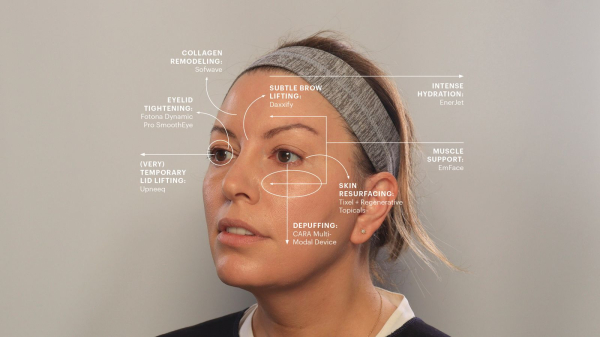 Photo: Courtesy Subject; Design: Mark Baker-Sanchez/Allure
My shift in perspective landed me in the office of Ava Shamban, MD, a board-certified dermatologist in Los Angeles. She was on the same page as Dr. Diamond: “For you, we don’t want to erase the hooding. We want to tighten and support it.” Her strategy involved a series of nonsurgical treatments done both in-office and at home that would target multiple factors: muscle, collagen, surface texture, and ligaments.
Over the next eight months, I worked through the following protocol in phases. Treatments aimed at improving structural support and skin laxity came first, followed by procedures targeting texture and skin quality. Sometimes I was getting one treatment per appointment; other times, we’d do two in the same session. The sequencing allowed Dr. Shamban to assess how my face responded at each stage and build results gradually rather than chasing a dramatic one-time transformation.
One note: The downtime and side effects described throughout this story—many of which were minimal or nonexistent—reflect my personal experience. All of these treatments come with some level of risk, and individual results and recovery time may vary based on the treatment, provider, settings, and the patient’s skin.
1. Muscle Support: EmFace
EmFace is a 30-minute treatment that combines radiofrequency to stimulate collagen with high-intensity electromagnetic stimulation to contract muscle. We started here because Dr. Shamban thinks muscle tone and structural support were the main cause of my issue. After a few weeks of EmFace-only appointments, she added more of the treatments below.
At each appointment, a grounding pad went on my stomach, and two adhesive strips were placed across my forehead and undereyes. When the machine was turned on, my brows and undereye areas would start twitching in rhythmic pulses. “The brow elevators are muscles,” says Dr. Shamban. “If we strengthen the lifters without over-relaxing the depressors, we create upward support.” Translation: Train the muscles that pull up, don’t just freeze the ones that tug down, which is what a neuromodulator like Botox does.
What it feels like: An involuntary eyebrow workout. Not painful, just quiver-y spasms, like your face is doing Pilates without asking you.
Downtime: I experienced no downtime or side effects, though temporary redness, warmth, and mild swelling can occur.
My results: Subtle but real. My brows felt more supported, with a slight visible lift in the outer corners that made my eyes look more open by the end of the series.
Series: 4 treatments, 1 week apart. Full results at 3-4 months
Lasts: 6 months
Devil’s Advocate: Studies are promising, but many are manufacturer-funded. If you’re expecting browlift-level results, temper expectations…a lot.
Price: $1,800 for a series of four
2. Collagen Remodeling: Sofwave
If EmFace is about muscle training, Sofwave is about collagen building. About four weeks later, after EmFace had strengthened the muscles supporting my brow, Dr. Shamban layered in Sofwave to target the skin itself. In a Sofwave treatment, focused ultrasound energy penetrates the mid-dermis, deep enough to trigger increased collagen and elastin production, but not so deep that it melts the fat layer underneath. Around the eyes, that distinction is everything. You cannot afford to lose volume here. Instead, the goal is to make the skin that’s already there thicker, denser, and more supportive over time. “If you tighten along the brow, you can get a visible lift,” Dr. Shamban says.
For similar effects, other dermatologists are partial to using devices like Thermage FLX, which delivers radiofrequency, and Ultherapy PRIME, which uses focused ultrasound, to achieve collagen-stimulating, skin-tightening effects around the eyes.
What it feels like: Concentrated bursts of heat that build and peak, like someone pressing a very hot spoon against your brow for one sharp second. With 45 minutes of numbing cream first, it’s tolerable. Without it? I probably would’ve clenched my jaw the entire time. I asked for Pronox (laughing gas) for the most intense passes, especially over the brow bone, where the skin is thinnest and the heat feels sharpest.
Downtime: A few hours of redness
My results: A visible tightening along the brow line and upper lid area that created a modest but meaningful lift
Series: 1 treatment, full results at 12 weeks
Lasts: 1-2 years
Devil’s Advocate: Sofwave can tighten skin. It cannot remove skin. If you have significant excess skin, known as dermatochalasis, surgery will always be your better bet.
Price: $1,250 for eye area and brows
3. Eyelid Tightening: Fotona Dynamic Pro SmoothEye
One of the challenges with a nonsurgical approach is that even if you strengthen the brow muscles and firm the skin above the eye, the eyelid itself can still look lax. That's where SmoothEye comes in. Unlike Sofwave, which treats the broader brow and periocular area, SmoothEye uses a non-ablative Er:YAG laser to target the tissue-thin eyelid skin itself, triggering collagen remodeling. “We're contracting existing collagen while stimulating new production,” Dr. Shamban explains. “The goal isn't to change your anatomy. It's to make the tissue behave younger.” We added this after EmFace and Sofwave addressed deeper support layers.
What it feels like: Warm pulses that build gradually, similar to a heated massage around the eyes.
Downtime: Temporary redness and swelling can occur for 24 to 48 hours. I had mild pinkness and puffiness during that window, but both resolved quickly.
My results: The skin on my upper lids looked firmer and less crepey, especially along the fold where hooding collects. Not dramatic on its own, but a meaningful contribution to an overall more open, rested appearance.
Series: 3 treatments, spaced 4-6 weeks apart
Lasts: About a year
Devil’s Advocate: Individual before-and-afters can be impressive, but the clinical data on SmoothEye is still emerging. Think refinement, not reinvention.
Price: $600-$1,200 per treatment, depending on the area
4. Skin Resurfacing: Tixel + Regenerative Topicals
Eyelid skin is the thinnest on the body, which means it keeps no secrets: crepiness, fine lines, and laxity show up here first. Thickening it can bring some of those things back under wraps. Tixel is a procedure that does that with a heated titanium tip studded with tiny pyramids that briefly stamp the skin, creating controlled microthermal injury. As those injuries heal, the skin responds by going into repair mode: producing new collagen and strengthening existing tissue to create a thicker, smoother surface over time. At a separate appointment from the treatments listed above, Dr. Shamban paired the Tixel with VAMP, a gel containing PDRN (polydeoxyribonucleotide), derived from purified salmon sperm DNA. Regenerative medicine is glamorous like that. Applied after the Tixel treatment, PDRN is intended to support the skin’s repair response. Research suggests it may help activate pathways involved in tissue regeneration, including fibroblast activity and collagen production.
What it feels like: Rapid hot taps that are sharp and a bit startling
Downtime: I felt sore for a couple of days, with some redness, tenderness, and tiny sand-grain crusts.
My results: The fine, crepey texture around my eyes (underneath and on my lids) was softened in a way concealer never quite achieves.
Series: 4 sessions, spaced 4 weeks apart, full results 4-6 months after final treatment
Lasts: 6-12 months
Devil’s Advocate: Tixel can improve crepiness, but it’s not lifting anything. Smoother skin is not the same as less skin.
Price: $900 per treatment
5. Subtle Brow Lifting: Daxxify
Neuromodulators like Botox and Daxxify can be blamed for frozen foreheads and heavy lids. But in the right hands, it’s precision engineering. The goal of the forehead muscle is lift. That’s why you have horizontal lines. If you leave it alone and relax only the downward-pulling muscles around the eyes, you get an unopposed upward pull, which lifts the brows. Dr. Shamban injected my Daxxify with particular restraint. “If you relax the muscles too much, you lose the squeeze that helps move lymph. Then the eyelid can look puffier,” she explains. Instead of freezing everything in my face, she targeted only the depressors, the muscles that pull the brow down over time. By leaving the forehead elevator muscle active, the upward pull became unopposed.
What it feels like: Quick pinches, minimal discomfort
Downtime: Aside from a few tiny injection-site bumps that disappeared within an hour, I didn’t have much immediate downtime. A few days later, I developed a slight “Spock brow” on one side—a slightly overarched brow that’s a known possibility with neuromodulators and was easily adjusted at a follow-up visit. I, like most people, have natural muscle asymmetry, and those differences can become more noticeable after treatment.
My results: The tails of my brows looked higher, and I could see more of my lids.
Series: Every 3-4 months, full results at 2 weeks
Lasts: 4 months
Devil’s Advocate: This is precision work. Consider the Spock brow as your cautionary tale: One overly arched eyebrow that locks your face into permanent skepticism. On the flip side, if the heaviness is due to skin laxity rather than muscle pull, the lift could be minimal. Plus, injectors tend to be super-conservative in that area to preserve natural movement, so the results are often intentionally subtle.
Price: $900-$1,200 for full eye area
6. Intense Hydration: EnerJet
EnerJet is a handheld device that uses high-pressure jet propulsion (not heat or needles) to push small amounts of hyaluronic acid into the upper dermis. My treatment was focused along the hairline and upper forehead, reinforcing the brow’s anchoring points rather than adding volume to the lid itself.
What it feels like: Sharp, rubber-band snaps. Loud but brief.
Downtime: Mild swelling and tiny, mosquito bite bumps for 2-3 days. Bruising from a ruptured capillary is possible; I got bruising that took 5 days to clear.
My results: A slight improvement in skin quality and bounce, with a subtle supportive effect along the brow
Series: Every 4 months, results are immediate
Lasts: 3-4 months
Devil’s Advocate: The science is still evolving, and I’m not convinced the results fully justify the price. This is more supporting actor than leading role.
Price: $1,500 per session
7. (Very) Temporary Lid Lifting: Upneeq
The active ingredient in these prescription eye drops is oxymetazoline hydrochloride, which stimulates the Müller’s muscle that controls involuntary eyelid elevation, causing it to contract and lift the lid for up to eight hours. It’s surprisingly impactful. “I use them in the morning if I’m tired,” Dr. Shamban told me. “It pops my eyes open, and I literally feel more awake.” When I put one drop in each eye (they come pre-dosed in pouches), my eyes look noticeably wider within a few minutes. Upneeq is the only FDA-approved, at-home treatment for ptosis.
What it feels like: A mild tightening sensation for a few seconds, then nothing
Downtime: I didn’t experience any, but possible side effects include temporary redness, irritation, dryness, or blurred vision.
My results: Noticeably more open eyes within minutes, a quick, reliable refresh
Series: Daily as needed, results in 5-10 minutes
Lasts: 8 hours
Devil’s Advocate: The effects last only 12 hours at most: You won’t see any permanent or even semipermanent lifting, even if you use these consistently.
Price: About $200-$250 for a box of 30 prefilled droppers. Each single-use dropper contains enough solution for both eyes.
8. Depuffing: CARA Multi-Modal Device
I’ve been using the CARA microcurrent device—a wand Dr. Shamban helped develop that combines radiofrequency, electrical muscle stimulation, and LED—several nights a week. Before each session, I apply a conductive gel that helps the electrical currents travel evenly and allows the device to glide across my skin. It hums faintly across the brows and undereye areas. It's not painful, just a steady, almost meditative tickle. Microcurrent won’t replicate surgery, but over time, supporting muscle tone and lymphatic flow can make lids look less puffy and undereyes more smooth. Other at-home microcurrent devices that Allure editors have seen results from are the NuFace Trinity and Ziip Halo, though any model requires consistent use for noticeable change.
What it feels like: Gentle tingling and rhythmic contractions beneath the skin. The device warms slightly as it glides, creating a relaxing, almost spa-like sensation.
Downtime: None
My results: Less morning puffiness, particularly under my eyes, and a slightly more lifted, refreshed look with ongoing use. Subtle and cumulative, definitely no drama here.
Series: 15 minutes per session, 3-5 times a week
Devil’s Advocate: Consistency is everything. Use home energy devices religiously and you may see a difference.
Price: $350 for the device
My Final Results (and Final Receipt)
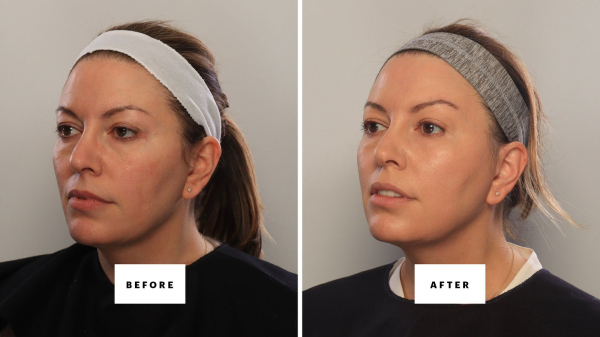 Courtesy Subject
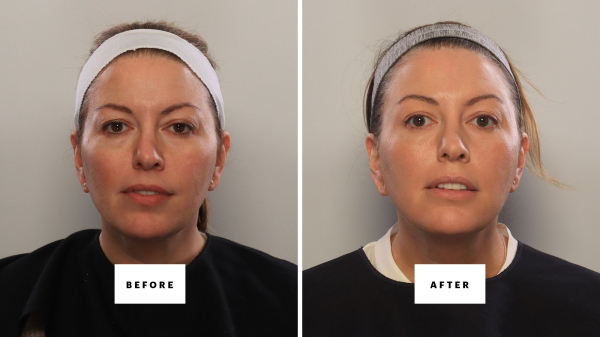
Eight months after starting treatments (a total of 19 appointments with Dr. Shamban and her team of registered nurses and physician assistants), the changes are real. I’ve actually seen way more improvement than I expected. Maybe I managed my expectations a little too much? No one has gasped or asked what I’ve “had done.” But that’s the point, especially in this part of the face. The outer third of my brows sits slightly higher. More lid is visible when my eyes are open. The fine crepiness around my eyes has noticeably diminished. Friends tell me I look rested. Unflattering lighting is harder to come by.
If surgery is 100%, I’d call this tweakment extravaganza a solid 40%. But what surprised me most wasn’t the visual shift. It was the one I could clock without looking in the mirror. The midday droop that used to make me feel exhausted around 3 p.m.? Gone. I stopped instinctively tilting my chin to manufacture a good angle. I no longer keep a scrunchie at my desk for an emergency ponytail lift.
I still have hooding. That slight droop is part of my eye shape, part of my identity. Erasing it entirely would change me. I know this after seeing a familiar necklace across a restaurant and realizing it belonged to a woman I’ve known for years but no longer recognized. The difference now is that my face finally reflects how I actually feel. And at this stage of aging, that may be enough.
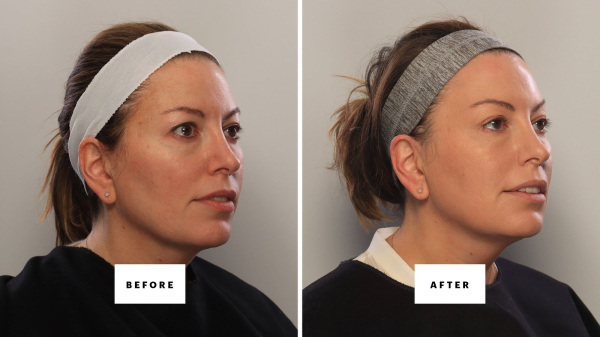 Courtesy Subject
Then there’s the financial reality. It’s a lot. A comprehensive, nonsurgical protocol like mine can easily reach $12,000—and a year later almost all results will be gone. The treatments must be repeated indefinitely to maintain results. (My initial series of procedures was provided gratis by Dr. Shamban’s practice.) By comparison, an upper blepharoplasty averages about $5,000 in the US, while a lower blepharoplasty typically runs around $8,000, according to the American Society of Plastic Surgeons, but the final bill can be several thousand dollars higher once anesthesia and facility fees are added. A brow lift, which can be performed alone or combined with a blepharoplasty, averages around $5,500. In major markets, the total can climb significantly. A conservative upper and lower blepharoplasty in Los Angeles or another major city can approach $20,000 once all fees are factored in.
Surgery also comes with very real recovery–about two weeks of swelling and bruising, with most patients returning to normal activities within two weeks. Surgery is more invasive and painful, but “a well-executed surgical result can last a decade or longer,” Dr. Schwarcz says. One thing to keep in mind: If excess upper lid skin is significant enough to impair vision, insurance may cover part or all of a blepharoplasty, though this requires testing and documentation.
I’m thrilled with what Dr. Shamban’s protocol delivered. Her layered approach was cumulatively powerful. The changes are real. I look like myself, only less tired. But maintaining those results is a commitment. I won't pretend the process was easy. At roughly $12,000 a year out of pocket—not to mention the appointments, the driving, the numbing, the downtime, the recovery—I find myself thinking, Wouldn't one surgical procedure actually be easier than repeating this cycle indefinitely? Honestly, maybe.
I haven’t booked surgery. But I’ve also stopped romanticizing the idea of avoiding it. What I’ve realized is that I’m not anti-surgery. I’m just not into overcorrection. If I move forward, I may consider an endoscopic mini brow lift rather than a traditional upper bleph. It’s an option I didn’t even know to ask about before reporting this piece.
More than anything, it’s bought me time to understand what’s changing, to get clear on what bothers me and what doesn’t, and to figure out how to get a face that matches how I feel. Watching my neighbor wave at me from across the restaurant, I finally understood what I was actually after. The goal was never to look sculpted, dramatically retouched, or surgically finessed. After eight months and 19 appointments, the goal is simple: to look awake—and legible.
Note: Throughout this story, I mention the exact brand names of the tools and products Dr. Shamban and her team used. However, many of these technologies are not unique and represent one example in a broader category. SmoothEye is one of several Er:YAG lasers used around the eyes. Other popular Er:YAG devices for the eye area include Sciton Joule and Lutronic Action II. Sofwave is one of a handful of ultrasound-based skin-tightening devices. Other energy-based approaches include Thermage FLX, which uses monopolar radiofrequency, and Ultherapy PRIME, which uses microfocused ultrasound. Daxxify is one of six FDA-approved botulinum-toxin neuromodulators, including Botox, Dysport, Xeomin, Jeuveau, and Letybo. EnerJet is one of several needle-free, pressure-based injection systems. EmFace and Tixel each use patented mechanisms (HIFES muscle stimulation and Thermo-Mechanical Action, respectively) that are more unique to their manufacturers. Upneeq is currently the only FDA-approved at-home treatment for ptosis, with no direct branded competitor.
How AI-Generated Images Are Changing Beauty Consultations
PauseAnimation by Mark Baker-Sanchez/Allure; Photo: Adobe StockSave this storySave this story
Poreless skin with a preternatural glow. Blonde highlights blended so well you can no longer see the individual strands. A nose that’s never even heard of a crook. A hand with individual, intricate tattoo “sleeves” on each finger. Manicures with textures and designs so complex they’d be impossible to recreate. Artificial intelligence has come for the beauty industry, and it seems many clients can’t resist the generative chatbots’ siren song. Experts across fields report a sharp increase in the number of AI-generated images their patients and clients are bringing as inspiration for the service they want provided.
“[Bringing AI-generated images] has become a normal part of the consultation,” says Melissa Doft, MD, a board-certified plastic surgeon based in New York. July, a Leicester, England-based tattoo artist who goes by @inkedbyjuls, says “Nearly 30% of my clients have reached out to me with AI-generated images as a reference for their tattoo ideas in recent months.” While some practitioners are OK with using these as a jumping off point—and understand that some clients who struggle with verbally explaining their vision might find chatbots helpful for translating that idea into an image—everyone we spoke to for this piece agrees that these artificially-generated visuals are largely just setting people up for disappointment.
Many experts interviewed for this story acknowledged that their clients or patients may not even realize they’ve brought something AI-generated, since the online places where people typically get inspiration have become flooded with slop of varying quality. “When I clock the AI, I’m super upfront with them about a realistic result,” Anna Miles, a nail artist based in New York City, says, echoing the general consensus among these pros.
Here, a brief look into how AI-generated images are changing the consultation process across the beauty industry—and where these experts wish you would get your inspiration from instead.
For Plastic Surgery
Plastic surgeons have long cautioned patients against bringing in photos of celebrities as inspiration for their own rhinoplasty/breast implants/tummy tuck. That famous person’s face (or boobs or butt) is not your face, and no amount of amazing (and expensive) surgery will make you look like them.
“Patients arrive having already generated a version of themselves through a beauty app or ChatGPT. They say, ‘This. Make me look like this.’”
So, technically, you could say patients are more closely following doctors’ orders these days. “Years ago, I was the one holding the pencil, sketching a new profile onto a photo of your nose while you watched,” Dr. Doft says. Now, “patients arrive having already generated a version of themselves through a beauty app or ChatGPT, and they hand me the picture and say, ‘This. Make me look like this.’” She notes that some people even come in with a full, AI-generated medical plan, including the procedures they think they need and after-care instructions.
AI is a viable tool for research, but the humans actually performing plastic surgeries know the most about these procedures. “AI generated photos do not take into account anatomic constraints on potential surgical results such as skin thickness, skeletal anatomy for the face and underlying cartilage shape and strength for rhinoplasty,” Dr. Steven Pearlman, MD, a dual board-certified facial and reconstructive plastic surgeon in New York City. “AI does not understand what can and cannot realistically be accomplished in facial plastic surgery.”
“AI does not understand what can and cannot realistically be accomplished in facial plastic surgery.”
There’s also the issue that these generative AI-models are trained to view a very specific type of beauty as ideal. “A generated face optimizes for one thing: so-called ideal proportions [like] wide-set eyes, a small straight nose with a delicate tip, full lips, high cheekbones, and perfect symmetry,” Dr. Doft says. “Plenty of patients love the nose they inherited from their father or the eyes that run in their family, and a generated photo erases all of that in favor of a sameness I see over and over. You lose the individual.”
Both Dr. Doft and Dr. Pearlman agree that patients should seek out a qualified, experienced surgeon who can create an individualized plan. Dr. Pearlman says he does use computer imaging to show rhinoplasty and revision rhinoplasty patients their potential results, but only after carefully examining the patient to see what could actually be achieved.
As far as computer-free inspiration photos go, Dr. Doft recommends patients bring in older photos of themselves or “images of real people whose features feel authentic to them,” saying, “These give me far more to work with than a filtered ideal.”
For Manicures
Although Miles prefers drafting nail art looks with a pen and paper, she understands why clients might turn to generative AI. “AI can be helpful for the client if they can’t explain their concept in full,” she says. She even admits that these programs can occasionally come up with something cool. “Sometimes the computer hits shuffle and makes some valid points, like throwing digital spaghetti at a proverbial wall,” Miles says. “But my imagination is usually better than the logarithmic output.”
“I was relieved they were still hiring an artist to create the work, even though they used AI as a tool to mock it up.”
Sigourney Nuñez, a nail artist based in Los Angeles, recalls one time a brand she was working with presented her with a project brief “just covered with AI-generated photos.” She says it took her by surprise, but ultimately, “I was relieved they were still hiring an artist to create the work, even though they used AI as a tool to mock it up.”
Both Miles and Nuñez say that this type of inspiration creates unrealistic expectations for what a human nail artist can do, but that they’re typically able to bring the client back down to earth after some additional collaboration. Nuñez says she tries to explain that “the inspo pic is just a launchpad” for ideas. “I am not a photo copy machine,” she says. “I am an artist.”
“I am not a photo copy machine. I am an artist.”
Although she’s successfully worked with clients who bring in AI-generated images to align on a manicure concept they both love, Miles says she’s uneasy about the psychological, environmental, and copyright implications of the technology. “I personally love using my brain for creative tasks, but those who aren’t naturally inclined to flex that muscle have now replaced trying with a machine,” she says. “I’m broadly concerned about the atrophy of imagination.”
For Haircuts and Color
Carly Zanoni, a San Diego-based colorist who frequently shares tips with other pros on how to work from clients’ inspo photos, doesn’t mind an AI-generated image. “I love when clients bring inspiration because it gives me insight into the overall vibe they’re going for,” she says. “Is it bright? Soft? High contrast? Lived-in? AI images can communicate that really well.” Sara Briscoe, a colorist in Queensland, Australia, agrees—to a point. “Any visual reference helps, because verbal communication is tough for some people,” she says. “But it stops being useful when the image is so AI that there’s no real texture. The gloss, density and tone are all fake and unachievable.”
“Any visual reference helps, because verbal communication is tough for some people.”
Hannah O’Malley, a hairstylist in Wichita, Kansas who specializes in razor cuts, is vehemently not on board with generated photos and the unrealistic expectations they tend to set. “The AI pictures don’t show real hair patterns or reflect like real color,” she says, noting that this can cause a lot of frustration during the consultation process. “We can’t give clients robot hair.” O’Malley recommends that clients pull inspiration from the stylist’s portfolio; finding looks you like right on their social media account means the stylist is probably going to be able to achieve exactly what you’re looking for. She also recommends Pinterest, as long as you use its tool to filter out AI-generated images.
“We can’t give clients robot hair.”
Zanoni emphasizes that real photos are “the gold standard,” ideally with multiple angles and before-and-after transformation images that haven't been heavily edited. When a client does bring in something totally unrealistic (AI-generated or not), she sees that as a conversation starter. “I usually say something like, ‘I love this as inspiration. Let’s figure out what you love most about it and make a plan to create that feeling on your hair,’” Zanoni says. “Sometimes we can get really close in one appointment, and sometimes it’s more of a journey. I think clients appreciate honesty, and I’d much rather under-promise and over-deliver than promise an AI result that no one could realistically recreate.”
For Tattoos
If there’s one beauty-adjacent industry where the vibes around AI-generated images seem to be particularly negative, it’s tattooing. Of all the people Allure reached out to for this story, tattoo artists were the most likely to bring up ethical concerns—such as generative models being trained on other artists’ work and the environmental implications of using this technology—than pros in other industries. Many artists have explicit bans against sending AI-generated photos as inspiration on their social media and/or booking websites.
“I’ve had clients walk out when I’ve told them I wouldn’t tattoo their AI generated design.”
“I’ve noticed when people AI generate their tattoo references, they become attached to what they’ve received,” says Sam Bradley, a tattoo artist based in Tacoma, Washington who has one of the aforementioned AI bans pinned to the top of her Instagram account. “I’ve had clients walk out when I’ve told them I wouldn’t tattoo their AI generated design, or become frustrated when I’ve redrawn the image they brought in initially.”
Similar to Dr. Pearlman’s concerns about AI inspiration for plastic surgery, tattoo artist Alyssa Stokes says these generative programs simply don’t understand what type of art can actually be done on a person’s skin. “Generative AI does not have the years of experience and proper understanding of flow, contrast, line weight, and skin aging,” Stokes says, noting that the images she’s seen don’t take how a design would work with an individual’s anatomy into account. “It includes way too many details, not enough spacing, and leads the client to believe it is possible when it really isn’t.” Bradley seconds this. “A skilled tattoo artist knows how a design will age over time,” she says. “They have to consider the placement, size, and what techniques need to be used to create a tattoo that stays beautiful.”
“The growing anti-AI sentiment brings me a lot of hope. I think artistry is becoming a lot more valuable to people who seek it.”
Instead of leaning on AI, these tattoo artists want their clients to collaborate with them on a design—and trust them to create something awesome. “As someone who deeply values individual creativity and connection with my clients, [this type of inspiration image] not only takes out a huge part of the trust they need in me to do my job, but starts off my creative flow in an extremely restricted state,” Stokes says. Indeed, many tattoo artists prefer more abstract starting points. “I prefer if they create a Pinterest mood-board, send a written explanation of their idea, and even draw the silliest scribble to describe it,” July says.
“Gone are the days of independent thought, and human creativity,” Bradley says. “Although the growing anti-AI sentiment brings me a lot of hope. I think artistry is becoming a lot more valuable to people who seek it.”
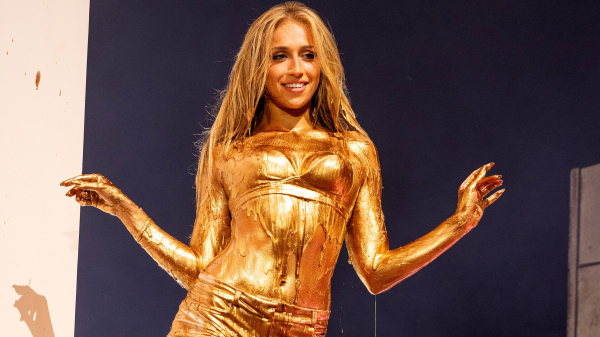
Tate McRae Covered Herself in Gold at Lollapalooza—See the Photos
 Getty ImagesSave this storySave this story
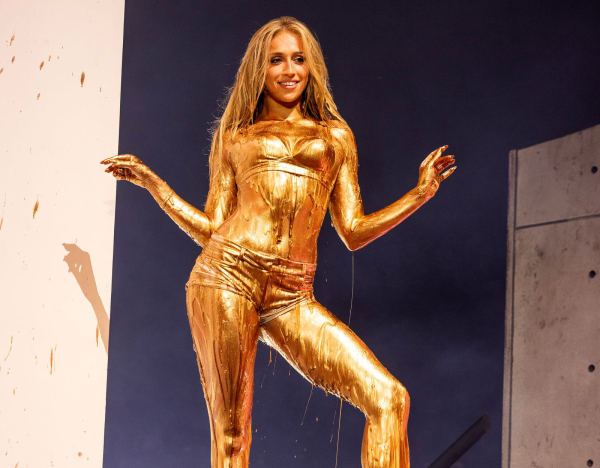
Tate McRae is (literally) so golden. When the musician closed out her set at Lollapalooza 2026 in Chicago, she didn't just wave goodbye and leave the stage—she took things to the next level of pop-star glamour and dunked almost her entire body in a glimmering metallic gold paint. And we're not talking body shimmer or glitter, though McRae does often channel a 2000s aesthetic in her performance looks. Nope! This was thick, drippy, molten gold, as though she was turning herself into a statue onstage. (Cue the James Bond theme music!) McRae was completely covered in the metallic liquid from her neck downward, even her fingernails, and after seeing video footage of the big show-stopping moment, we had some questions—namely, was this actually paint, and if so, what kind and how long did it take to remove?
So we reached to McRae's makeup artist Kali Kennedy for answers!
According to Kennedy, it wasn't paint at all—it was methyl cellulose, copper, and water mixed into a paint-like consistency. The product was actually made by Blair Adhesives, the same folks who create the slime for the Nickelodeon Kids Choice Awards, Kennedy explains, so they knew how to make a material that would shine onstage. While Kennedy isn't sure exactly how much of the liquid was used for the stage show, McRae's team did use 135 gallons for the gold bath video shown in the Lollapalooza visuals; Kennedy estimates the stage gold bath was about half that size. Kennedy adds that McRae and her team had been talking about the idea for months but weren't sure they could pull it off, but they really, really did.
Surprisingly, there was “no real skin prep” involved pre-gold dip, save for what Kennedy describes as a “healthy coat” of body moisturizer. However, as soon as McRae left the stage, there was a group waiting to immediately wipe away the excess product before she hopped in the shower. “During the Lollapalooza gold bath I was hiding behind the staircase waiting to clean her off and her last choreo move sent gold splatter backstage,” Kennedy shares. “I’m pretty sure it’s still in my hair.”
 Getty Images
McRae's hair, typically a warm bronde color, also looked quite a bit brighter, much more golden blonde than brunette. As she posed onstage in her full-body paint, her hair practically disappeared into the molten gold.
And gold was indeed a factor in the overall glam for the evening. “Tate naturally looks so good in warm golden tones,” Kennedy shares of the color motif. “Her golden tan is such a signature part of her look. I wanted to make sure her eyes really popped, so we did a heavier liner than normal, and I also went with more peachy tones to warm her up in a way that seemed to give dimension next to so much gold.”
Kennedy used Neutrogena products on the star (she's an ambassador for the brand), prepping McRae’s skin with Hydro Boost Hyaluronic Acid Rejuvenating Serum and Hydro Boost Hyaluronic Acid Water Gel, then applied Healthy Skin Liquid Makeup in the shade Medium Beige 80 and Healthy Skin Radiant Cream Concealer in Toffee Medium 03. Kennedy combined Healthy Glow Blush Stick in shades Peachy Keen and Pink Petal on the inner cheek and paired Intense Gel Liner in Jet Black 10 Precision Liquid Eyeliner in Jet Black 01 on the star's lids, finished with “a healthy coat” of Healthy Volume Mascara in Carbon Black 01. And though you can't easily see them underneath all that gold liquid, there were also gems applied to McRae's eyes and body for an “extra pop,” shares Kennedy. To say the overall look shined onstage may be the understatement of the summer!
Mielle Organics Is Updating Its Rosemary Mint Products
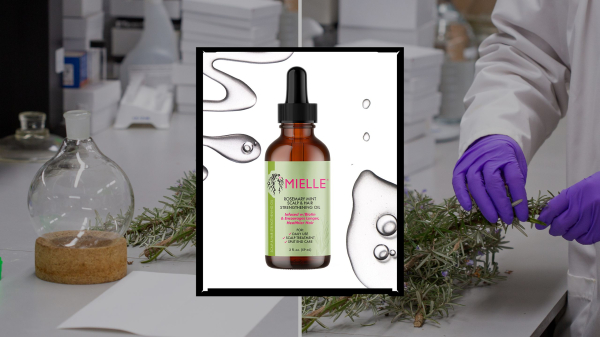
 Mielle is adjusting the ingredients in its headline-making Rosemary Mint range.Courtesy of brandSave this storySave this story
Not many hair oils ever achieve headline-making status, but Mielle Organics' Rosemary Mint Hair Strengthening Oil certainly has. Since its launch in 2018, it's made news for its cult following, then its TikTok virality, then its alleged hair loss risk. And somewhere along the way, Mielle's Rosemary Mint Strengthening Hair Oil spawned a 10-product collection and nabbed an Allure Best of Beauty award. Now, that entire collection is getting a subtle refresh.
Which is pretty risky business — these products are Mielle’s best-sellers and fear of losing access to the original formula has struck nerves in the past. In December 2022, when Alix Earle praised the Rosemary Mint Hair Strengthening Oil on TikTok for inspiring growth in her long blonde hair, the brand’s longtime textured hair fans were afraid they wouldn’t be able to find it anywhere. Shortly thereafter, Mielle’s acquisition by Procter & Gamble Beauty (which also owns Pantene, Herbal Essences, and Head & Shoulders) made shoppers afraid a reformulation was imminent. And the fear isn’t totally unfounded; it’s happened in the past when Black-owned brands have gotten acquired by large corporations.
Neither fear came to pass in the following months, but then in 2024, TikTok was awash in accusations that the Mielle Rosemary Mint Strengthening Hair Oil was causing hair damage, dryness, breakage and loss. At the time, Mielle’s founder, Monique Rodriguez, said in an Instagram video, “My whole family and myself are avid users of Mielle […] because we believe in the power of our products,” adding, “I am so grateful for the opportunities this partnership [with P&G] has brought us. This partnership has allowed us to expand our reach and make a positive impact in the world.”
That conversation eventually died down, and the line remained at the top-selling list for Mielle. And through it all the formulas across the now 10-product Rosemary Mint collection stayed the same. Until now, with Mielle adding rosemary extract to the shampoo, conditioner, mask, leave in and styling cream, and getting its rosemary and peppermint oils certified by the Royal Botanic Gardens, Kew, which validates the quality natural origin of the oils for consumers. Rodriguez told Allure last week that these 2026 updates are not about getting away from past controversies but about new resources available to the brand. “I can understand why some may think this is a reaction to controversy. But, no, point-blank, it’s not,” she says. “Our whole journey with Mielle has been, ‘how do we find the best?’”
A big part of searching for the best is the expanded access to ingredients, labs, and testing a global partner like P&G brings. “Because of the partnership with P&G, it has allowed me to have access to resources like this. I had never heard of Kew before the partnership,” Rodriguez says. “When it was presented to me what they provide, and the certification and quality of ingredients, I was all in. I want to go out here and do research myself. I’m putting myself in the shoes of my consumers.”
As for the formulas themselves, the brand is framing the changes as “enrichment” and not “reformulation.” And perhaps that’s fair. In the original oil and its lighter counterpart themselves, the ingredient list isn’t changing—the namesake ingredients are just being certified by Kew so there is the utmost guarantee that they are what they say they are. “Mielle wants reassurance that the ingredients that they’re incorporating into their products are of highest quality and they’re certified plant material,” says Phil Stevenson, science lead at Kew. Without the certification, “It’s possible that something like an antioxidant component from Rosemary, which is one of its fantastic qualities, you could get from a synthetic chemical. What we’re able to do is verify that it is actually plant material that has gone into that product, and I think that’s important. It’s about trust with your customer. If you’re making a product and you’re telling your customer that your product has natural ingredients, you want to be certain.”
Kew has worked with P&G in the past, starting with a range of products from Herbal Essences in 2020. This Mielle certification will have Kew regularly reviewing the sourced rosemary and peppermint oils that go into the line. It’s not uncommon for Kew to re-validate its certified ingredients, more or less on an annual basis, Stevenson says. “We also can provide accurate information on the quantities, so that we can be certain the product provided to Mielle is not just high-quality, but that those bioactives are at the right amount to be effective in a way Mielle would wish them to be.”
In five other care products, Mielle has also added rosemary extract. Upon evaluating the old and new ingredient lists on the shampoo, cosmetic chemist Dr. Julian Sass, Ph.D., says the experience and results will be virtually the same. “The addition of any extracts in addition to the oils will likely do little to change the performance of the product,” he says, “This new formula seems quite similar to the old one, with a lot of the key functional ingredients like the surfactants [cleansing ingredients] not changing or potentially having small percentage tweaks. Many of the plant extracts/oils here are added for marketing purposes and any tweaks there likely won't provide tangible benefits.”
To further evaluate all seven “enriched” products, Mielle tapped a third-party lab for a set of dermatologist-overseen patch tests on 30 subjects, which were reevaluated both upon application and afterwards, to confirm low allergenicity. You’ll also see updated education around how to use the product like application and washing techniques to prevent buildup. The way Rodriguez sees it, these updates are really just more of the same from Mielle. “This is how Mielle has always operated,” she says. “My philosophy from day one has always been listening to our mavens and hearing what they have to say. Then I take that feedback and use what I already know in my gut about the textured hair consumer because I’m also a textured hair consumer. Science is ever-changing, and how can we stay on top of the evolution of the science behind the ingredients, work to improve, and be better?”
Given the subtleties of the refresh, many founders wouldn’t have drawn attention to it at all. However, “the brand has always been founded on transparency, trust and authenticity,” Rodriguez says. “I trust a brand that is telling me what they’re doing, versus when a customer notices a packaging change and is like, ‘what happened?’ I want consumers to know I’m being transparent and they’re still on this journey with me. I trust a brand that does that, and our consumers deserve that same type of trust.” Mielle has always been a brand that inspires conversation – both good and bad. Whether brand fans notice changes in the product, for better or for worse, only time will tell.